Water conditioner installation steps

Water Conditioner Installation Steps

Installing a water conditioner improves water quality, protects plumbing, and extends the life of appliances. This guide breaks down the process into simple steps: preparation, mounting the unit, connecting plumbing, and ensuring safety. Here’s what you need to know:

  • Preparation: Choose a stable, accessible spot near the main water line with adequate clearance. Gather tools like a drill, pipe cutter, and plumber’s tape.
  • Mounting: Secure the unit to a plywood backer board using mounting brackets.
  • Plumbing Connection: Use the right materials (e.g., flux for copper pipes, NSF-certified tape for PVC) and install valves for maintenance.
  • Safety Checks: Test for leaks, confirm proper grounding, and ensure pressure stays between 30-80 PSI.

Regular maintenance, like replacing filters every 6-12 months, keeps the system efficient. For complex setups, hiring professionals ensures compliance with safety codes and avoids costly mistakes.

Key Tip: Use push-to-connect fittings for easier, leak-resistant connections. Proper installation and upkeep save money and deliver clean, high-quality water for years.

How To Install Water Softener System – Complete Installation Guide

Preparation for Installation

Getting everything ready beforehand ensures your water conditioner works efficiently and protects your plumbing and appliances, as discussed earlier.

Selecting an Installation Site

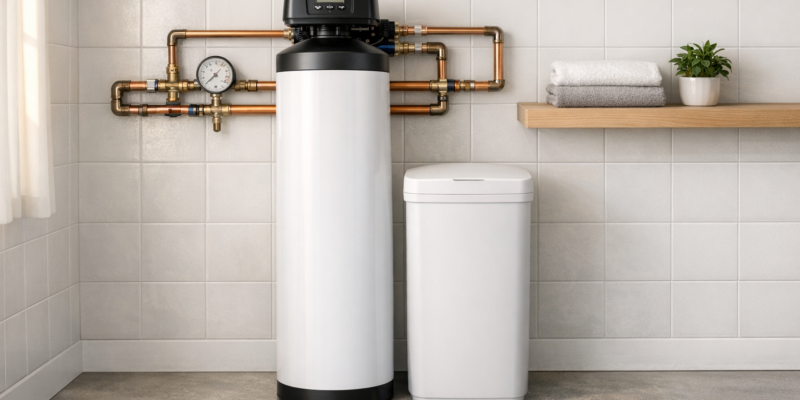
Pick a spot close to the main water line that offers at least 60 inches of vertical clearance and 45 inches of floor space. Make sure it’s easy to access for future maintenance [4]. The area should be stable, well-lit, and away from direct sunlight. If your unit needs electricity, ensure there’s a nearby outlet.

Tools and Materials Needed

Essential Tools Required Materials
Drill, pipe cutter, level, safety gear Mounting brackets, plumber’s tape, pipe fittings, screws/anchors

Ensure the pipe fittings match your plumbing system [1]. Avoid using pipe dope or PVC primer/glue on threaded fittings to prevent damage to plastic components [4].

Checking Water and Power Supply

Make sure the water and power supplies are ready for safe installation. Completely shut off the main water valve [5]. If the unit needs electricity, confirm that an outlet is within reach. For metallic plumbing, install two grounding clamps to avoid electrical risks [4].

“Proper grounding is essential when installing on metallic plumbing. Securely install two grounding clamps to prevent electrical shock and ensure safety.” [4]

If the plumbing setup is complicated, it’s a good idea to consult professionals like Hydrodynamics. They specialize in water conditioner installations and can ensure everything meets local regulations.

Once the site is ready and utilities are secure, you can move on to the installation process.

Installation Steps

Now that everything is prepared, let’s walk through the installation process step by step.

Mounting the Unit

Start by attaching a plywood backer board to the wall studs for added stability. Make sure it’s level before moving forward. Align the mounting brackets with the unit’s mounting points, checking the level again, and then secure them using heavy-duty screws. Once the unit is firmly mounted, you’re ready to connect it to the plumbing system.

Connecting to Plumbing

Carefully measure and cut the pipes to the required length, then clean the ends with sandpaper for smooth connections. If you’re working with copper pipes, apply flux before soldering to ensure a strong bond [1]. Keep the alignment precise to avoid stress on the joints. Install valves and a bypass system to allow for maintenance without interrupting your home’s water supply [3].

Connection Type Materials Needed
Copper Flux, solder, torch
PVC NSF-certified tape
Metallic Grounding clamps, #4 copper wire

“Dry fit all connections before securing them, and use NSF-certified plumber’s tape on threaded fittings. Avoid using pipe dope or PVC primer/glue to prevent damage to plastic fittings” [4].

After securing the pipes and valves, it’s time to install the filter cartridges.

Installing Filter Cartridges

Handle the filter cartridges with clean hands to avoid contamination. Inspect each cartridge for any damage before inserting it into the housing. Turn the cartridges clockwise until they are snug, but don’t overtighten – this could harm the O-rings [6]. Make a note of the installation dates to keep track of replacements and maintain the system’s efficiency [3].

Once everything is installed, check all connections to ensure they are secure, and the system is ready to go.

Safety and Maintenance

Preventing Leaks and Ensuring Functionality

Once installation is complete, it’s time to test for leaks to confirm everything is working as it should. Slowly turn on the water supply and carefully check all connections – especially threaded fittings and joints – for any signs of leakage. A well-installed system will hold steady pressure without dripping or seeping.

Focus on these critical areas:

Testing Area What to Check & Fix
Connections Look for moisture; tighten fittings or replace seals if needed
Pressure Gauge Confirm pressure is within 30-80 PSI; adjust regulator if necessary
Filter Housing Ensure cartridge is seated properly and O-rings are intact; reseat or replace if needed

Once you’re sure the system is leak-free, regular maintenance will keep it running smoothly for years to come.

Maintenance Tips

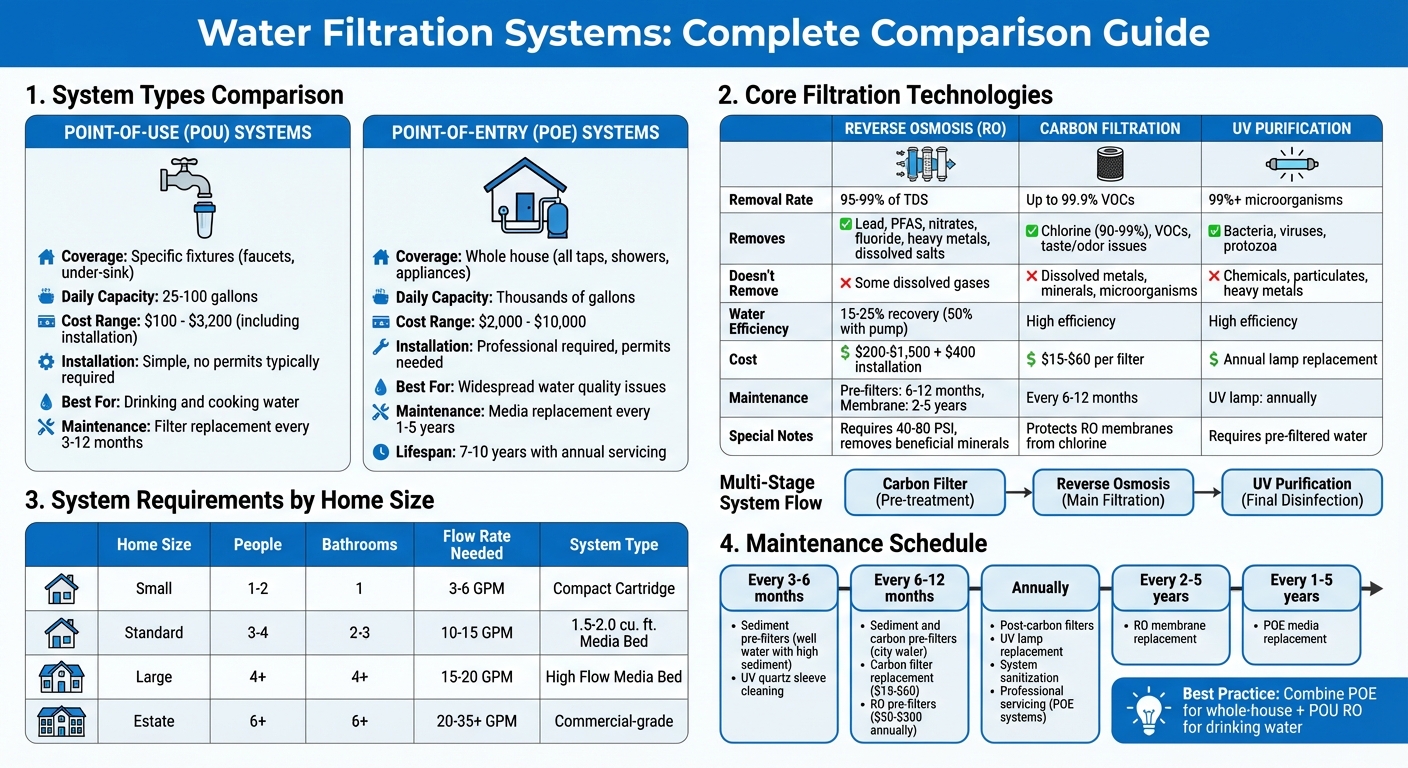
How often your system needs attention depends on your water usage and quality. Most filter cartridges need replacing every 6-12 months, but this can vary based on your specific conditions [1][3].

“Regular inspections can help identify potential issues early, such as leaks or wear on components” [7][3].

Here are some key maintenance tasks to keep in mind:

  • Check pressure readings and inspect O-rings and seals every three months.
  • Clean the exterior of the system monthly to prevent dust and grime buildup.
  • Test the bypass system every six months to ensure it’s functioning properly.

During your inspections, confirm that the system’s electrical grounding is secure. Keep a log of all maintenance activities, like filter replacements and any repairs, to stay organized and maintain warranty coverage.

If you notice odd noises, reduced water flow, or changes in pressure, address these concerns quickly to avoid further issues. For more advanced repairs or troubleshooting, consider hiring a professional for added peace of mind.

Additional Tips and Professional Help

Using Push-to-Connect Connectors

Push-to-connect connectors make installation easier by providing secure, leak-resistant seals – no special tools required [1][6]. To ensure a proper seal, insert the connector fully until you hear a click. For best results, avoid sharp bends and keep the connector lines in smooth, gentle curves.

These connectors are especially helpful during the plumbing connection phase. However, for more intricate setups or to guarantee everything is installed correctly, hiring a professional can be a smart choice.

Professional Services from Hydrodynamics

Hydrodynamics

While many installations can be done on your own, more advanced water conditioning systems often require expert handling. Hydrodynamics Inc., a family-owned business since 1994, offers specialized water conditioning installation and maintenance services throughout Northeastern Pennsylvania.

Their services include:

  • System sizing and placement advice: Ensuring the system fits your specific needs and space.
  • Post-installation testing: Checking and fine-tuning the system for optimal performance.
  • Expert installation: Handling grounding and backflow prevention correctly.

For setups involving additional features like check valves or specialized grounding, professional installation can help you avoid expensive errors. Hydrodynamics’ team ensures installations meet safety codes and run efficiently.

Safety Tip: Professionals use grounding clamps and #4 copper wire to ensure proper safety measures. They also make sure the system is protected from freezing and direct sunlight [2][3].

Conclusion

Adding a water conditioner can enhance water quality and prolong the life of your plumbing system. Using durable materials and following the manufacturer’s instructions are key to avoiding leaks and inefficiencies [1][4].

Paying close attention to placement, connections, and safety measures ensures the system runs efficiently. While proper installation is essential, ongoing care – like regular maintenance – keeps the system performing well over time. Choosing NSF-certified materials and adhering to manufacturer guidelines can help sidestep common problems [1][4].

For more complex setups or installations requiring code compliance, working with experts like Hydrodynamics is a smart move. Their knowledge is particularly useful for systems with specialized features or those that need to integrate with existing plumbing.

Routine upkeep, such as replacing filters and conducting system checks, helps your water conditioner stay effective and last longer [3]. A properly installed and maintained unit not only delivers clean water but also protects your appliances and lowers overall costs.

Whether you’re tackling the installation yourself or hiring professionals, preparation and safety should remain your top priorities. Investing in a water conditioner pays off with better water quality, longer-lasting appliances, and fewer maintenance expenses over time [3].

Hard Water Solutions: Comparing Water Softener Systems

Hard Water Solutions: Comparing Water Softener Systems

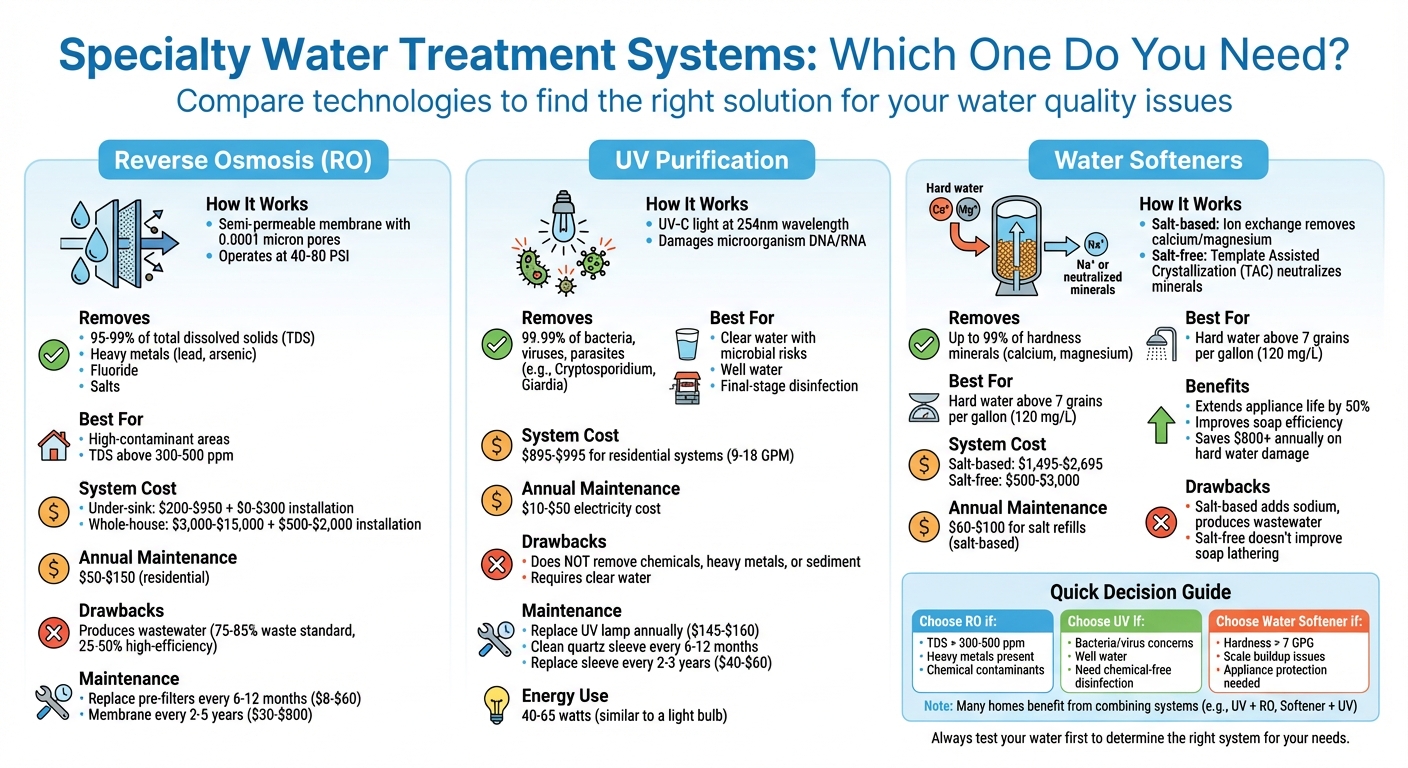
Hard water causes problems like scale buildup, clogged pipes, and reduced appliance efficiency. Water softeners are the solution, and here are four popular options:

  • SpringWell SS1: A salt-based system with smart regeneration, Bluetooth controls, and high flow rates. Best for very hard water. Price: $1,495.
  • SoftPro Elite: Another salt-based option with upflow regeneration, reducing salt use by 75%. Ideal for large households. Price: Varies, with low operating costs.
  • Fleck 5600 STX: A budget-friendly salt-based softener with digital controls and iron removal. Best for homes on a budget. Price: $549.50.
  • SpringWell FutureSoft: A salt-free conditioner using TAC technology. Maintenance-free and eco-friendly. Best for moderate hardness. Price: $1,597.31.

Quick Comparison

System Type Grain Capacity Flow Rate Annual Cost Key Feature Price
SpringWell SS1 Salt-based 32k-80k Up to 20 GPM $108 Smart regeneration, Bluetooth $1,495
SoftPro Elite Salt-based 32k-110k Up to 15 GPM $56 Precision brining, efficient Varies
Fleck 5600 STX Salt-based 32k-80k Up to 20 GPM Varies Affordable, iron removal $549.50
SpringWell FutureSoft Salt-free (TAC) N/A 12-20 GPM $0 Maintenance-free, eco-friendly $1,597.31

Choose based on your water hardness, household size, and maintenance preferences. Salt-based systems are great for very hard water, while the salt-free option is perfect for those seeking low-maintenance and eco-friendly solutions.

Salt VS Salt-Free Water Softeners: What’s the Verdict?

1. SpringWell SS1 Water Softener

SpringWell SS1

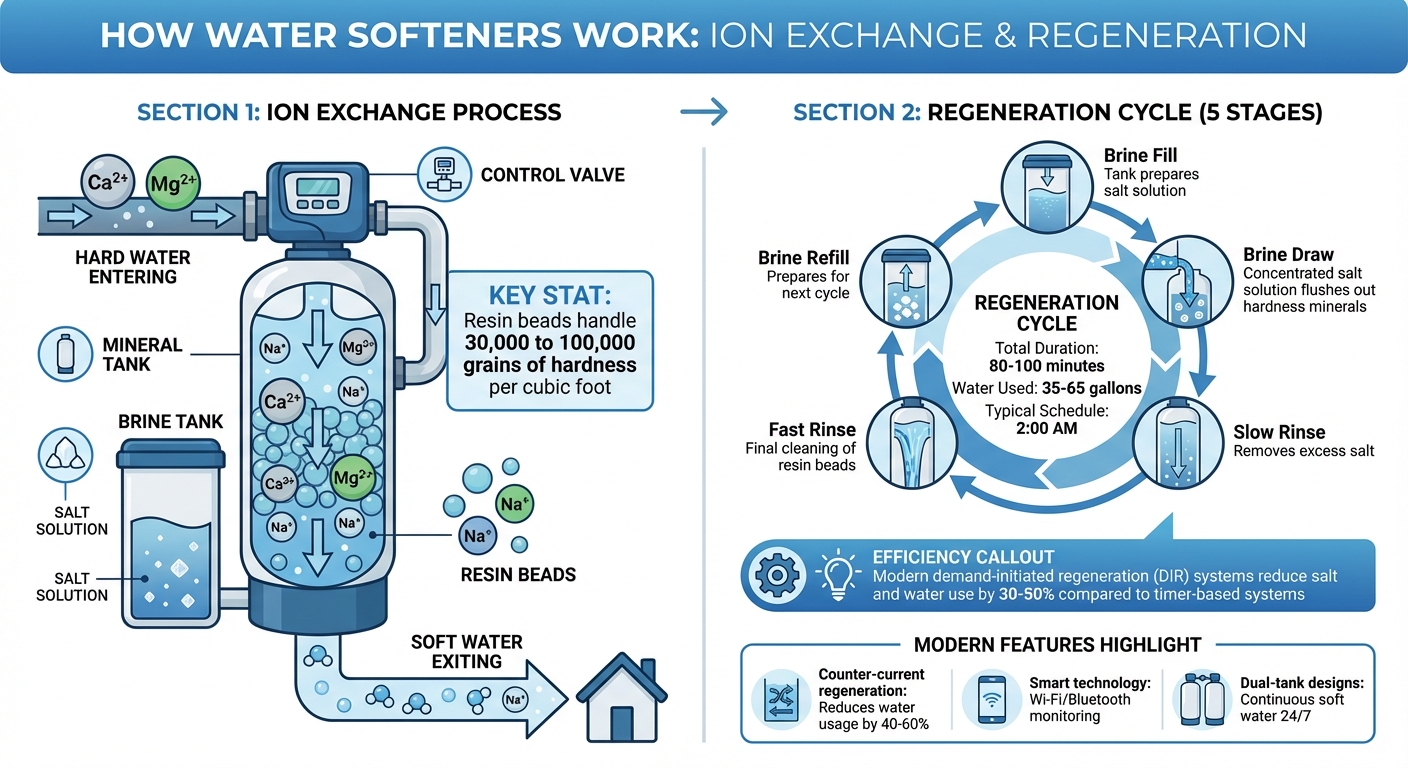
The SpringWell SS1 is a top-tier salt-based water softener designed to tackle moderate to severe hard water problems. Using ion exchange technology, it effectively removes hardness minerals from your water, providing a reliable solution for households dealing with these issues.

This system offers grain capacities between 32,000 and 80,000, making it suitable for homes of various sizes. With flow rates reaching up to 20 GPM, it ensures steady water pressure even in larger households with higher water usage.

One standout feature is its smart regeneration system. Instead of running on a fixed schedule like traditional systems, it monitors your water usage patterns and regenerates only when needed. This smart approach can save you money, with estimated annual operating costs of just $108 [1].

The SS1 also includes Bluetooth connectivity, allowing you to manage and monitor the system through your smartphone. This makes it easy to track performance and keep an eye on salt levels.

Key Features

  • Hardness Removal: Eliminates up to 99.6% of hardness minerals
  • High Flow Rates: Supports up to 20 GPM without compromising water pressure
  • Efficient Design: Reduces salt and wastewater usage with precise regeneration

The system is NSF/ANSI 44 certified and comes with a lifetime warranty on both the tank and control head. For the best results, professional installation is recommended, and regular maintenance – like checking salt levels – is essential to keep it running smoothly.

Priced at $1,495, the SS1 includes an installation kit, a lifetime warranty, and a 6-month money-back guarantee. It’s a strong investment for improving your home’s water quality.

While the SpringWell SS1 stands out for its efficiency and smart features, other options, such as the SoftPro Elite, may offer additional functionalities worth considering.

2. SoftPro Elite Water Softener

SoftPro Elite

The SoftPro Elite is a salt-based water softener designed to handle hard water issues efficiently. With grain capacities ranging from 32,000 to 110,000, a 15 GPM flow rate, and annual operating costs as low as $56, it’s a solid choice for homes of various sizes [1].

One key feature of the SoftPro Elite is its upflow regeneration and precision brining technology. This system adjusts salt use based on actual water consumption, cutting salt usage by up to 75% compared to standard models – all while maintaining top performance.

The design includes quick-connect bypass valves, making installation and maintenance straightforward. It’s also backed by a lifetime warranty [1]. The system effectively removes hardness minerals, preventing scale buildup in plumbing and protecting appliances.

Thanks to its precision brining system, the SoftPro Elite uses salt efficiently while delivering consistent performance. This smart regeneration method not only conserves resources but also helps extend the life of appliances that rely on water.

Next, we’ll look at how the Fleck 5600 STX measures up in terms of efficiency and features.

3. Fleck 5600 STX Water Softener

Fleck 5600 STX

The Fleck 5600 STX is a solid pick for medium to large households, offering grain capacities between 32,000 and 80,000 and a flow rate of up to 20 GPM [1]. It features metered regeneration, which adjusts cycles based on water usage, and a digital control panel for easy monitoring and customization [5].

Feature Specification
Type Salt-based ion exchange
Grain Capacity 32k – 80k
Flow Rate Up to 20 GPM
Warranty 5 years
Regeneration Metered (usage-based)

The system’s programmable interface handles varying water hardness levels effectively, removing minerals that cause scale buildup and protecting your plumbing and appliances [5][6]. While its annual operating costs may be slightly higher than some alternatives, the lower initial price makes it appealing for cost-conscious homeowners looking for efficient water treatment [1].

With straightforward maintenance and a strong reputation among users, the Fleck 5600 STX stands out as a reliable choice [5]. It offers similar grain capacities and flow rates as the SpringWell SS1 but comes with a more affordable upfront price and an easy-to-use interface, making it well-suited for larger households on a budget.

Next, we’ll look at the SpringWell FutureSoft Salt-Free Conditioner, which takes a different approach to handling hard water.

sbb-itb-99db659

4. SpringWell FutureSoft Salt-Free Conditioner

SpringWell FutureSoft

The SpringWell FutureSoft uses TAC technology to neutralize calcium ions, helping prevent scale buildup while keeping the minerals in your water that are good for you [1]. It’s a practical choice for anyone looking for a hassle-free water treatment system.

Feature Specification
Type Salt-free TAC conditioner
Flow Rate 12-20 GPM
Max Hardness 81 gpg
Annual Operating Cost $0
Warranty Lifetime

This system is designed to eliminate 99.6% of limescale without needing salt, electricity, or regular maintenance [1]. It works especially well with municipal water and can handle high hardness levels up to 81 grains per gallon [1].

Since it doesn’t use salt or electricity, there’s no wastewater or salt brine discharge [1][6]. You can install it yourself, saving on installation costs, and the lifetime warranty ensures long-term reliability [1].

Another perk? The FutureSoft comes with Bluetooth connectivity, allowing you to monitor it through a mobile app. But the real standout feature is its maintenance-free operation. Its eco-friendly design makes it a great fit for households that prioritize sustainability.

While the FutureSoft shines in convenience and environmental friendliness, it’s important to weigh its features against other systems to decide if it meets your specific needs.

Advantages and Disadvantages of Each System

Here’s a breakdown of the features, pros, and cons of different water systems to help you decide which one fits your needs.

System Advantages Disadvantages Best Suited For
SpringWell SS1 • Chlorine-resistant resin for effective softening
• Bluetooth-enabled controls
• Lifetime warranty
• Works with both well and municipal water
• Requires regular salt refills
• Higher upfront cost
• Needs ongoing maintenance
Homes dealing with high water hardness
SoftPro Elite • Upflow regeneration for efficiency
• Multiple grain size options
• Precision brining reduces salt use
• Ideal for varying water demands
• Installation can be complex and needs more space
• Regular upkeep required
Large households with fluctuating water usage
Fleck 5600 STX • Affordable starting price ($549.50)
• Removes iron, great for well water
• User-friendly digital controls
• Meter-based regeneration saves resources
• Lacks advanced features, requires manual setup
• Needs salt for operation
Budget-conscious buyers needing reliable performance
SpringWell FutureSoft • No salt or electricity needed, eco-friendly
• Prevents 99.6% of scale buildup
• Zero maintenance required
• High initial cost ($1,597.31+)
• Doesn’t remove minerals
• Limited to 81 gpg hardness levels
Households focused on convenience and sustainability

Salt-based systems like the SpringWell SS1, SoftPro Elite, and Fleck 5600 STX are highly effective at removing hardness minerals through ion exchange [2]. They are ideal for homes with very hard water or those using well water. However, they come with the trade-off of regular salt refills and maintenance.

The SpringWell FutureSoft, on the other hand, offers scale prevention without requiring salt or ongoing upkeep. This makes it a convenient and environmentally friendly choice for households with moderately hard water.

When it comes to energy savings, salt-based systems help reduce energy use by preventing scale buildup in appliances and water heaters [2][6]. The FutureSoft achieves similar results without the environmental concerns of brine discharge or added sodium in the water supply.

For businesses or industrial needs, the SoftPro Elite is a strong contender. Its customizable grain capacities and efficient regeneration process make it well-suited for high-volume water demands [1].

The Fleck 5600 STX provides a good mix of affordability and functionality, especially for well water users dealing with iron contamination [3]. Its cost-effective design and iron-removal capabilities make it a practical choice for many homes.

Now that you know the strengths and limitations of each system, it’s time to weigh your priorities and pick the one that fits your lifestyle and water needs.

Final Thoughts and Recommendations

Choosing the right water softener comes down to your water’s hardness, household size, and how much maintenance you’re willing to handle. Here’s a breakdown of the best options based on our analysis:

For very hard water (over 15 gpg), salt-based systems are the way to go. The SpringWell SS1 stands out for larger households and well water users, thanks to its chlorine-resistant resin, Bluetooth controls, and lifetime warranty.

If you’re watching your expenses, the SoftPro Elite is a smart pick. Its upflow regeneration technology cuts annual operating costs by 68% compared to traditional systems [2]. Plus, it uses precision brining to minimize salt waste while keeping performance high.

For budget-conscious buyers dealing with hardness and iron issues, the Fleck 5600 STX ($549.50) is a solid choice. It uses meter-based regeneration to save resources and effectively handles iron-laden well water.

Prefer a salt-free option? The SpringWell FutureSoft ($1,597.31) is perfect for moderate hardness. It’s eco-friendly, requires no maintenance, and doesn’t need electricity [1].

Concern Recommended System Key Benefit
Hardness Removal SpringWell SS1 Best for very hard water
Cost Efficiency SoftPro Elite Cuts operating costs by 68%
Environmental Impact SpringWell FutureSoft No waste, no electricity required
Initial Cost Fleck 5600 STX Best value at $549.50

Things to Keep in Mind Before Buying

  • Calculate your daily water usage.
  • Look for NSF/ANSI 44 certification [3].
  • Measure the available space for installation.
  • Check warranty details and local regulations.

“Different systems cater to different needs, and even households with moderate water hardness can benefit from a water softener system” [2][6].

A good water softener not only protects your plumbing but also helps lower energy costs. By considering these factors, you’ll find a system that solves your water issues and fits your budget and priorities.

FAQs

What are the drawbacks of salt-based water softeners?

Salt-based water softeners are effective at removing hardness minerals, but they come with several downsides. They require consistent maintenance, such as refilling salt and maintaining the resin. These systems also use a lot of water during their regeneration cycles, which can increase utility bills. On top of that, the sodium-rich discharge can pose environmental challenges by impacting local waterways. Space is another consideration – they need room for both the main unit and salt storage, which can be tricky for smaller homes [2][4].

What is the best water softener system?

According to testing and user reviews in 2024, the Fleck 5600SXT stands out for its advanced digital controls and efficient metered regeneration [1][3]. Other highly-rated systems include:

  • SpringWell FutureSoft: Known for its salt-free operation and eco-friendly design.
  • Aquasana Whole House System: Combines excellent filtration with effective water softening.
  • Pelican NaturSoft: A top choice among salt-free systems for its solid performance.

Which company makes the best water softeners?

Aquasana is often highlighted for its SimplySoft® 40,000 Grain Softener (WH-SF40), praised for its reliability and durability [1][3]. GE and Durawater are also well-regarded, offering NSF-certified systems with strong warranties and dependable customer support.

“Different manufacturers offer various features, such as Bluetooth connectivity and compact designs, to suit different needs” [5][1][3].

When choosing a manufacturer, focus on factors like warranty terms, customer service quality, and the availability of replacement parts. NSF certification is a key indicator of a system’s reliability and effectiveness.

These insights can help you decide which water softener best fits your household’s needs and preferences.