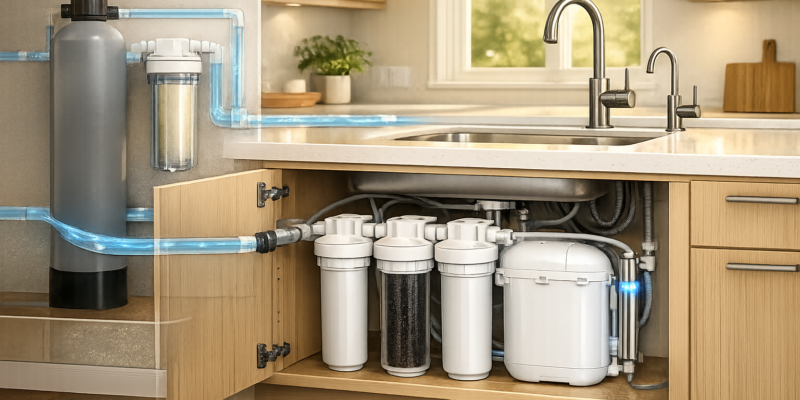
Water Filtration System Guide for Home

Water filtration system

A water filtration system removes contaminants like lead, PFAS, sediment, and bacteria from your water, ensuring it’s safer to drink and use. These systems also improve taste, reduce odors, and protect appliances from mineral buildup. Whether you rely on city water or a private well, the right filtration system can address specific issues and enhance water quality throughout your home.

Key Types:

  • Point-of-Use (POU): Filters water at specific fixtures (e.g., faucets); great for drinking and cooking water. Costs range from $100 to $3,200 (including installation).
  • Point-of-Entry (POE): Treats all water entering your home; ideal for whole-house filtration. Costs range from $2,000 to $10,000.

Core Technologies:

  1. Reverse Osmosis (RO): Removes up to 99% of dissolved solids like lead and fluoride but wastes water.
  2. Carbon Filtration: Eliminates chlorine, VOCs, and odors, but not heavy metals or microorganisms.
  3. UV Purification: Neutralizes bacteria and viruses but requires pre-filtered water to work effectively.

Maintenance:

  • Replace filters every 6–12 months.
  • RO membranes last 2–5 years; UV lamps need annual replacement.
  • Annual sanitization prevents bacterial buildup.

To choose the right system, test your water for contaminants, compare system types, and consider household water usage. Combining POU and POE systems often provides the best results.
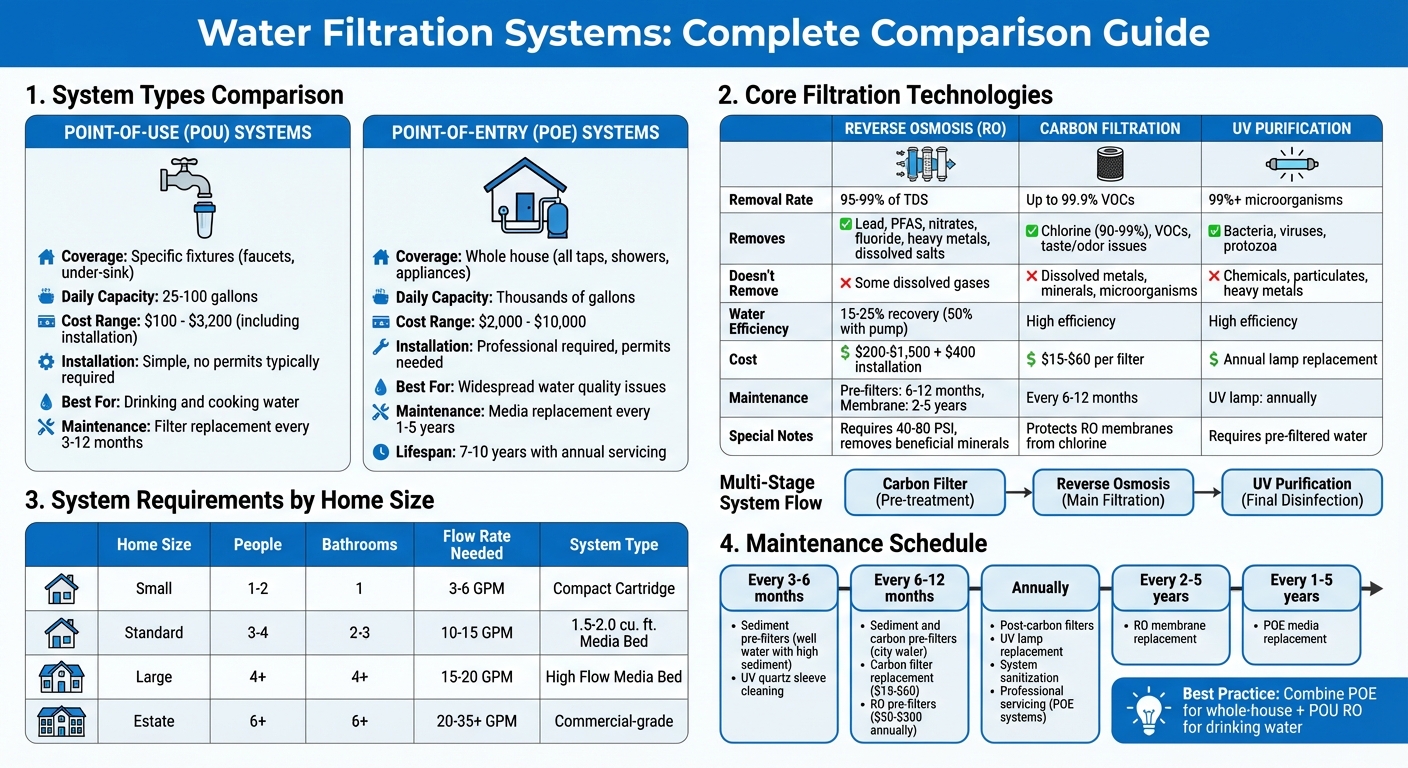
Water Filtration Systems Comparison: Types, Technologies, and Costs

Water Filtration Systems Comparison: Types, Technologies, and Costs

How to (properly) Choose a Water Filter

Types of Water Filtration Systems

Water filtration systems generally fall into two categories: Point-of-Use (POU) and Point-of-Entry (POE). POU systems target specific fixtures, while POE systems filter all the water entering your home. Choosing the right type depends on your water quality concerns and how you plan to use the filtered water.

“The real question isn’t which is better. It’s where in your home you need the protection.” – Crystal Quest

Point-of-Use (POU) Systems

POU systems are designed for localized filtration, attaching directly to fixtures like faucets or being installed under sinks. These systems are ideal for specific water needs, such as drinking or cooking, and typically produce between 25 and 100 gallons of clean water per day. They effectively remove contaminants like lead, fluoride, arsenic, PFAS, and nitrates.

Installation is relatively simple. Options like faucet filters and countertop units often cost under $100, while under-sink reverse osmosis (RO) systems can range from $400 to $1,200 for the unit alone. Professional installation for RO systems may increase the total cost to $1,600–$3,200. Since these systems don’t alter pressurized supply lines, they generally don’t require plumbing permits, making them a popular choice for renters.

However, POU systems do have some drawbacks. Their cartridges need frequent replacement – usually every 3 to 12 months. Additionally, residential RO systems are less efficient, recovering only 25% to 50% of input water as filtered water, with the rest being waste.

While POU systems are great for targeted use, they may not be sufficient for households needing broader water treatment.

Point-of-Entry (POE) Systems

POE systems filter water at the main supply line, ensuring that every tap, shower, and appliance in your home receives treated water. As Rogelio Alvarez from Monkey Wrench Plumbing explains, these systems provide whole-house filtration. They are capable of handling thousands of gallons per day, making them suitable for addressing widespread water quality issues like chlorine, sediment, iron, and hard water minerals.

For the 43 million Americans relying on private wells, POE systems are essential for protecting against bacteria and other contaminants that can affect the entire plumbing system. To maintain water pressure in a standard home with three bathrooms, a system rated for 15 to 20 gallons per minute is recommended.

Whole-house systems are more expensive than POU options, typically costing $2,000 to $5,000 including installation. In older homes with more complex plumbing, the cost can exceed $10,000. These installations are classified as plumbing work under the Uniform Plumbing Code and often require permits and inspections. On the plus side, maintenance is less frequent than POU systems, with media replacements needed every 1 to 5 years. With annual professional servicing, these systems can last 7 to 10 years.

For those seeking the best of both worlds, a combination of POE and POU systems is often recommended. A POE system can handle general filtration needs, such as removing chlorine and sediment, while a POU reverse osmosis system at the kitchen tap provides ultra-pure drinking water. This dual strategy offers comprehensive water treatment, setting the stage for exploring filtration technologies in more detail later.

Core Water Filtration Technologies

Choosing the right water filtration system starts with understanding how the main technologies work and what contaminants they target. Here’s a closer look at three key methods.

Reverse Osmosis (RO)

Reverse osmosis pushes water through a semi-permeable membrane with incredibly tiny pores (about 0.0001 microns). This process separates purified water from a concentrate that contains rejected contaminants, removing 95–99% of total dissolved solids (TDS) in the process.

“Reverse osmosis is the gold standard of home water filtration. It’s the only widely available technology that removes 95-99% of dissolved contaminants from your drinking water.”

  • Crystal Quest Water Filters

A typical residential RO system includes several components: sediment and carbon pre-filters, the RO membrane, and a post-filter to improve taste. It’s highly effective against heavy metals like lead, arsenic, and chromium, as well as dissolved substances such as fluoride and nitrates. It’s even recognized by the U.S. EPA as a top option for reducing regulated contaminants. These systems can produce between 25 and 100 gallons daily and need water pressure of 40–80 PSI to function well.

However, RO systems do have some downsides. They waste water – standard units recover only 15–25% of input water as purified water. High-efficiency models with permeate pumps can improve recovery to about 50%. Another issue is that RO removes beneficial minerals, so many systems include remineralization cartridges to restore calcium, magnesium, and proper pH levels. Costs for residential RO systems range from $200 to $1,500, with professional installation adding up to $400. Maintenance, including replacing pre-filters every 6–12 months, runs $50 to $300 annually. The RO membrane itself lasts 2 to 5 years when properly maintained. For households with hard water (above 7 grains), adding a water softener can help prevent scaling on the membrane.

Carbon Filtration

Unlike RO, which physically separates contaminants, activated carbon works through adsorption. This process traps contaminants on the porous surface of the carbon media. Granular activated carbon (GAC) can remove up to 99.9% of certain volatile organic compounds (VOCs), such as trichloroethylene (TCE).

“GAC is a proven technology with high removal efficiencies (up to 99.9%) for many VOCs, including trichloroethylene (TCE) and tetrachloroethylene (PCE).”

  • US EPA

Carbon filters are excellent for removing chlorine, VOCs, and impurities that affect taste and smell, making them ideal for improving municipal water quality. However, they don’t eliminate dissolved salts, heavy metals, or microorganisms. Carbon media can be made from materials like coconut shells, wood, or coal, each offering unique porous structures for trapping contaminants. In multi-stage systems, carbon pre-filters also protect RO membranes by removing chlorine, which could otherwise damage them. Replacement carbon filters cost between $15 and $60 and should be changed every 6–12 months.

UV Purification

UV purification is often used as a final step after RO and carbon filtration to tackle microbial threats. It uses ultraviolet light to disrupt the DNA of microorganisms, preventing them from reproducing. This method is highly effective against bacteria, viruses, and parasites, achieving inactivation rates of over 99%.

While UV systems are great for biological contaminants, they don’t remove physical particles, chemicals, or heavy metals. For UV to work effectively, water must first pass through sediment filters to eliminate particles that could block the UV light. UV lamps typically need to be replaced annually as part of routine maintenance.

By combining carbon pre-filters, RO membranes, and UV purification, you can create a comprehensive system that addresses chemical, mineral, and biological contaminants. Carbon filters protect RO membranes while improving taste, the RO membrane removes dissolved contaminants like lead and PFAS, and UV purification ensures water is free from harmful microbes.

Technology Best For What It Removes What It Doesn’t Remove
Reverse Osmosis Lead, PFAS, Nitrates, Fluoride, TDS Heavy metals, dissolved salts, ions (95–99%) Some dissolved gases
Carbon Filtration Chlorine, VOCs, Taste, Odor Chemicals, chlorine (90–99%), VOCs (up to 99.9%) Dissolved metals, minerals, microorganisms
UV Purification Bacteria, Viruses, Protozoa Biological contaminants (99%+) Chemicals, particulates, heavy metals

Choosing the Right Water Filtration System

Identifying Water Quality Issues

Before deciding on a water filtration system, it’s critical to understand the quality of your water. As Crystal Quest Water Filters explains:

“Think of it this way: you wouldn’t pick a medicine without knowing the diagnosis. Water filtration works the same way.”

If you’re connected to a municipal water supply, start by reviewing your Consumer Confidence Report (CCR). This annual report, published by your local utility, lists detected contaminants and their concentrations. You can use the EPA’s CCR tool to locate this report. Precision Today emphasizes the importance of this step:

“Testing is such a crucial first step because it eliminates the guesswork and ensures you get a water filter that actually resolves your home’s issues.”

Pay close attention to any contaminants that exceed Maximum Contaminant Levels (MCLs) – these are the areas you’ll need to address.

For those using well water, professional lab testing is essential since there’s no utility monitoring your supply. State-certified labs offer mail-in kits starting at about $159, which can test for bacteria, heavy metals like lead and arsenic, nitrates, and pesticides. Well water users should also be particularly mindful of iron, manganese, and bacteria, as these issues aren’t regulated like contaminants in municipal systems.

Once you’ve identified the contaminants in your water, you can match them to the appropriate filtration technology. For example:

  • Reverse Osmosis (RO): Effective for dissolved solids like lead, PFAS, and nitrates.
  • Activated Carbon: Targets chlorine, unpleasant odors, tastes, and volatile organic compounds (VOCs).
  • Ion Exchange Systems: Commonly used as water softeners, these address hard water minerals like calcium and magnesium when levels exceed 7 grains per gallon.
  • UV Sterilization: Ideal for neutralizing bacteria, viruses, and parasites, especially in well water.

With a clear understanding of your water’s issues, you can move on to evaluating system capacity and installation needs.

Evaluating System Requirements

After pinpointing your water’s contaminants, consider your household’s water usage and installation constraints. The size of your household and its water demands will dictate the type of system you need. For instance, a home with 3–4 people and 2–3 bathrooms typically requires a flow rate of 10–15 gallons per minute (GPM). If the system’s flow rate is too low, you may experience drops in water pressure.

There are two main types of systems to consider:

  • Point-of-Entry (POE) Systems: Installed at the main water line, these treat water for the entire house, including taps, showers, and appliances. They’re great for whole-house concerns like hard water or sediment but often require professional installation and possibly permits.
  • Point-of-Use (POU) Systems: Installed at a single faucet, usually under the kitchen sink, these are ideal for improving drinking water quality or for renters.

Here’s a quick guide to recommended flow rates based on home size:

Home Size Bathrooms Recommended Flow Rate System Type Example
Small (1–2 people) 1 3–6 GPM Compact Cartridge System
Standard (3–4 people) 2–3 10–15 GPM 1.5–2.0 cu. ft. Media Bed
Large (4+ people) 4+ 15–20 GPM High Flow Media Bed
Estate/Multi-unit 6+ 20–35+ GPM Commercial-grade System

Many households find that combining both POE and POU systems works best. For example, a whole-house water softener can protect plumbing and appliances, while a POU reverse osmosis system ensures high-quality drinking water. Keep in mind the space requirements for installation: under-sink RO systems need room for a storage tank and multiple filters, while whole-house systems require space near the main water line for larger tanks.

Cost and Maintenance Considerations

Water filtration systems come with a wide range of price tags. Basic cartridge-based whole-house systems may cost a few hundred dollars, while more advanced systems, like multi-stage or whole-house reverse osmosis setups, can run into the thousands. Point-of-use systems are generally less expensive upfront, ranging from $200 to $1,500 for residential RO units, but they may have a higher cost per gallon over time compared to whole-house options.

Maintenance is another factor to weigh. Cartridge systems typically require filter replacements every 6–12 months, with costs varying:

  • Carbon filters: $15–$60 per replacement
  • RO pre-filters: $50–$300 annually

RO membranes, if maintained properly, can last 2–5 years, while UV bulbs generally need annual replacement. High-capacity media bed systems can handle up to 1,000,000 gallons before the media needs replacing.

To stay on top of maintenance, set calendar reminders for filter changes. Expired filters not only lose effectiveness but can also release trapped contaminants back into the water. Look for systems with NSF/ANSI certifications, such as:

  • Standard 42: For chlorine removal
  • Standard 53: For lead reduction
  • Standard 58: For reverse osmosis systems

These certifications ensure that performance claims have been independently verified.

Finally, think about the total cost of ownership over 5–10 years, factoring in installation, filter replacements, and maintenance. While a more durable system may have a higher upfront cost, it can save you money in the long run compared to frequently replacing cheaper units.

Maintaining Your Water Filtration System

Regular Filter Replacement

Taking care of your water filtration system is just as important as picking the right one. Proper maintenance ensures clean water and keeps your system running efficiently.

A key part of this upkeep is regularly replacing filters. Overused filters let contaminants slip through long before you notice changes in taste or smell. As Mid Atlantic Water points out:

“Missing a filter change is the most common cause of poor-tasting water, slow flow, and premature membrane failure.”

Here’s a general guide for filter replacement:

  • Sediment and carbon pre-filters: Replace every 6–12 months for city water. If you’re on well water with high sediment, aim for every 3–6 months.
  • Reverse osmosis (RO) membranes: Typically last 2–4 years.
  • Post-carbon filters: Replace annually to avoid stale flavors.
  • UV lamps: Replace yearly, as they lose effectiveness after about 9,000 hours of use. Craig “The Water Guy” Phillips from Quality Water Treatment advises:

“UV lamps need annual replacements as they lose disinfection effectiveness after 9,000 hours of continuous operation.”

When replacing filters, follow these steps:

  1. Turn off the water supply and relieve pressure in the system before opening housings.
  2. Clean the housings with mild soap and a soft brush.
  3. Lubricate the O-ring with food-grade silicone grease to ensure a proper seal.
  4. Install the new filter cartridge and flush the system for 5–10 minutes to clear out carbon fines and trapped air. For RO systems, drain and refill the storage tank 2–3 times before using the water.

Cleaning and Sanitization

Even with timely filter changes, yearly sanitization is crucial to prevent bacterial buildup and biofilm formation inside your system. Plan to sanitize the system during a filter change for convenience.

To sanitize:

  • Mix 2 tablespoons of unscented household bleach with 1 gallon of water.
  • Remove the filters (but leave the RO membrane in place if applicable).
  • Pour the bleach solution into the housings and let it circulate for 30–60 minutes.
  • Flush the system thoroughly until no chlorine smell remains.

Important safety tip: Never mix bleach with ammonia or acidic cleaners, as this can create harmful fumes.

For UV systems, clean the quartz sleeve every 3–6 months to remove mineral deposits that can block UV light. If your system sits unused for an extended period, such as during a vacation, flush it thoroughly before drinking the water again to eliminate any stagnant water.

Troubleshooting Common Issues

After regular maintenance, you might still encounter a few hiccups. Here’s how to address them:

  • Low water pressure: This usually means clogged pre-filters or low pressure in the RO storage tank. Replace the filters first, then check the tank’s air pressure (it should be 7–10 PSI when empty).
  • Bad taste or odor: Indicates depleted carbon filters or bacterial growth. Replace the filters and sanitize the system.
  • Continuous running RO system: Check the shut-off valve and test the membrane’s TDS (total dissolved solids) rejection rate. If the rejection rate falls below 90%, replace the membrane.
  • Cloudy or milky water: Likely caused by air bubbles or carbon fines after a filter change. Flush the system for 30–60 seconds until the water clears.
  • Gurgling or sputtering sounds: Normal for the first 24–48 hours after maintenance as trapped air escapes.
  • Leaks: Usually due to dry or misaligned O-rings. Lubricate the O-rings and ensure they’re seated correctly. Avoid over-tightening housings – hand-tight plus a quarter turn with a wrench is enough.

To stay organized, keep a simple log of filter changes, monthly TDS readings, and any observations about water quality or pressure. This can help you catch issues early and extend the life of your system. With proper care, an RO system can last over 20 years, and handling maintenance yourself could save you $200–$300 annually compared to hiring a professional.

Conclusion

Choosing and maintaining the right water filtration system starts with understanding the specific contaminants in your water. Testing your water is a critical first step – whether you’re dealing with lead, PFAS, bacteria, or hard water, each issue demands a tailored solution. For example, reverse osmosis (RO) systems are excellent for removing most dissolved contaminants, UV sterilization is ideal for addressing biological risks in well water, and ion exchange systems effectively handle water hardness that can harm appliances. A targeted approach ensures all aspects of your water quality are properly managed.

The decision between a whole-house system and a point-of-use system comes down to your needs. Whole-house, or Point-of-Entry (POE), systems treat water for the entire home, protecting every faucet, shower, and appliance. This helps prevent scale buildup and extends the lifespan of items like water heaters and dishwashers. On the other hand, Point-of-Use (POU) systems focus on delivering highly purified water at a single location, like your kitchen sink. Many households opt for a combination of both – a whole-house system for general water treatment paired with an under-sink RO unit for drinking water purity. However, selecting the right system is only part of the equation – consistent upkeep is just as important.

Regular maintenance, such as timely filter replacements and annual sanitization, ensures your system runs efficiently and lasts longer. Keeping a simple log of filter changes and water quality checks can help identify problems early, and handling maintenance yourself can save money.

Beyond health benefits, water filtration systems offer practical economic and environmental advantages. They reduce the need for single-use plastic bottles, lower energy costs by preventing scale buildup in appliances, and cut down on plumbing and repair expenses. For those using private wells, reliable filtration is especially critical. Beyond these practical gains, the impact on daily life is undeniable.

Clean water improves everything from drinking and cooking to appliance performance. With the right system and proper care, you’re prioritizing your health, saving money, and ensuring safe, high-quality water throughout your home.

FAQs

Which filter removes my specific contaminant?

When it comes to choosing the right water filter, it all boils down to the specific contaminants in your water. For PFAS chemicals, such as PFOA and PFOS, look for filters that are certified to remove them. Granular activated carbon (GAC) filters are effective for tackling chlorine, lead, and heavy metals. If bacteria and viruses are your concern, UV systems are a solid choice. For sediment or nitrate problems, mechanical filters or ion exchange systems work best. The key is to test your water first and choose a filter specifically certified to address the contaminants you’re dealing with.

Do I need whole-house or under-sink filtration?

Choosing the right water filtration system depends on your specific needs. Whole-house systems treat all the water entering your home, making them a great choice if you’re looking to reduce contaminants across taps, showers, and even appliances. On the other hand, under-sink filters are installed at individual faucets, targeting drinking water or specific contaminants. While whole-house systems cover more ground, they tend to be more expensive. Under-sink systems, however, are simpler to install and maintain, offering a more focused solution.

How often should I service my system?

To keep your water filtration system running smoothly, regular maintenance is key. The service frequency depends on the type of filter you’re using:

  • Sediment filters: Replace every 3–6 months.
  • Carbon filters: Replace every 6–12 months.
  • Reverse osmosis membranes: Replace every 2–5 years.

Beyond replacing filters, you should sanitize storage tanks every three months and check Total Dissolved Solids (TDS) levels monthly. These steps help ensure your system delivers clean, high-quality water consistently.
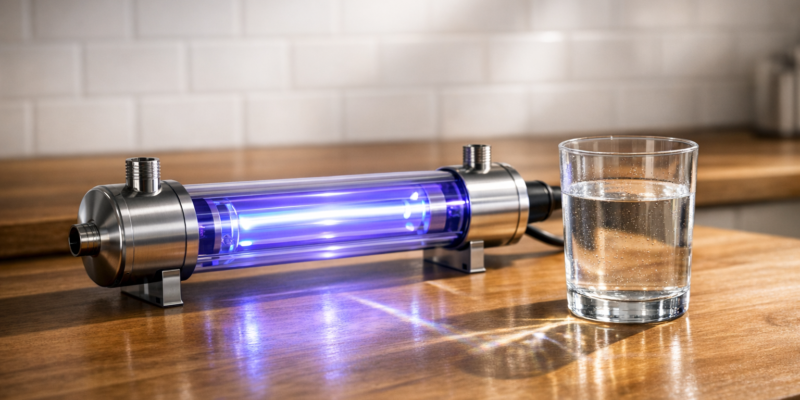
UV Water Treatment: UV-C Disinfection Guide

UV light water treatment

UV light water treatment is a chemical-free method to eliminate 99.99% of harmful microorganisms, including bacteria, viruses, and chlorine-resistant parasites like Cryptosporidium and Giardia. It uses UV-C light at 254 nanometers to disrupt microbial DNA, preventing reproduction and inactivating pathogens. This process is quick, effective, and does not alter water’s taste, odor, or pH.

Key Points:

  • How It Works: UV-C light damages microbial DNA, rendering them inactive.
  • Applications: Used in homes (well water), industries (food, beverage, aquaculture), and municipal systems.
  • Benefits: No chemicals, no taste change, low energy use (40–65 watts), and simple maintenance.
  • Limitations: Does not remove dissolved chemicals or metals, requires clear water (turbidity <1 NTU), and pre-filtration.

Cost Overview:

  • Residential systems: $895–$995 upfront, $2,400–$3,100 over 10 years.
  • Maintenance: Annual lamp replacement ($145–$160) and quartz sleeve cleaning.

Proper installation and maintenance, including pre-filtration and annual lamp replacement, ensure reliable performance for 10–15 years.

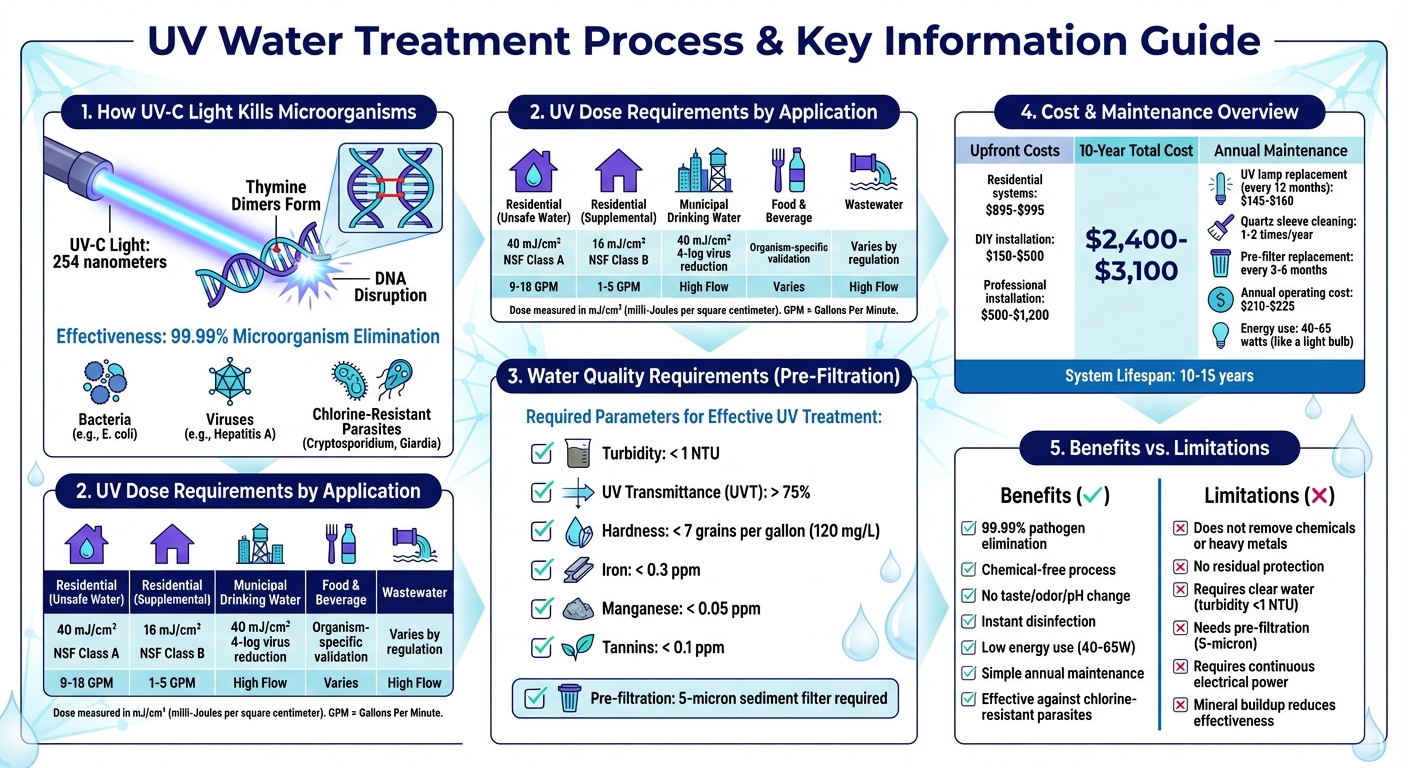
How UV Light Water Treatment Works: Complete Process and Requirements

How UV Light Water Treatment Works: Complete Process and Requirements

What is UV Disinfection and How Does it Work?

How UV Light Kills Microorganisms in Water

UV‑C light, operating within the 200 to 280-nanometer range, is most effective at around 265 nm for killing microorganisms. This wavelength is highly absorbed by the DNA and RNA of microorganisms as water passes through the UV chamber. The low-pressure mercury lamps commonly used in water treatment emit UV light at 253.7 nm, which is very close to this optimal range.

When UV‑C photons hit the genetic material of bacteria, viruses, or protozoa, they disrupt it by causing adjacent pyrimidine bases to bond together, creating dimers. In DNA, these are thymine dimers, while in RNA, they form uracil dimers. This bonding distorts the genetic strand, preventing replication enzymes from properly reading or copying the code. Without the ability to replicate, the microorganism becomes inactive and incapable of causing infection. Since this process doesn’t rely on metabolic pathways, UV treatment is also effective against antibiotic-resistant bacteria.

The dosage required to kill microorganisms varies. For a 90% kill rate, doses between 2,000 and 8,000 μJ/cm² are typically needed. In groundwater systems, achieving a 99.99% virus inactivation rate requires a minimum validated dose of 40 mJ/cm². Microorganisms are especially vulnerable to UV‑C because they haven’t evolved defenses against it – Earth’s ozone layer naturally blocks these wavelengths. This makes UV treatment particularly effective against chlorine-resistant parasites like Cryptosporidium, which needs at least 2,500 μW·s/cm² for a 90% reduction.

The success of UV disinfection also depends on water quality. Turbidity levels should stay below 1 NTU, as suspended particles can shield microorganisms from UV light. Pre-filtration to 5 microns or finer improves light penetration, ensuring thorough exposure. Additional information about system benefits and installation is covered in the next sections.

Benefits and Limitations of UV Water Treatment

Benefits of UV Water Treatment

UV water treatment relies on 254 nm light to disinfect water without using chemicals. This method effectively eliminates pathogens without affecting the water’s taste, odor, pH, or mineral content. The process is nearly instantaneous, occurring as water flows through the UV chamber. It’s particularly effective at neutralizing bacteria, viruses, and protozoa, achieving a 99.99% inactivation rate – even for chlorine-resistant organisms like Cryptosporidium and Giardia.

According to Aidan from Mid Atlantic Water:

UV disinfection is the fastest, most effective, and most affordable way to make well water microbiologically safe: no chemicals added, no taste change, and one straightforward maintenance step per year.

Maintenance is straightforward, involving an annual lamp replacement and occasional cleaning of the quartz sleeve. Energy usage is minimal, comparable to a standard 40–65 watt light bulb. Over 10 years, the total cost for residential systems is estimated at $2,400–$3,100, which includes the unit’s initial cost (around $895–$995) and replacement bulbs.

Limitations of UV Water Treatment

While UV treatment is highly effective against biological contaminants, it does not address dissolved chemicals or heavy metals. It also lacks residual disinfection, meaning treated water can be re-contaminated during storage or distribution. The system’s efficiency depends heavily on water clarity – cloudy water with suspended particles can shield microorganisms from UV light. To counter this, pre-filtration to 5 microns or finer is required, and water must meet specific quality standards (e.g., iron below 0.3 ppm, turbidity below 1 NTU, hardness under 7 grains per gallon, and UV transmittance above 75%).

Mineral buildup on the quartz sleeve can also block UV light, reducing effectiveness. Additionally, the system requires continuous electrical power, making it unusable during outages.

Benefits vs. Limitations Comparison Table

Feature Benefits Limitations
Contaminant Target Neutralizes 99.99% of bacteria, viruses, and protozoa Ineffective against dissolved chemicals and heavy metals
Water Chemistry Maintains taste, odor, and pH of water Needs high clarity (UVT >75%, turbidity <1 NTU)
Chemical Usage 100% chemical-free; no byproducts Cannot remove dissolved chemicals
Operation Provides instant disinfection Lacks residual protection against re-contamination
Maintenance Annual lamp replacement and occasional cleaning Requires pre-filtration (5-micron) to ensure effectiveness
Energy & Power Low energy use (similar to a 40–65 watt bulb) Requires uninterrupted electrical power

Next, we’ll explore the water quality standards necessary for optimal UV system performance.

Where UV Water Treatment is Used

UV water treatment systems play a crucial role across homes, businesses, and municipalities. With its proven ability to disinfect water effectively, these systems can be scaled to handle everything from a single faucet to large industrial operations. This adaptability allows UV treatment to meet the specific demands of residential, industrial, and municipal applications.

Residential Uses

In homes, UV systems are commonly installed to disinfect well water or to enhance the safety of municipal water. These systems can be configured as whole-house setups or as point-of-use (POU) systems, depending on water flow needs. Point-of-entry (POE) systems treat all water entering the home, while POU systems focus on individual faucets.

Private well owners often rely on UV systems to eliminate harmful microorganisms like E. coli, coliform bacteria, and parasites such as Cryptosporidium and Giardia. Even households connected to municipal water systems are turning to UV solutions, especially during boil-water advisories or to address chlorine-resistant pathogens. For instance, Texas issued over 3,000 boil-water notices in 2022 alone, prompting many homeowners to use UV systems as an added layer of protection.

Industrial Uses

Industrial and municipal facilities use UV treatment for a variety of purposes, including process water, wastewater, and drinking water disinfection. In the food and beverage industry, UV systems comply with FDA regulations (21 CFR Part 110/117) and ensure water is disinfected without adding chemicals that could alter product taste or safety. Similarly, aquaculture facilities use UV to protect fish from pathogens in recirculating water systems, avoiding chemical residues that could harm aquatic life.

Municipal water treatment plants also depend on UV technology to meet EPA standards, such as controlling Cryptosporidium in surface water supplies under the Long Term 2 Enhanced Surface Water Treatment Rule. These facilities typically use medium-pressure (MP) or low-pressure high-output (LPHO) UV lamps, which can handle much higher flow rates than residential systems.

UV Dose Requirements by Application

Application UV Dose Range Flow Rate Example
Residential (Unsafe) 40 mJ/cm² (NSF Class A) 9–18 GPM
Residential (Supplement) 16 mJ/cm² (NSF Class B) 1–5 GPM
Municipal Drinking Water 40 mJ/cm² (4-log virus) High Flow (Validated)
Food & Beverage Process Organism-specific validation Varies by facility
Wastewater Disinfection Varies by local regulation High Flow

NSF Class A systems, delivering a UV dose of 40 mJ/cm², are designed for water considered microbiologically unsafe. These systems often include features like sensors, alarms, and automatic shut-off mechanisms for added safety. On the other hand, Class B systems, which provide a UV dose of 16 mJ/cm², are intended for supplemental treatment of water already deemed safe.

Pre-Filtration and Water Quality Requirements

For UV disinfection to work properly, the UV rays must have a clear path to target microorganisms. Particles and minerals in the water can block or shield pathogens from the UV light, making pre-filtration a critical step for any UV system. Without proper filtration, these obstructions can significantly reduce the system’s effectiveness.

Suspended particles like sediment, grit, or rust can create shadows that block the UV dose needed to neutralize microorganisms. Minerals such as calcium and magnesium contribute to scaling, while iron and manganese can stain the quartz sleeve, reducing the UV light’s ability to penetrate the water effectively.

As ESP Water Products puts it:

If water is murky or contains ‘floaties,’ UV light cannot effectively reach microorganisms because the rays are blocked by these other particles.

To ensure the UV system operates efficiently, the water must meet specific quality standards before UV exposure. A key metric for assessing water clarity is UV Transmittance (UVT), which measures the percentage of UV light at 254 nanometers that can pass through 1 cm of water. For effective UV disinfection, UVT should be at least 75%, and turbidity (a measure of water cloudiness) should be below 1 NTU.

Here’s a quick look at recommended water quality limits to maintain UV system performance:

Parameter Recommended Limit for UV Effectiveness
Turbidity < 1 NTU
UV Transmittance (UVT) > 75%
Hardness < 7 grains per gallon (120 mg/L)
Iron < 0.3 ppm
Manganese < 0.05 ppm
Tannins < 0.1 ppm

To achieve these standards, install a 5-micron sediment filter directly before the UV system. If the water hardness exceeds 7 grains per gallon, a water softener should also be used to prevent mineral buildup on the quartz sleeve. For private well owners, a complete water analysis is strongly recommended to check for iron, manganese, and tannins, as these contaminants can interfere with UV penetration. Always position UV systems as the final step in the treatment process, following sediment filters and water softeners, to ensure the water is as clear as possible.

How to Install a UV Water Treatment System

Installing a UV water treatment system is a project you can tackle yourself with the right tools and preparation. On average, the equipment costs between $150 and $500 if you’re doing it yourself, or $500 to $1,200 if you decide to hire a professional. Here’s a step-by-step guide to help you set up your system effectively.

Choose the Right Location

The UV chamber needs to be installed indoors to protect it from freezing temperatures and harsh weather. Place it on your main cold water line, after all pre-treatment equipment. As Aidan from Mid Atlantic Water emphasizes:

UV purification must always be the last step in your treatment chain.

Install the chamber vertically to prevent air pockets, which can reduce disinfection efficiency. Make sure there’s at least 24 inches of clearance above or below the unit for easy access when replacing the UV lamp and quartz sleeve during annual maintenance.

Gather the Necessary Materials

Before you start, ensure you have everything you need:

  • UV unit (including the stainless steel chamber, UV lamp, quartz sleeve, and ballast)
  • 5-micron sediment pre-filter
  • Shutoff valves for both sides of the chamber
  • Pipe fittings (usually 3/4-inch or 1-inch NPT)
  • Thread seal tape
  • Silicone lubricant for O-rings
  • Mounting bracket

For the electrical connection, you’ll need access to a standard 120V GFCI-protected outlet. Ray P., a verified buyer, offers a key piece of advice:

When you’re installing the UV light, make sure you install copper lines to the light. PEX does not work.

Using copper pipes or fittings ensures a sturdy, leak-proof connection.

Step-by-Step Installation

  1. Turn Off the Water Supply: Shut off the main water line to avoid any mess during installation.
  2. Prepare the Mounting Area: If needed, mount a plywood board for added stability.
  3. Install the Pre-Filter: Attach the 5-micron sediment filter first, as it protects the UV chamber from debris.
  4. Mount the UV Chamber: Use threaded fittings and seal tape to secure the chamber. Insert the quartz sleeve carefully – never touch it with bare hands, as oils from your skin can create hot spots and damage the glass.
  5. Insert the UV Lamp: Place the lamp inside the quartz sleeve and connect it to the ballast.
  6. Set Up the Controller: Mount the controller horizontally above or beside the UV chamber. Create drip loops in the cords to stop water from traveling down to the outlet.
  7. Power Up and Test: Plug the controller into the GFCI outlet, turn the water back on, and open faucets to bleed air from the lines. Check for leaks at all connections before regular use.

Post-Installation Disinfection

Once the system is installed, disinfect your plumbing with bleach to eliminate any residual bacteria. This final step ensures your water is safe and ready for use immediately.

How to Maintain UV Water Treatment Systems

Once installed, keeping your UV water treatment system in top shape is straightforward but crucial. The key task? Replace the UV lamp every 12 months, even if it still emits visible light. By the end of a year, the UV-C output can drop to just 60–70% of its original strength, reducing its ability to neutralize bacteria and viruses effectively. Replacement lamps usually cost between $145 and $160, depending on the model.

Another important step is cleaning the quartz sleeve. Mineral deposits, iron, and manganese can accumulate on the sleeve over time, blocking the UV-C light. Dr. Elena Brooks, a Smart Hydration Specialist, highlights this as a common issue:

The number one reason a UV system underperforms is surprisingly simple: a dirty or damaged quartz sleeve around the lamp.

Make it a habit to clean the sleeve at least once a year when replacing the lamp. If you’re dealing with hard water or high iron levels, clean it every 3 to 6 months. Use a soft cloth and a cleaning solution like white vinegar, citric acid, or a commercial product such as CLR or Lime-A-Way. Always wear clean gloves during this process – skin oils can create hot spots that crack the glass. Plan to replace the sleeve every 2 to 3 years, as it may become permanently cloudy over time.

Don’t forget about the O-rings and seals. These should be replaced annually during the lamp change to prevent leaks caused by heat-related wear and tear. Additionally, change the 5-micron pre-filter every 3 to 6 months to stop sediment from building up on the sleeve or shielding microbes from the UV light.

To ensure consistent disinfection, run the system continuously rather than turning it on and off. Power cycling can reduce the lamp’s lifespan, so keeping it on 24/7 is optimal. Annual operating costs for a UV system typically range from $210 to $225. By following these maintenance steps, you can keep your system running efficiently and your water safe.

Conclusion

UV water treatment eliminates 99.99% of harmful microorganisms while preserving the water’s natural taste, odor, and pH balance. Whether you’re safeguarding your family from bacteria in well water or ensuring clean water for industrial processes, UV systems provide a dependable and environmentally friendly option. Plus, they operate with minimal energy – comparable to a 40-watt light bulb.

This method is particularly effective against chlorine-resistant parasites like Cryptosporidium and Giardia. From small residential systems to massive municipal facilities handling billions of gallons daily, UV treatment can meet a wide range of water safety demands.

To ensure optimal performance, proper installation and maintenance are key. Position the UV system as the final step in your water treatment process, following sediment and iron filtration. This helps maintain the required water quality, with iron levels below 0.3 ppm, hardness under 7 gpg, and turbidity less than 1 NTU.

Routine upkeep is straightforward. Replace the UV lamp annually and clean the quartz sleeve to keep the system running reliably for 10 to 15 years. Over a decade, the total cost of ownership averages between $2,400 and $3,000 – a reasonable price for consistent and eco-conscious water safety. By following these steps, your UV system can remain a dependable solution for clean, safe water.

FAQs

Do I need a UV system if I’m on city water?

Whether you need a UV system for city water largely depends on your specific circumstances. Municipal water is treated to meet safety standards, but aging infrastructure or rare contamination events can sometimes let microorganisms slip through. Adding a UV system can serve as an extra safeguard, effectively neutralizing harmful pathogens like E. coli and Giardia. It’s a practical way to boost your household’s water safety and enjoy greater peace of mind.

What filters should go before a UV light?

Pre-filters, such as sediment or particle filters, play a crucial role when used before a UV light system. They work by removing larger contaminants and organic matter from the water. This not only improves the efficiency of the UV system but also helps safeguard it, ultimately prolonging its lifespan.

What happens to UV treatment during a power outage?

During a power outage, UV water treatment systems lose their ability to disinfect water because they rely on electricity to function. Once the power comes back, the system will start working again. However, it’s crucial to properly restart and maintain the system to ensure it continues to work effectively.

Water Softeners: Home Buyer’s Guide

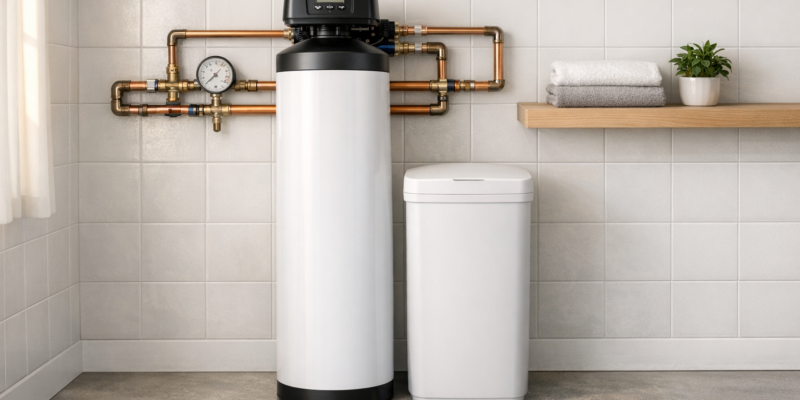
Water Softeners

Hard water affects over 85% of U.S. households, leading to clogged pipes, reduced appliance lifespans, and higher energy costs. A water softener solves this by removing minerals like calcium and magnesium through ion exchange, protecting plumbing, improving water quality, and saving money over time.

Key Takeaways:

  • What it does: Replaces hard water minerals with sodium or potassium, preventing scale buildup and improving efficiency.
  • Why it matters: Hard water clogs pipes, damages appliances, and requires more soap for cleaning.
  • How it works: Uses resin beads to trap minerals, regenerating with a brine solution to stay effective.
  • Types available: Salt-based softeners for high hardness, salt-free conditioners for low maintenance, and dual-tank systems for continuous use.
  • Costs: Systems range from $1,500 to $4,800 (installation included), with annual salt expenses of $60–$100.

Softened water extends appliance lifespans, reduces energy bills, and enhances everyday tasks like cleaning and bathing. Testing your water’s hardness is the first step to choosing the right system for your home.

Water Softener Buyer’s Guide

How Water Softeners Work

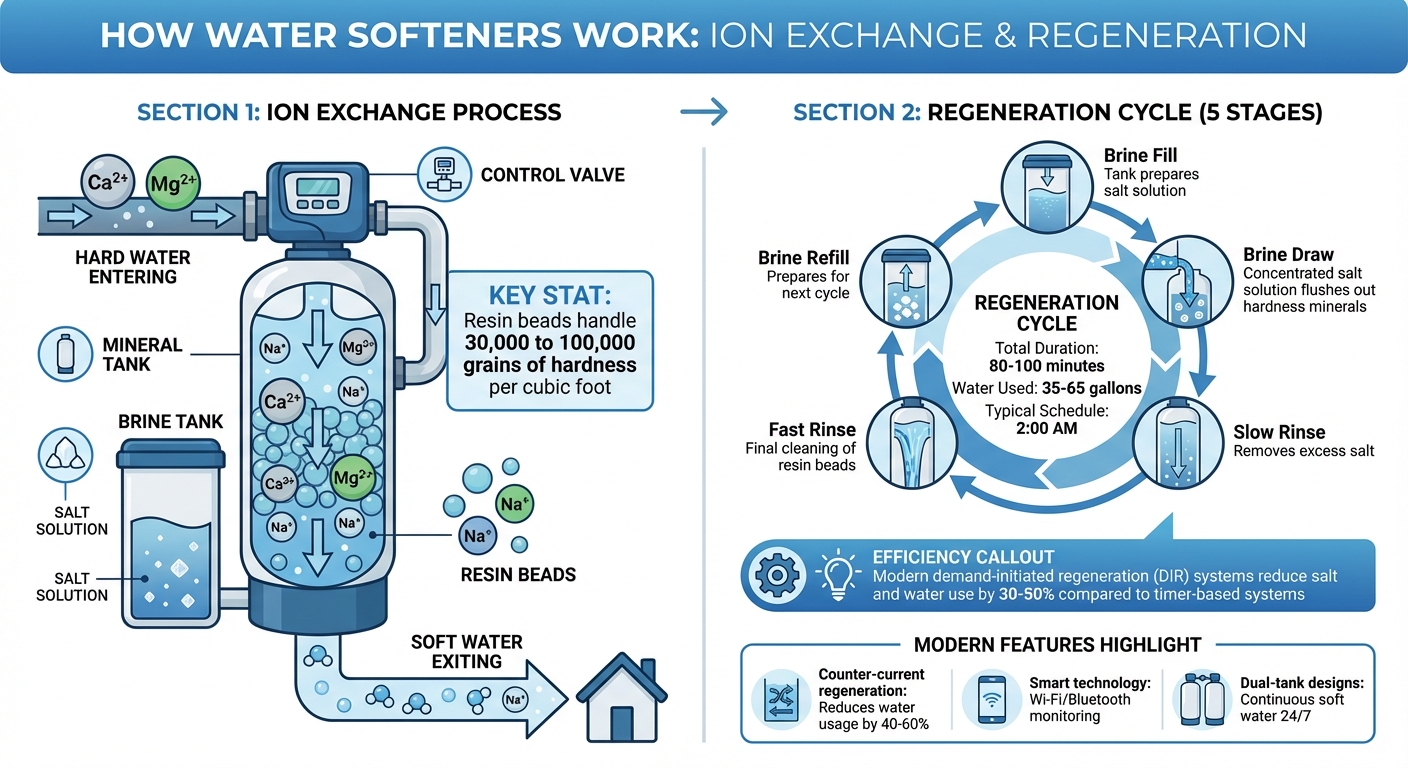
How Water Softeners Work: Ion Exchange and Regeneration Process

How Water Softeners Work: Ion Exchange and Regeneration Process

The Ion Exchange Process

Water softeners rely on a fascinating process called ion exchange. Inside the mineral tank, polystyrene resin beads – charged with sodium or potassium ions – play a key role. As hard water flows through, these beads attract and trap calcium and magnesium ions (the minerals responsible for water hardness), replacing them with sodium ions in the process. The system includes three main parts: the mineral tank (holding the resin), the brine tank (storing salt for regeneration), and the control valve, which regulates water flow and activates the regeneration cycle.

The resin beads are impressively efficient, capable of handling anywhere from 30,000 to 100,000 grains of hardness per cubic foot before needing to recharge. Once the beads reach their limit, the system kicks off a regeneration cycle to restore their softening ability.

The Regeneration Cycle

When the resin beads become saturated with minerals, the regeneration cycle begins. This process flushes out the trapped calcium and magnesium ions and replenishes the beads with fresh sodium ions. To avoid disrupting your water usage, most systems are programmed to regenerate during the early morning hours, typically around 2:00 AM.

A full regeneration cycle takes about 80 to 100 minutes and uses 35 to 65 gallons of water – similar to the amount needed for a single load of laundry. The cycle consists of five key stages: brine fill, brine draw, slow rinse, fast rinse, and brine refill. During the brine draw phase, a concentrated salt solution flushes out the hardness minerals, while the rinsing phases remove excess salt and prepare the resin for continued use.

Modern systems often feature demand-initiated regeneration (DIR), which uses flow meters to monitor water usage and only regenerates when necessary. This approach cuts salt and water use by 30% to 50% compared to older systems that regenerate on a fixed schedule. Thanks to advancements in technology, these systems are now more efficient than ever.

Modern Water Softener Features

Today’s water softeners come packed with features designed to improve efficiency and convenience. Many systems use demand-initiated and counter-current regeneration, which minimizes resource consumption while ensuring uninterrupted service. For example, demand-initiated systems can cut annual salt use from 15–20 bags to under 10 bags. Counter-current regeneration, where brine flows in the opposite direction, reduces water usage during regeneration by 40% to 60%.

Modern units often include smart technology like Bluetooth or Wi-Fi connectivity, giving homeowners real-time access to monitor salt levels, track water usage, and receive maintenance alerts. Advanced control valves with optical sensors and hydraulically-balanced pistons ensure precise operation. Some models even feature dual-tank designs, allowing one tank to stay in service while the other regenerates, so you never run out of soft water.

For homes with well water containing small amounts of iron or chlorine, 10% crosslink resin is a worthwhile upgrade. It lasts 20% to 30% longer than standard 8% resin but comes with a higher price tag. Additionally, many modern systems include power outage protection, with non-volatile memory to retain system settings during electrical failures. These features make today’s water softeners more efficient, durable, and user-friendly than ever before.

Types of Water Softeners

Salt-Based Water Softeners

Salt-based systems rely on ion exchange to remove calcium and magnesium from water, replacing them with sodium ions. This process not only prevents scale buildup but also improves soap lathering. These systems are incredibly effective, achieving up to a 99% removal rate for minerals in very hard water.

“A water softener uses ion exchange to remove calcium and magnesium… It’s the only proven method for truly softening water.” – Aidan, Expert, Mid Atlantic Water

Salt-based water softeners are ideal for water hardness levels above 7.5 grains per gallon (GPG) and are the go-to option if your water contains more than 0.3 mg/L of iron. However, they require regular salt refills, which can cost between $60 and $100 annually. High-efficiency models are designed to minimize salt usage, requiring only 3 to 4 pounds of salt per 1,000 grains of hardness removed. Installation costs for these systems range from $400 to $2,500, depending on size and features.

If you’re looking for a system that doesn’t use salt, a salt-free conditioner might be a better fit.

Salt-Free Water Conditioners

Salt-free systems take a different approach by neutralizing minerals rather than removing them. Using Template Assisted Crystallization (TAC), these systems turn calcium and magnesium into tiny crystals that won’t stick to surfaces, effectively preventing scale formation.

“The battle of hardness removal versus mineral transformation defines the core difference between these competing water solutions.” – Craig “The Water Guy” Phillips, Founder, Quality Water Treatment

These conditioners are best suited for moderate water hardness levels (3.5 to 7 GPG). They require little maintenance – typically just an annual sediment filter replacement – and don’t produce wastewater. However, they don’t technically soften water or improve soap lathering. For individuals on sodium-restricted diets or in areas where salt-based systems are restricted, these systems are an excellent choice. Prices generally range from $500 to $3,000.

For households with high water usage or specific needs, dual-tank systems might be worth considering.

Dual-Tank and High-Capacity Systems

Dual-tank systems are designed for continuous soft water 24/7, thanks to their two mineral tanks and one brine tank setup. While one tank is in use, the other regenerates or remains on standby. This seamless switching ensures uninterrupted access to softened water.

“For households that use water around the clock, businesses, or homes with very high water demand, [dual-tank] is the way to go.” – Aidan, Expert, Mid Atlantic Water

These systems are ideal for large families (5+ people), businesses, or homes with water hardness levels exceeding 25 grains. They can handle flow rates of up to 60 gallons per minute and reduce salt usage by as much as 40% compared to single-tank models. By distributing the workload, dual-tank systems help extend the life of plumbing and minimize maintenance needs. Costs for residential models typically range from $1,000 to $3,500, while commercial-grade systems can exceed $6,000.

Choosing the Right Water Softener

Testing Your Water Hardness

Before buying a water softener, you need to know your water’s hardness level. Hardness is measured in grains per gallon (GPG), where 1 GPG equals 17.1 parts per million (ppm). You can test this with home strips, check your municipal Consumer Confidence Report, or opt for professional lab testing (costing $50–$150) for detailed results on calcium, magnesium, and iron levels.

“Understanding water hardness units is critical for proper system sizing.”
– Craig “The Water Guy” Phillips, Founder, Quality Water Treatment

If your water has iron – common in well water – add 5 GPG for every 1 ppm of iron to your total hardness. Similarly, an acid neutralizer can increase hardness by 4 to 6 GPG. Accurate testing ensures your system is neither overworking nor underperforming. Once you have precise hardness data, you can pick a system with the right capacity.

What to Consider When Buying

To estimate the capacity you need, start by calculating your household’s daily grain demand. Multiply the number of people in your home by 75–80 gallons (the average daily water use per person) and then by your water hardness in GPG. Next, multiply that number by the number of days in your preferred regeneration cycle (usually 5 to 7 days). This will give you the total capacity required.

Flow rate is another key factor. Most homes need systems that handle 8 to 12 gallons per minute (GPM), while larger homes with multiple bathrooms may need 15+ GPM. Look for models with demand-initiated regeneration, which monitor water usage and can cut salt consumption by up to 30%. Also, ensure the system is NSF/ANSI 44 certified and comes with at least a 10-year warranty.

Here’s a quick guide to help you match capacity with your household size and water hardness:

Household Size Daily Water Use Hardness Level Recommended Capacity
1–2 People 75–150 Gallons 10 GPG 24,000 – 32,000 Grains
3–4 People 225–300 Gallons 10 GPG 32,000 – 40,000 Grains
5–6 People 375–450 Gallons 10 GPG 48,000 – 64,000 Grains

Once you’ve determined the right size, weigh the upfront cost against the long-term savings.

Water Softener Costs and Value

By 2026, water softener equipment alone will cost between $700 and $3,500. Professional installation typically adds $500 to $1,200, bringing the total to $1,500–$4,800 for most homeowners. Entry-level systems ($700–$1,200) are suitable for smaller households with moderate hardness, while mid-range systems ($1,200–$2,400) fit average family needs. High-capacity or dual-tank systems start at $2,400 and can exceed $3,500.

“A water softener is the only permanent fix… Prices range from $1,495 to $2,695 for residential systems. That’s far less than replacing a water heater destroyed by scale.”
– Aidan, Water Treatment Expert, Mid Atlantic Water

Investing in the right system protects your appliances and saves money. For example, scale buildup can reduce water heater efficiency by 25% to 48%, while soft water can cut soap and detergent costs by over $200 annually. Maintenance costs are relatively low, with annual salt expenses ranging from $60 to $100. Plus, quality control valves often last 15 to 20 years, and resin beds typically hold up for 10 to 15 years. If you’re using well water, consider 10% crosslink resin, which lasts 20% to 30% longer than standard 8% resin.

Maintaining Your Water Softener

Taking care of your water softener is crucial to keeping your water soft and your plumbing in good shape. Regular maintenance not only ensures your system runs smoothly but also protects your appliances and plumbing from hard water damage.

Adding Salt to the Brine Tank

Check your brine tank’s salt levels at least once a month. Most households need to refill the salt every 4–6 weeks, though some may stretch to 6–8 weeks depending on water usage and hardness. Ideally, the salt level should stay between one-quarter and one-half full, with the salt resting about 3 inches above the water.

For the best results, use evaporated salt pellets. They’re over 99.9% pure and dissolve cleanly, leaving little to no residue. Solar salt crystals, with around 99.6% purity, are another solid option. Stay away from rock salt – it contains impurities that can form sludge and clog your system. On average, a family of four with moderately hard water will go through 40 to 80 pounds of salt per month, costing about $5 to $10.

“Salt is the lifeblood of your water softener – without it, hard water minerals win the battle against your home’s plumbing and appliances.”
– Craig “The Water Guy” Phillips, Founder, Quality Water Treatment

Be sure to check for salt bridges monthly by gently pushing a broom handle into the tank. If you find a hard crust with an empty space underneath, break it up right away to keep the system regenerating properly. Also, avoid overfilling the tank beyond two-thirds full, as this can cause the salt to harden into a thick paste.

Managing salt levels properly is key to keeping your water softener running efficiently.

Cleaning and Inspecting Components

Clean your brine tank once a year with soapy water or vinegar to remove sediment and bacteria. For areas with high iron content in the water, use a resin cleaner like Iron Out every 3–6 months to keep the resin beads working effectively. These beads typically last 10 to 15 years with proper care.

Inspect key parts of your system regularly, including the venturi, bypass, intake, and outtake valves, to ensure there are no blockages. Perform an annual sanitization cycle using a bleach or vinegar solution to prevent bacterial growth.

“A well-maintained water softener provides years of scale-free, spot-free water while protecting your plumbing and appliances.”
Southern California Well Service

If you notice salty-tasting water, mineral buildup, or soap that doesn’t lather well, it’s a sign your system needs attention. Clean the brine tank, add resin cleaner, and run a manual regeneration cycle to flush out the system.

Using Smart Maintenance Features

Modern water softeners now come with smart features that simplify maintenance. Systems with Wi-Fi connectivity allow you to monitor salt levels, water quality, and performance directly from your smartphone. Real-time alerts can notify you when salt levels are low, water quality changes, or a regeneration cycle is due, making upkeep much easier.

Demand-initiated regeneration (DIR) systems are especially efficient, adjusting to your water usage and cutting salt and water consumption by up to 25% compared to older timer-based models.

“Smart integration maximizes system performance, delivering critical alerts when you need them most.”
– Craig “The Water Guy” Phillips, Founder, Quality Water Treatment

Set up push notifications to ensure your salt levels stay between one-third and one-half full. If you’re heading out of town, activate vacation mode to pause regeneration cycles. This saves both salt and water while extending the life of your resin bed. Many systems also feature digital displays that show remaining capacity, water usage, and diagnostics, helping you catch potential issues early. Make it a habit to review these diagnostics monthly to keep everything running smoothly.

Benefits of Installing a Water Softener

Protecting Plumbing and Appliances

Hard water is a challenge for many U.S. households, and its effects can be costly. Minerals like calcium and magnesium create scale deposits inside pipes, which clog them, reduce heating efficiency by 25–40%, and shorten the lifespan of appliances by 30–50%. This can lead to expensive repairs, such as replacing a water heater (around $1,200) or, in severe cases, re-piping an entire home, which can cost between $5,000 and $15,000.

“It can shorten the life of any appliance that uses hot water.”
– Dave Jones, Master Plumber, Roto-Rooter

A water softener eliminates these minerals through ion exchange, keeping pipes clear, heating elements clean, and appliances running efficiently for years. Beyond extending the life of your home systems, softened water also improves the overall quality of daily water use.

Better Water Quality for Daily Use

Softened water makes a noticeable difference in everyday tasks. Without the mineral residue left by hard water, skin feels smoother, hair becomes more manageable, and laundry comes out softer and brighter with less static cling. You’ll also say goodbye to cloudy film on dishes, stubborn water spots on glassware, and crusty buildup on shower fixtures.

“Hardness can dry out skin, and there’s some evidence that high hardness can be a risk factor in exacerbating eczema.”
– Sam Bear, Senior Research Scientist, Tap Score

From clearer dishes to a more enjoyable shower experience, the benefits of softened water are immediate. These improvements not only enhance daily life but also contribute to long-term savings.

Saving Money Over Time

Investing in a water softener can lead to significant financial savings over time. Hard water can cost a household up to $3,061 annually, while softened water improves energy efficiency by 29%, extends appliance life by 30–50%, and cuts cleaning product expenses in half, potentially saving over $15,600 in ten years. For example, electric water heaters battling scale buildup may use 27% more energy, and avoiding such inefficiency can save approximately $163.20 annually in plumbing maintenance costs. With appliances lasting longer, homeowners could save an additional $3,000 to $5,000 in replacement costs over 10 to 15 years.

While the annual cost of salt for a water softener ranges from $60 to $100, the savings and protection it provides far outweigh this minimal expense.

Conclusion

Hard water impacts more than 85% of U.S. households, leading to problems like scale buildup in water heaters, clogged pipes, and reduced appliance lifespans. Water softeners address this by removing calcium and magnesium through ion exchange, helping to protect plumbing and improve water quality.

To get started, consider testing your water through a professional lab. These tests typically cost between $50 and $150 and can identify hardness levels, pH, and other contaminants. If your water hardness exceeds 7 grains per gallon, treatment is usually recommended.

“I don’t recommend treating your water in an information vacuum.”
– Sam Bear, Senior Research Scientist, Tap Score

Once you have accurate water data, select a water softener that matches your household’s needs. To size it correctly, calculate your daily grain demand by multiplying the number of people in your home by 75 gallons, then multiply that by your water’s hardness level. Choosing the wrong size can result in frequent regeneration cycles or wasted capacity.

Proper installation is equally important. A professional installer can ensure the system is placed correctly, includes an effective bypass for outdoor faucets, and complies with local plumbing codes. Regular maintenance, such as monthly salt checks and annual servicing, can extend the system’s lifespan to 10–15 years. Over time, this investment pays off with lower energy bills, fewer repairs, and longer-lasting appliances.

FAQs

Will softened water raise sodium in my drinking water?

Yes, softened water does add a small amount of sodium – around 7.5 mg per grain of hardness removed. While this is generally minimal, it might be worth noting for those managing sodium intake, such as individuals with hypertension. If you’re concerned about this, one option is to explore alternatives like a reverse osmosis system for your drinking water. Consulting a professional can help you determine the best solution for your needs.

Do I need a separate filter with a water softener?

If you’re wondering whether you need a water filter along with a softener, it often comes down to your water quality. Water softeners handle hardness caused by minerals like calcium and magnesium. However, they don’t tackle contaminants like chlorine, bad odors, or other impurities.

For those issues, a separate filter – like a carbon filter – can be a great solution. Usually, this filter is installed before the softener. Why? It helps protect the softener from harsh chemicals and provides more thorough water treatment for your home.

How do I know my softener is sized correctly for my home?

To determine the right size for your water softener, start by estimating your household’s daily water usage. On average, each person uses about 50 to 100 gallons per day. Next, measure your water hardness level in grains per gallon (gpg) – a key factor in choosing the right system.

Once you have these numbers, match them to the softener’s grain capacity. For smaller households, a system with 24,000 to 32,000 grains should suffice. Larger families, however, might need a unit with 48,000 grains or more to handle the demand.

Don’t forget to think ahead – factor in any possible future changes in water usage. Also, make sure you have enough space for installation to keep the system running smoothly.

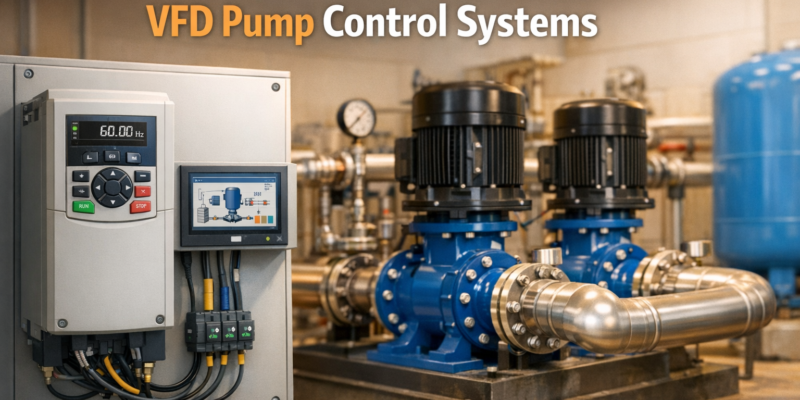
Ultimate Guide to VFD Pump Control Systems

Ultimate Guide to VFD Pump Control Systems

Did you know? Pumps consume over 30% of the electricity in U.S. industries, yet much of this energy is wasted when pumps run at full speed, regardless of demand. Variable Frequency Drives (VFDs) are a game-changer, reducing energy costs by 30-50% by adjusting motor speeds to match real-time needs.

Key Takeaways:

  • What is a VFD? A device that controls motor speed by altering power frequency and voltage, offering precise flow and pressure control.
  • Why it matters: VFDs save energy, reduce wear on equipment, and minimize maintenance costs by avoiding mechanical stress and pressure surges.
  • Applications: HVAC, water systems, irrigation, and industrial processes like chemical dosing and wastewater management.
  • Energy savings: A 10% speed reduction can cut power use by 27%, with potential savings of up to 60%.
  • How it works: Sensors and PID controllers ensure pumps operate efficiently and safely, adjusting speed based on demand.
  • Benefits: Lower energy bills, extended equipment life, and improved system reliability.

By using VFDs, facilities can significantly cut operating costs and improve the longevity of pump systems. Keep reading to learn how they work, where they’re used, and how to choose the right one for your needs.

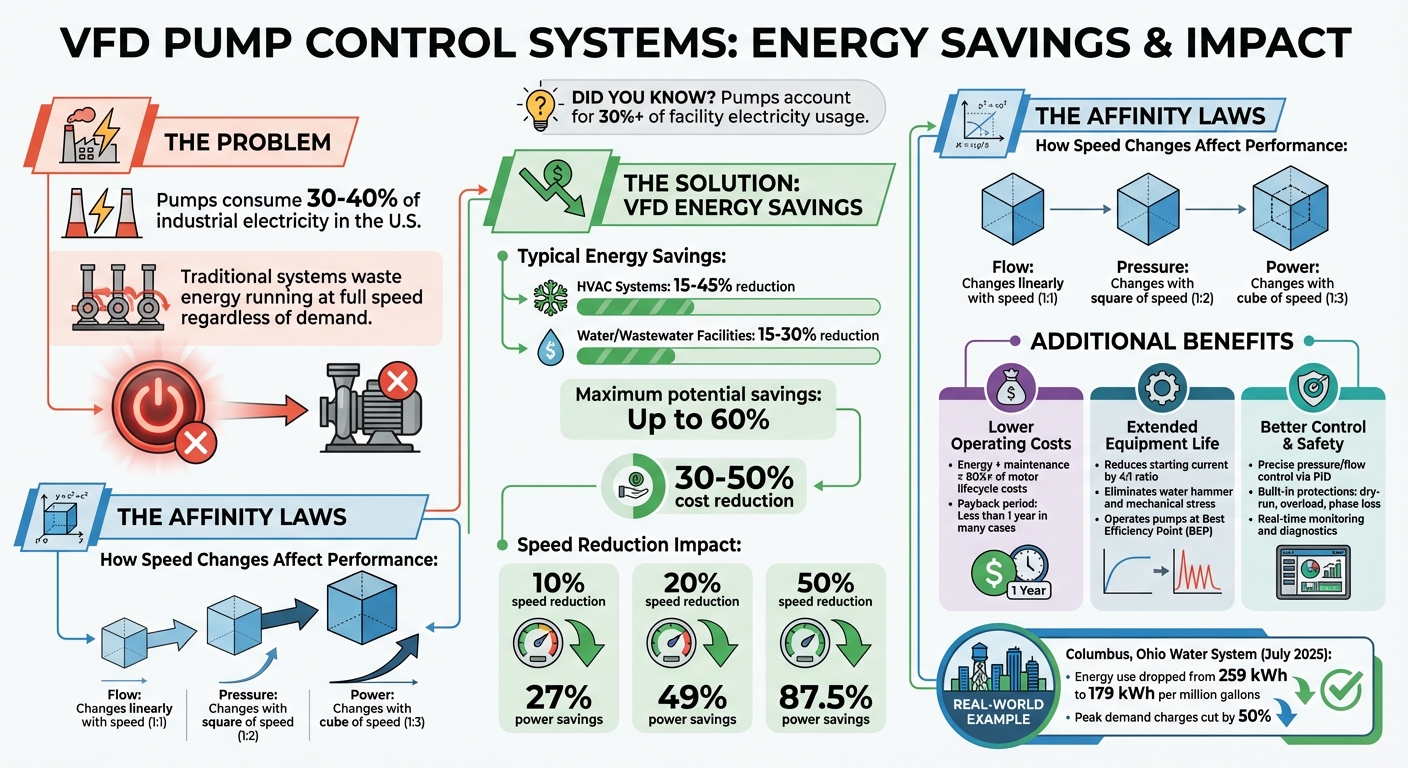
VFD Energy Savings and Efficiency Statistics for Pump Systems

VFD Energy Savings and Efficiency Statistics for Pump Systems

How Variable Frequency Drives Work in HVAC Systems

How VFD Pump Control Systems Work

Understanding how a Variable Frequency Drive (VFD) operates in pump systems is crucial for optimizing installation, maintenance, and troubleshooting. At its core, a VFD transforms standard AC utility power into a variable-frequency, variable-voltage output, allowing precise control over motor speed. This process unfolds in several stages, with each component playing a specific role. Let’s break it down further.

Main Components of a VFD System

A VFD system includes four primary components that work together seamlessly:

  • Rectifier: Converts the incoming constant-frequency AC power into direct current (DC) power.
  • DC Bus: Filters and smooths the DC power before it moves to the next stage.
  • Inverter: Takes the DC power and converts it back into variable-frequency AC using pulse-width modulation (PWM).
  • Control System: Oversees the entire operation, processing inputs from manual controls (like keypads or dials) and automatic feedback from sensors.
Component Primary Role
Rectifier Converts AC to DC
DC Bus Filters and smooths the DC voltage
Inverter Converts DC to variable-frequency AC using PWM
Control System Processes sensor feedback and regulates output logic

These components form the backbone of a VFD, but the integration of sensor feedback takes its performance to another level.

How Sensors Enable VFD Control

Sensors play a pivotal role by continuously monitoring variables like pressure, flow, and liquid levels. This real-time feedback is processed by an integrated PID (Proportional-Integral-Derivative) controller, which adjusts the pump speed to match system demands. For instance, in a building’s water distribution system, a pressure sensor measures pressure at key points. If demand drops – say, during nighttime hours – the sensor signals the VFD to slow the pump, ensuring consistent pressure without wasting energy.

Jason Vrboncic from WVCC Inc. highlights the importance of this integration:

“VFDs are best used when paired with control systems and operate best when based on a target flow rate measured by a flow sensor.”

Beyond efficiency, sensors also enhance safety by detecting potentially damaging conditions like dry-running. In such cases, the VFD can automatically shut down the pump, protecting equipment and eliminating the need for traditional mechanical throttling valves.

Understanding the Affinity Laws

The Affinity Laws provide the foundation for understanding how VFDs achieve energy savings. These laws explain how changes in motor speed affect centrifugal pump performance – specifically flow, pressure (or head), and power consumption . Here’s a quick summary:

  • Flow changes linearly with speed.
  • Pressure changes with the square of the speed.
  • Power consumption changes with the cube of the speed.

For example, reducing motor speed by 20% results in a 20% decrease in flow, a 36% reduction in pressure, and a 49% drop in power consumption. Tom Neuberger, Product Manager at Eaton, explains:

“The affinity laws can determine the system performance for centrifugal devices, defining both theoretical load requirements and possible energy savings.”

Affinity Law Relationship Mathematical Formula
Flow vs. Speed Q₁ / Q₂ = N₁ / N₂ (linear relationship)
Pressure vs. Speed H₁ / H₂ = (N₁ / N₂)² (square relationship)
Power vs. Speed P₁ / P₂ = (N₁ / N₂)³ (cubic relationship)

This cubic relationship is why VFDs are so effective at reducing energy consumption. For example, cutting motor speed by 50% can slash power demand to just 12.5% of full capacity, resulting in an impressive 87.5% energy savings . These principles make VFDs particularly useful for applications with variable torque loads, such as HVAC systems, water distribution, and centrifugal pumps.

Benefits of Using VFDs in Pump Systems

VFDs (Variable Frequency Drives) offer more than just motor speed adjustments – they bring advantages in energy efficiency, equipment durability, and system control.

Energy Savings and Lower Operating Costs

One of the standout benefits of VFDs is their ability to drastically cut energy consumption. Pumps powered by motors account for 30–40% of industrial motor electricity use. Traditional systems run motors at full speed, wasting energy by restricting flow mechanically. VFDs address this inefficiency, reducing energy costs by as much as 60% in some cases. Typical savings range from 15% to 45% in HVACR systems and 15% to 30% in water and wastewater facilities.

Alex Harvey, Director of AC and DC Drives at Control Techniques – Americas, highlights this:

“In centrifugal pump applications with low head pressures, VFD controllers will typically save more than 50 percent of the energy used.”

Even small adjustments make a big difference – a 10% speed reduction can lower power usage by approximately 27%, with larger reductions leading to even greater savings.

Another benefit is the elimination of power spikes during motor startup. Traditional starting methods can draw up to 600% of the rated current, but VFDs use soft starts to gradually increase voltage and frequency, reducing the starting current by a 4:1 ratio. Since energy and maintenance make up over 80% of a motor’s life cycle costs, these savings directly impact operating expenses.

Longer Equipment Life

VFDs not only save energy but also extend the lifespan of equipment by reducing mechanical stress. Traditional motor starts create high inrush currents and shock loads, which can damage pumps, motors, and piping. VFDs, on the other hand, use S-ramp functions for smooth acceleration and deceleration, preventing mechanical shock and avoiding issues like water hammer – pressure surges caused by abrupt flow changes.

Operating pumps at their Best Efficiency Point (BEP) further reduces vibration, which is a major cause of wear. Alex Harvey explains:

“Variable speed control operates the pump at its BEP to greatly reduce vibration when compared to other process control methods. This reduction in vibration significantly extends the life of the pump seals.”

Additional features like skip frequencies help avoid speeds that trigger natural resonances, while sleep mode halts the pump during low-flow conditions to minimize wear. For pumps already spinning from backpressure, the flying start feature allows VFDs to safely regain control without stressing the impellers.

Better System Control and Safety

VFDs also enhance precision and safety, thanks to integrated control features. Closed-loop control systems can directly connect sensors for pressure, flow, or temperature to the drive’s PID controller. This setup allows the motor to adjust speed automatically, maintaining exact setpoints even when demand fluctuates. Such precision is critical for applications like chemical dosing, filtration, and water supply in high-rise buildings.

Torben Poulsen, Business Development Manager at ABB, underscores this benefit:

“Process control is about getting what is needed at any point in time. The user might need a certain pressure independent of the flow… Using a VFD and the right sensors makes it possible for the user to control the process in the way they want.”

Modern VFDs also come equipped with safety features that protect both equipment and operators. They monitor electrical and thermal conditions, detecting issues like short circuits, phase loss, ground faults, overloads, and voltage irregularities. Dry-run protection shuts down the pump when no fluid is detected, safeguarding seals and motors from damage. Advanced drives can even ride through temporary power losses, ensuring uninterrupted operation. Additionally, integrated communication protocols like Modbus and Ethernet, along with HMI panels, provide real-time data on energy use and performance, allowing for proactive maintenance.

How to Select the Right VFD

Once you understand how Variable Frequency Drives (VFDs) work and their advantages, the next step is choosing the right one for your application. This decision goes beyond just horsepower ratings – it requires careful consideration of motor specs, operating conditions, and the specific demands of your pump system.

Matching VFDs to Pump and Motor Specifications

To start, ensure the VFD’s output current and voltage align with your motor’s Full Load Amperage (FLA) and nameplate details. For demanding applications like deep well pumps, it’s smart to add a 10–20% safety margin to the motor’s FLA for additional reliability.

The type of pump you’re using also affects the VFD requirements. Centrifugal pumps, which are variable torque loads, typically need VFDs rated for 110–120% overload for up to 60 seconds. On the other hand, positive displacement pumps require constant torque and higher starting power, meaning you’ll need a VFD that can handle 150% overload. If your motor operates on a 480V system, confirm that it’s “inverter-duty” rated, meeting NEMA MG1 Part 31 standards, to handle voltage spikes effectively.

Another factor to consider is cable length. When the distance between the VFD and motor exceeds 200 feet – common in well pump setups – you should use output filters like load reactors or sine wave filters. These prevent reflected wave issues that can damage motor insulation.

Environmental and Operating Conditions

The environment where the VFD operates can significantly impact its performance and lifespan. Most drives are designed for ambient temperatures up to 40°C or 50°C. If temperatures exceed these levels, derating the VFD by around 1% per degree Celsius is necessary. Raj L. Narayanan, Product Manager at Eaton, highlights the importance of environmental factors:

“As with many electronic devices, environmental conditions can be a key factor in life span and reliability; temperature, humidity, shock and vibration, sun load, air cleanliness and quality are all factors that can affect the expected life span of VFDs.”

Choosing the right enclosure is also critical. For clean, indoor environments, an IP20 enclosure works well. For areas with light dust or humidity, opt for IP54/IP55-rated enclosures. Outdoor or harsh environments, such as those exposed to water or corrosive chemicals, require IP66/IP68 or NEMA 4X-rated enclosures.

In especially corrosive environments, like wastewater treatment plants or chemical facilities, adding a conformal coating to the VFD’s circuit boards can protect against harmful airborne chemicals like hydrogen sulfide or chlorine. If the VFD is installed outdoors, consider solar heat gain. White enclosures absorb less heat (with a heat gain coefficient of about 0.15) compared to black ones (0.97). Using sun shields or orienting the enclosure to reduce direct sunlight can also help.

Load and Performance Requirements

Understanding your pump’s performance needs is crucial for selecting the right VFD. For basic speed control in centrifugal pumps, the traditional V/Hz (Volts per Hertz) mode is usually sufficient and straightforward to set up. However, if you need precise control over flow or pressure – or if high starting torque is required in deep well systems – sensorless vector control can provide better low-speed torque and speed accuracy.

Sizing the VFD correctly is another key step. Oversizing wastes energy and efficiency, while undersizing can lead to overheating or early equipment failure. Even minor speed adjustments can noticeably reduce power consumption, making proper sizing essential for both performance and energy savings.

Finally, don’t overlook pump-specific protection features. For instance, dry-run protection is critical for well pumps to avoid motor damage when water levels drop. Similarly, sleep/wake logic in booster systems can save energy by shutting down the pump during periods of low demand.

Installation and Maintenance Guidelines

Ensuring proper setup and upkeep of a VFD (Variable Frequency Drive) is key to keeping it running efficiently.

Proper Installation Procedures

Start by confirming that the motor is “inverter duty” rated and complies with NEMA MG-1 Part 31 standards, which ensure it can handle VFD peak voltages. Check the cable insulation resistance – it should exceed 1 megohm at 68°F.

Mount the VFD on a flat, stable surface, free from vibrations, and leave at least 6 inches of clearance around it. Sean Gaffney, Senior Product Manager at VACON, emphasizes the importance of proper ventilation:

“Drives, like people, keep cool by ‘breathing.’ Failure to follow the instructions will result in a drive that does not operate properly, repeatedly trips on over-temperature faults and fails prematurely.”

When wiring, keep power cables and control cables in separate conduits to minimize electromagnetic interference. If they must cross paths, ensure they do so at a 90-degree angle. Use shielded cables for motor connections, and always connect both the VFD and motor to a robust earth ground. Additionally, install the manufacturer-recommended fuses on the incoming line side. As Gaffney points out, “A drive measures and monitors itself and its motor outputs, but a drive does little to protect itself against incoming voltage or current spikes”.

Before powering up, torque all terminal connections according to the manufacturer’s specifications. On initial startup, use the “jog” function to check motor rotation. If the direction is incorrect, swap two output connections. Once the motor is correctly aligned, run the drive’s auto-tune or motor-identification function. This step ensures the VFD can create an accurate motor profile, enhancing control and protection.

Once installation is complete, the focus shifts to ongoing maintenance to keep the VFD performing at its best.

Regular Maintenance Tasks

While VFDs are designed to operate for five to ten years without major intervention, regular inspections are essential. Annually, check for condensation, corrosion, dust, and insects. Clean heatsinks, fans, and filters to prevent blocked airflow, which can lead to overheating and early failures.

Power connections can loosen over time due to temperature fluctuations. Jason Wellnitz, Product Marketing Manager at Yaskawa America, Inc., highlights the risks:

“Power connections can loosen with heating and cooling cycles. Loose connections can overheat and cause VFD faults, tripped branch circuit protection, or premature failure.”

Use a torque wrench annually to ensure all connections meet OEM specifications. A thermal imaging camera can also help identify hot spots in wiring during peak operation, allowing you to address potential problems early.

If a VFD remains unused for over six months – whether in storage or during a seasonal shutdown – perform capacitor reforming. This involves gradually applying voltage through a variac to prevent damage to the capacitor’s dielectric material. Additionally, always keep a backup of the VFD’s parameter file on a memory card or cloud storage. This makes restoring settings quick and hassle-free if the drive fails.

Routine inspections and resolving faults promptly are crucial for extending the drive’s lifespan.

Performance Monitoring and Diagnostics

After maintenance, continuous monitoring helps catch issues before they escalate. Modern VFDs monitor their internal health, tracking parameters like power module and heatsink temperatures, capacitor conditions, and DC bus voltage ripple. Pay attention to fault codes – they can indicate whether the problem is electrical (e.g., overvoltage, undervoltage, phase loss) or mechanical (e.g., pump blockage or overload).

Set up SMS or email alerts for fault events to address issues quickly and avoid downtime. If you notice unusual vibrations or noise, gradually adjust the pump speed to identify problematic frequencies. Noise disappearing at lower speeds often points to cavitation.

For critical systems, don’t rely solely on the VFD’s internal flow calculations. Use a physical flow meter, such as a magnetic or ultrasonic type, for precise closed-loop PID control. As Jason IP P.E., a Professional Engineer at Industrial Monitor Direct, advises:

“You cannot control what you do not measure”.

Export trend data quarterly and log parameter changes to identify inefficiencies early.

VFD Optimization Techniques

Fine-tuning your Variable Frequency Drive (VFD) settings can significantly improve energy efficiency and system performance. When combined with proper installation and maintenance, these adjustments can lower energy costs and enhance system reliability.

Closed-Loop Control with Sensors

Using real-time sensor feedback to configure your VFD ensures optimal pump performance. Rather than running at a constant speed and relying on valves to regulate flow, closed-loop control adjusts motor speed based on actual demand. Sensors like pressure transducers, flow meters, or level sensors provide continuous feedback to the VFD, which maintains the desired setpoint with precision.

When setting up PID parameters, start with conservative gains and gradually increase the integral time. This approach minimizes “hunting” – the oscillations around the setpoint that waste energy and strain equipment.

Closed-loop systems also support sleep mode, where the VFD shuts off the pump during zero-demand periods. In constant pressure systems, a pressurized tank (hydrophore) maintains pressure while the pump rests, avoiding inefficiencies from running against a closed valve. As Torben Poulsen, Business Development Manager at ABB, explains:

Just a small decrease in speed will decrease the power consumption considerably. It is known from the affinity laws that a 10% reduction in speed will lead to a 27% reduction in power.

For systems with multiple pumps, optimizing how they work together can further improve efficiency.

Multi-Pump Staging and Load Sharing

In setups with multiple pumps, automated staging ensures pumps operate near their most efficient point. Additional pumps are activated only when demand surpasses the lead pump’s capacity and are turned off as demand decreases. This method keeps each pump closer to its Best Efficiency Point (BEP), avoiding inefficiencies caused by running oversized pumps at low speeds.

There are two common configurations for multi-pump systems: one VFD controlling a single variable-speed pump with fixed-speed auxiliaries, or multiple VFDs where a master drive coordinates all follower drives. Ideally, each pump should have its own VFD for better performance and redundancy. Ranbir (Ron) Ghotra, Lead Application and Systems Engineer at Eaton, highlights the benefits:

Achieving this degree of control and automation by just using the VFD cuts down the installation and commissioning time for the pumping system and improves the overall return on investment (ROI).

To evenly distribute wear across equipment, program VFDs to rotate the lead pump based on runtime. For periods of low demand, consider adding a smaller jockey pump with its own VFD instead of running a large pump inefficiently. Rebekah Macko from Geiger Pump & Equipment explains:

A small pump with its own VFD for low demand can offer better efficiency and overall system reliability than a large pump sized for peak demand operating back on its curve.

In wastewater systems, always maintain a minimum speed high enough to keep self-cleaning velocity in pipes, preventing solids from settling.

Once pump operations are coordinated, refining control parameters can lead to even greater energy savings.

Programming for Maximum Energy Efficiency

Properly programming VFD parameters can unlock significant energy savings. Set acceleration and deceleration ramps to around 10 seconds to minimize inrush current and reduce mechanical stress on components like couplings, bearings, and seals. A minimum speed between 30% and 50% of nominal ensures the pump remains above its minimum continuous stable flow while still achieving energy savings.

With closed-loop control in place, mechanical throttling can often be reduced or eliminated. As Rebekah Macko notes:

VFDs often allow control valves to be more open than constant speed systems because the pump can be slowed down to achieve the same flow rate with less throttling, leading to energy savings.

In some cases, minimum flow orifices can be removed entirely.

For tank-fed systems, program the VFD to slow the pump when supply tank levels drop. This prevents cavitation when Net Positive Suction Head available (NPSHa) is limited and reduces wasted energy. Additionally, use the VFD’s internal data logs to monitor energy use, starts, and operating hours. This data can help identify opportunities to refine setpoints and schedules even further. Typical energy savings from these programming strategies range from 15% to 45% in HVAC systems and 15% to 30% in water and wastewater applications.

Conclusion

VFD pump control systems offer a powerful way to lower energy expenses and extend the lifespan of equipment. For instance, reducing pump speed by just 10% can decrease power consumption by 27%. Some facilities have even reported energy savings of up to 60%, with payback periods of less than a year. Considering that pumps often account for over 30% of a facility’s total electricity usage, the potential for significant annual savings is clear.

By combining advanced components, precise controls, and smart optimization strategies, VFD systems bring numerous advantages. Soft starts help avoid the damage caused by high inrush currents and water hammer, protecting seals, bearings, and pipes. Real-time speed adjustments ensure pumps operate under ideal conditions, preventing issues like cavitation. Additionally, built-in diagnostics can identify problems early, reducing both downtime and maintenance costs.

The versatility of this technology is evident across various applications. HVAC systems, for example, have achieved energy savings ranging from 15% to 45%. Municipal water systems also showcase its effectiveness – take Columbus, Ohio’s July 2025 retrofit as an example. After implementing VFDs, specific energy consumption dropped from 259 kWh to 179 kWh per million gallons, and peak demand charges were cut in half.

With tangible benefits like lower utility bills, reduced maintenance, and enhanced process control, VFD pump control systems deliver quick returns on investment. They’ve become an indispensable part of modern pumping solutions.

FAQs

How do I know if my pump is a good fit for a VFD?

To figure out if your pump works well with a VFD, start by assessing its operating conditions. Pumps that deal with variable load demands, energy inefficiencies, or frequent on-off cycles are prime candidates. Applications like water supply, HVAC systems, or irrigation often involve fluctuating demand, making them a good match for VFDs. Centrifugal pumps, in particular, pair well when you need precise flow control and better energy savings. Just make sure your pump is designed to handle variable speed control for the best performance.

What sensors are needed for closed-loop VFD pump control?

Closed-loop VFD pump control relies heavily on flow meters to measure flow rate (in GPM) and pressure sensors to track system pressure. These two components feed crucial data into the VFD’s control algorithms, such as PID controllers, allowing for real-time adjustments to pump speed. While additional sensors – like those for temperature or motor current – can help monitor overall system health, the flow meters and pressure sensors remain the core elements for maintaining efficient operation.

When should I add output filters for long motor cable runs?

When motor cables are particularly long, it’s important to include output filters. Why? Extended cables can lead to voltage spikes, ringing, and even insulation breakdown, all caused by impedance mismatches. These longer cables tend to amplify overshoot peak voltage, which could harm both the motor and the VFD. By adding output filters, you can help safeguard the system, ensuring smoother operation and reducing the risk of damage.