What Causes Uneven Home Heating? 8 Common Issues

A living room that feels comfortable while an upstairs bedroom stays chilly is more than a minor annoyance during a Northeastern Pennsylvania winter. It can point to heat loss, restricted airflow, an improperly balanced system, or equipment that is no longer delivering heat as intended. Understanding what causes uneven home heating helps you separate simple adjustments from problems that need professional attention before they affect comfort, energy costs, or equipment reliability.

What Causes Uneven Home Heating in a House?

Uneven heating happens when heat is not produced, distributed, or retained consistently throughout the building. The source may be inside the furnace, boiler, heat pump, ductwork, radiators, controls, or the home itself.

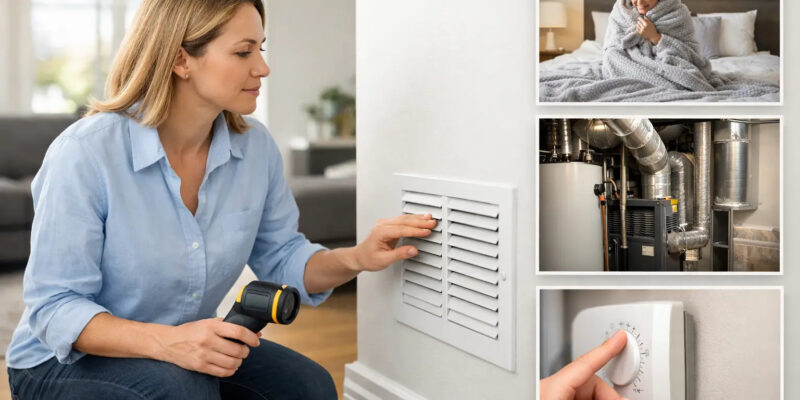
A useful first clue is the pattern. If one room is always cold, the issue may be related to that room's duct run, radiator, insulation, windows, or exposure to wind. If several rooms become uncomfortable at the same time, the heating system may have an airflow, fuel, control, or capacity problem. A room that is cold only on the second floor or over a garage often has a different cause than a room that is cold throughout the entire heating season.

1. Leaky, Damaged, or Poorly Designed Ductwork

Forced-air systems depend on ducts to move conditioned air from the furnace or air handler to each room. Ducts that leak in an attic, crawlspace, basement, or wall cavity can lose a surprising amount of heated air before it reaches a register. Loose connections, crushed flexible duct, gaps at joints, and disconnected runs can all reduce airflow.

Duct design matters as well. A long run with too many turns may receive less air than a short, straight run near the equipment. In some older homes, additions and remodeled spaces were connected to the original system without fully accounting for the added heating load. The result is often a cold addition, converted attic, or distant bedroom.

2. Airflow Restrictions at Registers, Filters, or Equipment

A dirty furnace filter is one of the most common and avoidable causes of poor heating performance. As the filter fills with dust, pet hair, and debris, it limits the volume of air moving through the system. Rooms farthest from the furnace are frequently the first to show the effect.

Closed or blocked supply registers can create a similar problem. Furniture, rugs, curtains, and storage boxes can prevent warm air from circulating into the room. Return-air grilles need clear space too. A forced-air system cannot distribute heat effectively if it cannot pull air back to the equipment for reheating.

Closing multiple vents to force more heat into another area is rarely a good long-term solution. It can increase duct pressure, reduce system efficiency, and create uneven temperatures elsewhere. If a room needs less heat, balancing dampers or thermostat controls should be evaluated instead.

3. Thermostat Location or Control Problems

Your thermostat measures the temperature where it is installed, not throughout the entire house. If it is located near a sunny window, exterior door, kitchen, fireplace, or supply register, it may sense a temperature that does not represent the rest of the home. The system can shut off before distant rooms warm up, or run longer than necessary because the thermostat is in a colder area.

Incorrect thermostat settings, weak batteries, calibration issues, and outdated controls can also contribute. In a multi-level home, a single thermostat may not be enough to manage different temperature zones effectively. Zoning equipment, additional thermostats, or properly installed ductless mini-splits may be practical options, depending on the building layout and existing system.

4. Heat Loss Through Windows, Doors, Insulation, and Air Leaks

Sometimes the heating system is operating normally, but the building envelope is losing heat faster than the system can replace it. Rooms over garages, above unconditioned basements, near drafty doors, and on the north or wind-facing side of a home commonly feel colder.

Insufficient attic insulation is a major concern because warm air rises. Gaps around plumbing penetrations, recessed lights, attic hatches, and wiring can allow conditioned air to escape. Older windows, poorly sealed doors, and uninsulated exterior walls can create cold surfaces that make a room feel uncomfortable even when the thermostat reading appears normal.

Weatherstripping and insulation improvements may help, but they are not always the complete answer. If the room has always been cold, an HVAC professional may need to determine whether the system was sized and designed for that space in the first place.

5. An Oversized or Undersized Heating System

Heating equipment must be matched to the home's heat loss, layout, insulation levels, and distribution system. An undersized furnace, boiler, or heat pump may run for long periods and still struggle to keep distant rooms warm during severe weather. This can happen after an addition is built, insulation conditions change, or a replacement unit is selected based only on the size of the old equipment.

Oversized equipment can cause different issues. A furnace that heats the thermostat area very quickly may short cycle, shutting down before heat reaches farther rooms. Short cycling also increases wear on equipment and can reduce efficiency.

Proper sizing requires more than a square-foot estimate. A professional load calculation considers windows, construction, orientation, insulation, air leakage, occupancy, and local winter conditions. In the Hazleton area and surrounding communities, the demands of a cold, prolonged heating season make accurate sizing particularly valuable.

6. Boiler, Radiator, or Hydronic Circulation Issues

Homes with boilers and radiators can develop uneven heating for reasons different from forced-air systems. Air trapped in radiators or baseboard loops can prevent hot water from circulating properly. A failing circulator pump, stuck zone valve, low system pressure, sediment buildup, or an out-of-balance hydronic system may leave one zone cold while another overheats.

Steam systems can also experience uneven heat when vents, traps, or piping components are not operating correctly. These systems need specialized diagnosis. Turning up the thermostat may make the warm rooms hotter without fixing the rooms that are not receiving heat.

If you notice banging pipes, water leaks, gurgling sounds, repeated pressure issues, or radiators that remain cold at the top, arrange service rather than attempting significant adjustments yourself. Boiler systems contain hot water, pressure, electrical components, and in many cases fuel-fired equipment.

7. Heat Pump Performance and Auxiliary Heat Problems

Heat pumps provide efficient heating in many homes, but their performance depends on proper refrigerant charge, airflow, outdoor-unit condition, defrost operation, and control settings. A dirty indoor coil, restricted filter, failing blower component, or refrigerant issue can reduce heat delivery to certain areas.

During colder weather, the system may rely on auxiliary or backup heat. If that backup stage is not engaging when needed, the home may feel unevenly heated or slow to recover after the thermostat is adjusted. On the other hand, frequent auxiliary heat operation can signal that the system needs evaluation, especially if utility costs rise sharply.

Ductless mini-splits can be a strong solution for difficult rooms, additions, or areas without practical duct access. Their placement and capacity still matter. A unit that is too small, poorly located, or blocked by furnishings will not solve the comfort problem as intended.

8. Aging Equipment or Deferred Maintenance

A heating system does not have to fail completely to lose performance. Worn blower motors, weak capacitors, dirty burners, a clogged condensate drain, deteriorated belts, failing zone controls, and dirty coils can all affect how heat moves through a building. Fuel-fired equipment may also operate less efficiently when burners, heat exchangers, venting, or combustion settings need attention.

Preventative maintenance gives a technician an opportunity to inspect these components before a minor loss of performance becomes a no-heat call. It also helps identify safety concerns, including venting or combustion issues, that should never be ignored.

How to Tell Whether You Need Heating Service

Start with the simple checks: replace a dirty filter, confirm that supply and return vents are open and unobstructed, and verify that the thermostat is set correctly. Note which rooms are cold, when the problem occurs, and whether the issue is worse during windy weather or at certain times of day. Those details make diagnosis more efficient.

Schedule professional service if the issue persists, if temperatures vary significantly between rooms, or if you see warning signs such as unusual noises, frequent cycling, weak airflow, cold radiators, water leaks, rising fuel bills, or a system that cannot maintain its setting. A qualified technician can evaluate equipment operation, airflow, duct condition, controls, combustion performance, and the home's heating load rather than guessing at a single cause.

Hydrodynamics Inc. helps homeowners and property managers address heating problems with practical repairs, maintenance, system improvements, and custom solutions across the systems that keep a building comfortable. The right fix may be as straightforward as restoring airflow, or it may involve duct corrections, zoning, boiler service, insulation coordination, or replacing equipment that no longer fits the property.

Comfort should not depend on which room you happen to be in. When a heating problem is identified early and evaluated as a whole-system issue, you can make a clear decision that supports dependable warmth through the season.

Ductless Versus Central Air for Your Home

A second-floor bedroom that never cools down, an addition with no ductwork, or an aging central AC system can all lead to the same question: ductless versus central air – which is the better investment? The answer depends less on a single efficiency rating and more on your building layout, existing equipment, comfort priorities, and plans for the property.

For homes and facilities across Northeastern Pennsylvania, both options can provide dependable cooling when properly designed and installed. They solve different problems well. A qualified evaluation should account for the space itself, insulation, windows, occupancy, electrical capacity, and the condition of any existing ductwork before a system is selected.

Ductless versus central air: the basic difference

Central air conditioning uses an outdoor condenser, an indoor evaporator coil, and a network of ducts to move cooled air throughout the building. In a typical home, the indoor coil is installed above or alongside a furnace or air handler. The same duct system distributes both heating and cooling.

A ductless mini-split system uses an outdoor unit connected by refrigerant lines and wiring to one or more indoor air handlers. Each indoor unit serves a specific room or zone. Most ductless systems are heat pumps, meaning they can cool in summer and provide heat during much of the heating season.

Central air is often the natural choice when a building already has well-designed, well-sealed ductwork. Ductless equipment is especially useful where ducts are impractical, such as older homes, finished attics, additions, garages, sunrooms, and individual offices.

When central air makes the most sense

If your home already has a forced-air furnace and ductwork that reaches the rooms you use, adding or replacing central AC may be the most straightforward route. One centrally located system can condition the whole home without wall-mounted units in each room. Many homeowners also prefer the cleaner visual appearance of supply registers and a single thermostat.

Central systems work particularly well in homes with open layouts and balanced duct design. They can also support whole-home filtration, humidification, dehumidification, and fresh-air accessories more easily than a single ductless unit. For commercial properties, existing ducted rooftop or split systems may be the practical choice when the building requires broad, consistent coverage across large occupied areas.

The limitation is the duct system itself. Leaky, undersized, poorly insulated, or poorly routed ducts can reduce comfort and waste energy. A new high-efficiency air conditioner cannot fully correct a distribution problem that sends too little air to the second floor or too much to a seldom-used area.

Central air installation can become more involved when a home has no ducts. Adding ductwork after walls and ceilings are finished may require soffits, chases, access openings, and careful planning around structural elements. In that situation, the lower equipment cost of a conventional central system may not translate to the lower total project cost.

Central air is a cooling system, not always a heating upgrade

Many homeowners use the term central air to describe a complete HVAC system. Technically, a conventional central AC unit provides cooling only. It relies on a separate furnace, boiler, or other heating source during winter. A central heat pump can use the same ducts while providing both heating and cooling, but it should be evaluated separately from a standard air conditioner.

That distinction matters in Pennsylvania. If an existing furnace is reliable and properly sized, replacing only the air conditioner may be sensible. If both the heating and cooling equipment are near the end of their service life, it may be worth discussing a coordinated replacement rather than making decisions one component at a time.

Where ductless mini-splits have an advantage

Ductless systems avoid the need for large supply and return ducts. Installation generally requires a small opening through an exterior wall for the refrigerant line set, condensate drain, and electrical connection. This makes them a strong option for spaces that were never connected to the central system.

An addition is a common example. Extending existing ductwork into a new room can overload the original system or create uneven airflow elsewhere in the house. A dedicated ductless unit can condition the addition independently without changing the rest of the home’s duct balance.

Zoning is another major benefit. Each indoor head has its own controls, so a bedroom can be cooler at night while an unused guest room is set back. In a business, separate zones can help address different heat loads in offices, conference rooms, server areas, or customer-facing spaces.

Most ductless heat pumps are highly efficient at part-load operation, which is where systems often run for much of the season. Rather than cycling fully on and off, inverter-driven equipment can adjust output to maintain a steadier temperature. That can improve comfort, but the result still depends on accurate sizing and proper installation.

Ductless equipment is not automatically the right answer for every whole-home project. Indoor heads are visible, although ceiling cassettes and concealed ducted options are available for some applications. A large home may need several heads or multiple outdoor units, and the best location for each unit must account for airflow, drainage, service access, and room use.

Cost, efficiency, and maintenance trade-offs

Equipment price alone is a poor way to compare ductless and central systems. A central AC replacement using existing, sound ductwork may cost less upfront than installing multiple ductless zones. On the other hand, building a new duct system into an older home can make ductless the more economical approach.

Operating cost also varies by building. Ductless zoning can reduce energy use when only a few rooms need conditioning. Central air can be very efficient in a tightly built home with properly sized, sealed ducts. Poor insulation, air leakage, and solar gain from large windows can affect either system more than the label on the equipment.

Both systems need regular service. Central systems benefit from clean filters, clear condensate drains, inspected electrical components, and duct evaluation when rooms are unevenly conditioned. Ductless indoor units need filter cleaning and periodic coil, blower-wheel, and drain-pan service. Neglecting these tasks can lead to reduced airflow, odors, water leaks, and lower efficiency.

For facilities with critical comfort or operating requirements, preventative maintenance is more than a seasonal chore. Planned inspection helps identify refrigerant issues, worn components, drainage concerns, and control problems before they lead to downtime.

Heating performance in a Pennsylvania winter

Modern cold-climate ductless heat pumps can provide meaningful heat at low outdoor temperatures, but performance and capacity decline as conditions become more severe. The right system may reduce reliance on propane, oil, or electric resistance heat, but it should not be chosen based on a cooling calculation alone.

Some homes use ductless heat pumps as primary heating for selected zones while retaining an existing furnace, boiler, or other system for backup. Others install a central heat pump with supplemental heat. The appropriate approach depends on heat loss, fuel costs, electrical service, insulation levels, and how the building is occupied.

A room-by-room load calculation is especially valuable for homes with additions, finished basements, high ceilings, older windows, or persistent comfort complaints. Oversizing a system may seem safe, but it can cause short cycling, poor humidity control, and unnecessary cost. Undersizing can leave occupants uncomfortable during extreme weather.

Questions to settle before choosing

Start with the condition of what you already have. Are the ducts accessible, sealed, and delivering enough airflow? Is the furnace or air handler nearing replacement? Are you trying to cool an entire home, solve one difficult room, or add comfort to a new space?

Also consider how you use the property. A family that keeps every room occupied may value whole-home central distribution. A homeowner with an unused upstairs, a workshop, or an addition may benefit more from ductless zoning. Property managers and business owners should factor in tenant comfort, equipment access, operating schedules, and the cost of interruption when equipment requires service.

Hydrodynamics Inc. can evaluate the complete mechanical picture, including existing heating equipment, ductwork, electrical needs, and the spaces causing comfort concerns. That broader view helps prevent a cooling upgrade from creating an airflow, drainage, or heating problem elsewhere in the building.

The best choice is the one that fits the building you have, not the one that looks best on a specification sheet. Before committing to either system, have the space measured, the existing equipment inspected, and the expected comfort goals clearly defined.

Water Softeners That Fit Your Property’s Needs

Water softeners address a problem many property owners notice long before they can name it: white buildup on fixtures, stiff laundry, spotty dishes, dry-feeling skin, and appliances that seem to lose efficiency too soon. In Northeastern Pennsylvania, especially for homes and facilities served by private wells, hardness can place a steady burden on plumbing and water-using equipment.

Hard water is not usually a health concern, but it can be an expensive maintenance concern. The minerals that cause hardness, primarily calcium and magnesium, collect inside pipes, water heaters, dishwashers, ice machines, boilers, and other equipment. The right treatment system can reduce that scale and help protect the systems your property depends on every day.

What Hard Water Does to a Property

Hardness minerals stay dissolved in cold water, but they become more troublesome when water is heated or evaporates. That is why scale often appears first around faucets, shower doors, humidifiers, coffee equipment, and water heater components. Over time, that buildup can restrict water flow, interfere with heat transfer, and shorten the service life of equipment.

At home, the effects are usually visible and frustrating. Soap may not rinse as cleanly, laundry can feel rough, and shampoo or body wash may not lather as expected. Homeowners may use more detergent and still see residue on glassware, tiles, and fixtures.

For a business or industrial facility, the stakes can be higher. Scale inside a water heater, boiler feed system, commercial dishwasher, process equipment, or refrigeration-related component can contribute to reduced performance, more frequent cleaning, and avoidable downtime. Water treatment is often a practical part of protecting mechanical equipment, not simply an upgrade for appearance.

How Water Softeners Work

Most conventional water softeners use ion exchange. Water flows through a tank containing resin beads that attract hardness minerals. The system exchanges calcium and magnesium for sodium or potassium ions, sending softened water to the plumbing system.

As the resin becomes loaded with hardness minerals, the softener must regenerate. During regeneration, a brine solution flushes the collected minerals from the resin and sends the wastewater to an appropriate drain connection. The unit then returns to service with renewed treatment capacity.

This process requires salt when a standard ion-exchange softener is used. The amount of salt and water consumed depends on several factors, including water hardness, daily usage, the system’s capacity, and how its regeneration controls are programmed. A properly sized system should regenerate based on actual demand whenever possible, rather than operating on an arbitrary schedule.

Softening Is Not the Same as Water Filtration

A common misunderstanding is that one piece of equipment treats every water-quality issue. Water softeners are designed to reduce hardness. They do not automatically remove bacteria, sediment, iron, sulfur odors, arsenic, or other contaminants that may be present in a private well.

A water test is the starting point for an effective recommendation. Depending on the results, a property may need sediment filtration ahead of the softener, specialized iron or sulfur treatment, ultraviolet disinfection, neutralization for acidic water, or another component. Treating the actual water conditions avoids spending money on equipment that does not solve the problem.

Signs You May Need a Water Softener

Visible scale is a clear warning, but it is not the only one. A household or facility may benefit from testing and treatment when hot-water equipment needs repeated service, fixtures develop crusty deposits quickly, or water spots return immediately after cleaning.

Other common signs include reduced water flow at showerheads, cloudy glassware, scratchy towels, frequent soap scum, and white deposits in humidifiers or coffee makers. If a water heater is making popping or rumbling sounds, sediment or mineral scale may be contributing. That condition should be evaluated rather than ignored, since it can affect efficiency and component life.

Private well owners should be especially careful about making assumptions based on taste or appearance alone. Water can look clear and still have enough hardness, iron, acidity, or microbial risk to warrant treatment. Periodic testing is useful after changes in taste, odor, staining, well repairs, flooding, or a change in household water use.

Choosing the Right Water Softener Size

Water softener sizing is not a matter of selecting the largest tank that fits in a basement or utility room. An oversized unit can cost more than necessary and may not operate efficiently. An undersized unit can run through its capacity too quickly, leading to frequent regeneration and inconsistent softened water.

The primary sizing factors are the hardness level measured in grains per gallon, the number of people or users, expected water consumption, plumbing demand, and any water-using equipment that needs protection. A restaurant, apartment property, medical office, or industrial operation may have very different peak demands than a single-family home, even if their total daily water use is similar.

Iron also matters. Iron can interfere with softener resin and may require pretreatment or a system designed for combined hardness and iron conditions. Likewise, low pH or heavy sediment can affect which equipment should be installed first in the treatment sequence.

Salt-Based and Salt-Free Options

Traditional salt-based water softeners are generally the appropriate choice when the goal is to remove hardness minerals and achieve the familiar benefits of softened water. They are effective for protecting fixtures, plumbing, and water-heating equipment when correctly installed and maintained.

Some salt-free products are described as conditioners or scale-control systems. These systems may change how minerals behave, helping reduce scale under certain water conditions, but they do not remove hardness in the same way as ion exchange. They can be a reasonable option where salt use, drainage limitations, or maintenance preferences rule out a conventional softener. They are not a direct substitute in every application.

The best choice depends on water-test results, local discharge considerations, equipment being protected, and the outcome the property owner expects. Clear expectations matter. If the goal is softer laundry and reduced soap scum, a conventional softener may be the better fit. If the goal is limited scale control with no salt, a conditioner may be worth considering.

Installation Details That Affect Performance

A water treatment system is only as dependable as its installation. The equipment needs a suitable location, stable power when required, a proper drain connection, adequate flow, bypass valves, and access for adding salt and servicing filters. Installing treatment equipment ahead of sensitive plumbing and water heaters is often necessary, while outside hose bibs may be left untreated for watering lawns or washing vehicles.

On a well system, the arrangement must also work with the well pump, pressure tank, pressure switch, and any existing filtration equipment. Commercial and industrial installations may require more detailed planning for peak flow, floor drainage, chemical compatibility, redundancy, and scheduled maintenance access.

Hydrodynamics Inc. evaluates water-conditioning equipment as part of the larger plumbing and mechanical system. That perspective helps identify issues that a softener alone will not correct, such as a failing well pump, poor pressure control, sediment intrusion, or a water heater already affected by heavy scale.

Maintaining Water Softeners for Consistent Results

Routine maintenance is straightforward, but it should not be neglected. Keep the brine tank supplied with the recommended salt, avoid creating a solid salt bridge above the water, and use clean salt appropriate for the equipment. If softened water suddenly feels different or scale returns, do not assume the system is working normally just because there is salt in the tank.

Resin can become fouled by iron, sediment, or other water conditions. Control valves can wear, drain lines can clog, and settings may no longer match the property’s actual water use. A service check can confirm that the softener regenerates correctly, draws brine properly, and delivers treated water where it is needed.

For facilities, preventative maintenance is particularly valuable. Checking water treatment before seasonal heating demand, busy operating periods, or scheduled equipment shutdowns can help avoid disruptions tied to scale buildup or treatment failures.

A water softener should solve a measured problem and support the life of the plumbing and equipment behind it. Start with a water test, consider how the property actually uses water, and choose a system that can be maintained reliably for years.

Hard Water Signs, Effects, and Treatment Options

A white ring around the faucet, spots that return to clean glassware, and soap that never seems to rinse completely are more than housekeeping frustrations. Hard water is common in homes served by wells and in many municipal water supplies across Northeastern Pennsylvania. While it is not usually a health concern, the dissolved minerals in hard water can steadily affect plumbing, water-using equipment, cleaning results, and long-term operating costs.

The right solution starts with knowing what is in your water and how that water is used throughout the property. A treatment system should be matched to the water chemistry, household demand, plumbing layout, and equipment it is intended to protect.

What Makes Water Hard?

Water becomes hard when it dissolves minerals, primarily calcium and magnesium, as it moves through soil and rock. The mineral level is commonly measured in grains per gallon or milligrams per liter. The higher the number, the more likely you are to see scale buildup and notice changes in how soap, detergents, and appliances perform.

A private well can have water quality that differs significantly from a nearby property. Even properties on the same public supply may have different practical concerns because of plumbing age, water heater settings, daily usage, or equipment condition. That is why a water test is more useful than choosing a softener based on a neighbor's experience or a one-size-fits-all recommendation.

Hardness can also occur alongside iron, manganese, sediment, acidity, bacteria, sulfur odor, or other water-quality concerns. These issues may require separate treatment steps. A softener is highly effective for hardness minerals, but it is not automatically the complete answer to every water problem.

Signs of Hard Water in Your Property

Hard-water symptoms often appear gradually. Homeowners may first notice cloudy dishes or stiff laundry, while a business or facility may see repeated maintenance needs on water heaters, ice machines, dishwashing equipment, boilers, or other water-dependent systems.

Common signs include:

  • White, chalky buildup on faucets, showerheads, sink edges, and glass shower doors
  • Soap scum in tubs and showers that is difficult to remove
  • Dry-feeling skin, dull hair, or laundry that feels rough after washing
  • Reduced water flow through showerheads or fixture aerators
  • Water heaters that make popping or rumbling sounds as sediment and scale accumulate
  • Shortened appliance life, higher energy use, or frequent service needs on water-using equipment

None of these signs alone confirms hardness. White deposits can be caused by several mineral conditions, and low water pressure can result from plumbing restrictions, a failing well pump, or fixture-related issues. Testing identifies the actual cause before treatment equipment is selected.

Why Mineral Scale Matters

The most costly effect of hard water is often hidden inside equipment. When hard water is heated, minerals can separate from the water and settle on heat-transfer surfaces. Inside a tank-style water heater, that buildup can collect near the bottom of the tank. In tankless units, scale can form within the heat exchanger. Either condition forces the equipment to work harder to heat the same amount of water.

Scale also reduces the inside diameter of pipes, fittings, valves, and fixture components over time. A showerhead may be easy to replace, but buildup in a water heater, recirculation system, dishwasher, commercial kitchen equipment, or process-related plumbing can be more disruptive and expensive to address.

For commercial and industrial properties, the stakes can be higher. Equipment downtime affects staff, tenants, customers, and operations. Preventative water treatment and scheduled maintenance can help protect systems that depend on consistent water flow and efficient heat transfer.

There is a practical trade-off, however. Not every property with moderately hard water needs an extensive treatment system immediately. If scale is minimal, water-using equipment is properly maintained, and residents are satisfied with the results, monitoring may be appropriate. When buildup is recurring or equipment performance is being affected, treatment becomes a stronger long-term investment.

Testing Comes Before Choosing a Water Softener

A dependable water-treatment plan begins with a current water analysis. For a private well, testing should look beyond hardness when appropriate. Iron and manganese can stain fixtures and interfere with softener performance. Sediment can clog controls and reduce flow. Low pH can contribute to corrosion. Bacteria testing addresses a different concern entirely and may point to the need for ultraviolet treatment or corrective well work.

A water professional also needs to understand the property's demand. The number of occupants, bathrooms, fixture use, peak flow needs, and water-using appliances affect softener sizing. A system that is too small may regenerate too frequently or allow hardness to pass through during high demand. An oversized system can add unnecessary upfront cost and may not operate as efficiently as a properly sized unit.

Commercial applications require an even closer review. A restaurant, apartment building, office, manufacturing space, or facility with specialized equipment may need treatment designed around gallons used per day, peak demand, water temperature, equipment warranties, and the consequences of downtime.

Hard Water Treatment Options

For most residential hardness problems, an ion-exchange water softener is the standard treatment. Water passes through resin beads that exchange hardness minerals for sodium or potassium ions. The system regenerates periodically using a salt or potassium chloride solution, flushing captured minerals away and preparing the resin for continued use.

Salt-based softeners are effective, but they require ongoing attention. The brine tank needs the correct salt level, and the system needs power, drainage, and periodic inspection. Potassium chloride is an alternative for some households, though it typically costs more and may not perform identically in every situation. The best choice depends on water chemistry, equipment requirements, household preferences, and local considerations.

Salt-free conditioners are sometimes considered by people who want to avoid adding salt. These systems may alter how certain minerals behave and can reduce scale adhesion in specific conditions, but they do not remove hardness minerals in the same way an ion-exchange softener does. They are not interchangeable solutions. If the goal is truly soft water for laundry, bathing, and scale reduction, a conventional softener is often the more reliable option.

Additional treatment may be needed before or after a softener. Sediment filtration can protect valves and appliances from particulate matter. Iron treatment can prevent staining and fouling. Ultraviolet disinfection may be appropriate where bacteria treatment is needed. Drinking-water filtration can improve the water used at a dedicated tap, but it does not replace whole-property hardness treatment where scale protection is the main objective.

Protecting Plumbing and Equipment After Installation

Installing a softener is not the end of water-system care. Existing scale does not always disappear immediately, and equipment that has operated with untreated hard water may already need cleaning, flushing, or repair. Water heaters, tankless heat exchangers, faucets, showerheads, and appliance connections should be evaluated as part of the overall plan.

Routine service helps the system continue doing its job. This may include checking salt usage, confirming regeneration settings, inspecting bypass valves and drain connections, testing treated water hardness, and reviewing changes in household or facility water use. A growing family, a new bathroom, added laundry equipment, or expanded business operations can change the demand a system must handle.

For property owners with wells, it also makes sense to coordinate water treatment with well-pump and pressure-tank maintenance. Water quality, pressure performance, and plumbing reliability are connected. Addressing one part of the system without considering the others can leave the underlying problem unresolved.

When to Call for Professional Help

Call for an evaluation when scale returns quickly after cleaning, water heaters lose efficiency, fixtures repeatedly clog, or a current softener is using excessive salt, regenerating unpredictably, or no longer delivering soft water. A professional assessment is also worthwhile before replacing a water heater or installing a high-value appliance that will be exposed to untreated water.

For homeowners and facilities in the Hazleton area, Hydrodynamics Inc. can evaluate water conditions alongside the pumps, plumbing, water heaters, and mechanical equipment that depend on them. The goal is not simply to add a treatment unit. It is to provide a solution that supports reliable water service and protects the equipment you rely on every day.

Hard water rarely causes a single dramatic failure. Its effects build quietly, one scale deposit and one reduced-efficiency cycle at a time. Testing the water and addressing the results early can help keep a small maintenance concern from becoming a larger plumbing or equipment expense.

Toilet Repair Signs You Should Not Ignore

A toilet that refills at random, rocks at the base, or requires a second flush is more than an everyday annoyance. Timely toilet repair can prevent wasted water, damaged flooring, sewer backups, and an unexpected loss of a working bathroom. The right response depends on where the problem starts: inside the tank, at the fixture base, in the drain line, or farther into the plumbing system.

For homeowners, business owners, and property managers, the goal is not to replace parts at the first sign of trouble. It is to identify whether a simple adjustment is appropriate or whether the symptoms point to a repair that needs professional attention.

Common Toilet Repair Problems and What They Mean

Most toilet issues fall into a few familiar categories, but the same symptom can have different causes. A toilet that runs continuously, for example, may have a worn flapper, an improperly adjusted fill valve, a leaking flush valve seal, or water pressure affecting the tank’s operation. Replacing a part without confirming the cause can turn a small repair into a frustrating series of trips to the hardware store.

A Toilet That Keeps Running

A running toilet is often caused by water escaping from the tank into the bowl after the flush. The flapper may be warped, coated with mineral buildup, or held open by a chain that is too short. In other cases, the fill valve may not be shutting off at the proper water level.

A simple check is to remove the tank lid and watch what happens after the toilet finishes filling. If water continues to flow into the overflow tube, the fill valve or float adjustment deserves attention. If the tank appears full but periodically refills on its own, the flapper or flush valve seal is more likely the issue.

This may seem minor, but a toilet that runs all day can waste a substantial amount of water. In a commercial restroom or multi-unit property, several running fixtures can make a noticeable difference in water usage and operating costs.

Weak, Incomplete, or Double Flushes

When a toilet does not clear the bowl reliably, begin with the simple possibilities. A partially closed shutoff valve, low tank water level, or a disconnected flapper chain can limit flushing performance. Mineral deposits can also restrict rim holes beneath the bowl edge, especially where water quality causes scale buildup.

However, weak flushing can also indicate a developing blockage in the trap or drain. If plunging restores normal flushing only briefly, there may be an obstruction farther down the line. Repeated clogs in one bathroom, slow drainage in nearby fixtures, or gurgling from a tub or sink are not typical toilet problems. They can indicate a drainage or venting issue that should be evaluated before a backup occurs.

Water Around the Toilet Base

Water at the base of a toilet should never be ignored. Sometimes the source is simple condensation from a cold tank in a humid room, a loose supply connection, or water splashing from a bath or shower. Dry the area completely, then check again after several flushes to understand when the water appears.

If water emerges at the base after flushing, the wax ring or toilet seal may have failed. A loose toilet can contribute to this problem because movement breaks the seal between the fixture and the drain flange. This is not a repair to delay. Wastewater can reach the subfloor, damage finished flooring, create odors, and lead to more extensive restoration work.

A Toilet That Rocks or Feels Loose

A toilet should sit firmly on the floor without shifting. Rocking may result from uneven flooring, loose mounting bolts, damaged shims, or a compromised flange below the fixture. Tightening bolts alone is not always the answer. Over-tightening can crack a porcelain base, and securing a toilet that is sitting incorrectly can conceal a leaking seal.

A technician can determine whether the fixture needs to be reset, whether the flange requires repair, and whether the surrounding floor has been affected by moisture. This is particularly worthwhile in older homes and properties where prior repairs may not have addressed the underlying condition.

What You Can Safely Check Before Calling for Toilet Repair

A few basic checks can help narrow down the issue without taking apart the plumbing system. First, confirm that the shutoff valve behind the toilet is fully open and that the supply line is not dripping. Then lift the tank lid carefully and inspect the flapper, chain, water level, and fill valve for obvious misalignment or wear.

For a simple clog, use a flange plunger designed for toilets rather than a flat sink plunger. Use steady pressure and avoid forcing the handle aggressively, which can splash contaminated water or damage an already weak seal. If the water level rises close to the rim, stop flushing. Turn off the shutoff valve if necessary and allow the bowl to drain before taking the next step.

Do not rely on chemical drain cleaners for a toilet clog. These products can be ineffective against solid obstructions, can damage certain plumbing components, and create a handling hazard if a technician later needs to work on the fixture. A toilet auger can clear some local obstructions, but repeated use without finding the cause may only postpone a larger drain problem.

When a Plumbing Professional Is the Better Choice

Some toilet repairs are straightforward when the failure is limited to a readily accessible tank component. The situation changes when there is sewage, recurring clogging, a suspected leak below the floor, or a problem that affects more than one fixture.

Call for professional service when the toilet overflows repeatedly, water appears at the base after flushing, the fixture is cracked, or a plunger does not resolve a clog. The same applies if sinks, tubs, or floor drains are backing up or making gurgling sounds. Those signs can point to a branch drain or main sewer issue rather than a problem within the toilet itself.

For commercial facilities, prompt evaluation matters even more. An out-of-service restroom affects employees, customers, tenants, and daily operations. A repair should account for fixture condition, water efficiency, drain performance, accessibility requirements where applicable, and the reliability of the surrounding plumbing system.

Repair or Replace: Making a Practical Decision

Repair is usually the sensible choice when the porcelain fixture is sound and the problem involves a flapper, fill valve, supply connection, handle, seat, or mounting hardware. These components wear out over time and can often be replaced without changing the entire toilet.

Replacement may make more sense when the bowl or tank is cracked, the toilet has sustained repeated leak damage, replacement parts are difficult to source, or the fixture is chronically inefficient. An older toilet may use significantly more water per flush than a newer model, but efficiency alone does not require replacement. The condition of the fixture, the plumbing layout, and the property’s needs should guide the decision.

In homes with well water or water treatment equipment, mineral buildup can also factor into the conversation. Scale may shorten the service life of tank components and affect flushing performance. Addressing water-quality conditions alongside fixture repairs can help reduce repeat service issues.

Preventing Repeat Toilet Problems

Good toilet maintenance is mostly about paying attention early. Check periodically for a running tank, wipe up moisture around the base, and address a loose seat or rocking fixture before it becomes a larger problem. Avoid flushing wipes, paper towels, hygiene products, dental floss, or other materials labeled as disposable but not intended for toilet drainage.

Property managers and facility operators benefit from a regular plumbing maintenance approach, especially in buildings with multiple restrooms, older piping, high-traffic fixtures, or pump-supported wastewater systems. Small repairs are easier to schedule and budget for than emergency water damage or a restroom closure.

Hydrodynamics Inc. helps customers throughout Northeastern Pennsylvania assess toilet and plumbing problems in the context of the full system, from a leaking fixture to drainage, water-quality, and pump concerns. A toilet should work quietly and reliably. When it does not, acting before the next flush becomes a bigger problem protects the property and the people who depend on it.