How to Reset a Sump Pump After a Power Loss

A sump pump can sit quietly for months, then become essential during a heavy Northeastern Pennsylvania rainstorm or rapid snowmelt. If you are searching for how to reset sump pump equipment after an outage or shutdown, start with safety and confirm what caused the pump to stop. A reset may restore operation, but it will not correct a jammed float, failed switch, blocked discharge line, or worn-out pump.

First, determine whether your sump pump needs a reset

Not every sump pump has a dedicated reset button. Many residential pedestal and submersible pumps simply restart when power is restored and the float switch rises. Others stop because the outlet is protected by a ground-fault circuit interrupter, commonly called a GFCI, or because a circuit breaker has tripped.

Before touching the pump, look at the water level in the pit. If water is close to the basement floor or rising quickly, treat the situation as urgent. Avoid standing in water near electrical equipment. If the pump is plugged in but silent, do not reach into the pit or handle the cord until the circuit is turned off at the electrical panel.

A recent power outage is the most common reason for a sump pump to need attention. However, a tripped GFCI or breaker can also signal a real electrical or mechanical problem. Repeatedly resetting a circuit without identifying the cause can create a safety risk and leave the property unprotected when the next storm arrives.

How to reset a sump pump safely

Begin by making sure the pit is accessible and dry around the outlet, plug, and electrical panel. Use a flashlight rather than relying on extension cords or temporary lighting near the basin. If the water level is high, keep hands and tools clear of the water.

Check the GFCI outlet

Many basement sump pump outlets include two small buttons marked TEST and RESET. If the RESET button has popped out, press it firmly until it clicks. Some pumps are protected by a GFCI outlet elsewhere in the basement, garage, utility room, or an adjacent bathroom, so check nearby outlets if the sump pump outlet does not have buttons.

Once the outlet is reset, listen for the pump. A working pump may run immediately if the float is raised by water. If it remains silent, move on to the circuit breaker rather than pressing the GFCI reset button repeatedly.

Reset the circuit breaker correctly

At the electrical panel, look for a breaker in the middle position or marked off. A tripped breaker often does not look fully off. Push it firmly all the way to OFF first, then move it to ON.

Return to the sump pump and check whether power has been restored. If the breaker trips again, leave it off. The pump could have a shorted cord, a seized motor, a defective float switch, water intrusion, or a problem in the circuit itself. That is a situation for qualified service, not repeated resets.

Inspect the pump plug and switch connection

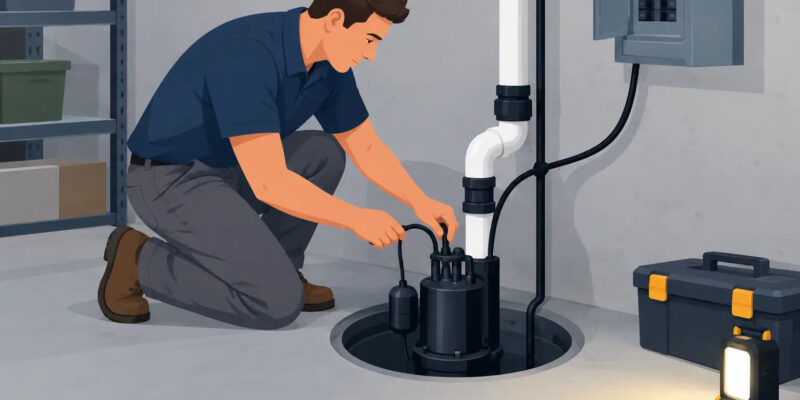
Most standard sump pumps use a piggyback plug arrangement. The float switch plugs into the wall outlet, and the pump plugs into the back of the float switch plug. This allows the float to turn the pump on and off automatically.

With power off, confirm that both plugs are fully connected and that cords are not cracked, pinched, or submerged outside the basin. Do not bypass the float switch by plugging the pump directly into the wall as a permanent fix. That can make the pump run continuously, overheat, or drain the pit below its intended level.

Some sump pumps have a thermal overload protector. When a motor overheats, this protection may shut it down. Depending on the model, it may reset automatically after the motor cools. If a pump stops after running for an extended period, give it time to cool with power disconnected, then restore power and test it. A pump that repeatedly overheats needs professional diagnosis.

Use the pump’s reset button only if the manufacturer provides one

Certain models include a reset button on the motor housing or control box. Consult the pump label or owner’s manual for its location and instructions. With the unit disconnected from power, press the specified reset control, restore power, and test the pump.

Do not confuse a pump reset with a battery backup reset. Backup systems have separate controls, batteries, alarms, and charging components. If the primary pump failed during an outage but the backup did not operate, both systems should be inspected before the next severe-weather event.

Test the sump pump after resetting it

Restoring power is not the same as confirming the system will protect the basement. The most practical test is to slowly pour water into the sump pit until the float rises and activates the pump. Stay nearby and watch the complete cycle.

The pump should start without prolonged humming, move water through the discharge line, and shut off after the water level drops. Check outside, when practical, to verify that water is leaving the discharge pipe and flowing away from the foundation. In freezing weather, an exterior discharge line can become blocked by ice even though the pump itself is running.

A brief hum followed by no water movement may mean the impeller is jammed or the motor has failed. Continuous running can point to a stuck float, a discharge obstruction, or water returning to the pit through a failed check valve. Short cycling may indicate an improperly adjusted float or a pit that is too small for the amount of groundwater entering it.

Do not run a sump pump dry for more than a moment during testing. Most pumps rely on water movement for cooling, and unnecessary dry running shortens motor life.

Problems a reset will not solve

A reset can restore power after a temporary interruption, but it cannot repair worn mechanical components or drainage problems. Arrange service if you notice any of the following conditions:

  • The GFCI outlet or breaker trips again after being reset.
  • The pump hums, vibrates, or smells hot but does not move water.
  • Water rises in the pit and the pump does not start when the float lifts.
  • The pump runs continuously or cycles on and off every few seconds.
  • Water comes back into the pit after the pump shuts off.
  • The discharge line is blocked, frozen, loose, or releasing water close to the foundation.

For commercial properties and facilities, a sump pump failure can affect more than one basement or utility room. Water can interrupt operations, damage stored materials, and create electrical hazards. A service plan that includes routine pump testing, float inspection, discharge-line checks, and backup-system verification is generally less disruptive than responding after flooding begins.

Keep the next reset from becoming an emergency

A sump pump deserves attention before the wet season, not only when an alarm sounds. Test it periodically with water, clear debris from the pit, and make sure the lid is secure if the basin is covered. Check that the discharge pipe directs water well away from the building and that its end is not buried, blocked, or frozen.

If your home depends on a sump pump, consider what happens when utility power is unavailable. A properly maintained battery backup or standby power solution can provide valuable protection, but only if it is sized for the system and tested regularly. The best option depends on how often outages occur, how much groundwater the property handles, and how long the pump may need to run.

When a pump will not reset, trips power, or cannot keep up with incoming water, prompt service protects the building far better than another attempt at the switch. Hydrodynamics Inc. can help homeowners and property managers identify whether the issue is electrical, mechanical, drainage-related, or tied to the pump system itself – and put a dependable repair or replacement plan in place.

When Should a Sump Pump Run? What’s Normal

A sump pump can be quiet for weeks, then run several times in a single day after heavy rain or rapid snowmelt. That difference often leaves property owners asking: when should sump pump run, and when does its operation point to a problem?

The short answer is that a sump pump should run whenever groundwater or collected drainage water raises the level in the sump pit enough to activate its float switch. The longer answer depends on your property’s drainage, water table, weather conditions, foundation construction, and the condition of the pump system itself. A pump that runs during a storm may be doing exactly what it was installed to do. A pump that runs continuously in dry weather needs attention.

When Should a Sump Pump Run Under Normal Conditions?

A properly operating sump pump turns on when water in the basin reaches a preset level. The float rises with the water, activates the switch, and the pump sends water through a discharge pipe away from the foundation. Once the water level falls, the float drops and the pump shuts off.

For many homes in Northeastern Pennsylvania, sump pump activity is most common during sustained rainfall, spring thaw, rapid snowmelt, and periods when the ground is already saturated. Properties with a naturally high water table, lower elevations, or drainage directed toward the foundation may see more frequent cycles than nearby homes on higher, drier ground.

It is also normal for a pump to run multiple times during a severe storm. The key is whether it cycles on and off appropriately and actually lowers the water level in the pit. A working pump may run for a short period every few minutes during peak water conditions, then slow down as the rainfall eases and the surrounding soil drains.

A sump pump is not supposed to run on a fixed daily schedule. Its schedule is controlled by water. If it does not run for long stretches during dry weather, that alone is not a concern. In fact, infrequent operation can be normal for a home with effective grading, gutters, and exterior drainage.

How Often Is Too Often for a Sump Pump?

There is no single number of cycles per hour that applies to every property. During a major downpour, a pump may cycle frequently without indicating a defect. What matters is the pattern and the cause.

Frequent running deserves investigation when it continues after rain has stopped, occurs during dry weather, or seems to be increasing compared with previous years. A pump that turns on every few minutes all day may be handling an unusually high volume of groundwater, but it may also be short-cycling because of a switch issue, discharge problem, or water returning to the pit.

Continuous operation is more urgent. If the motor runs but the water level does not go down, the pump may be undersized, clogged, worn out, or unable to push water through the discharge line. If the basin is empty and the pump keeps running, shut off power to the unit if it is safe to do so and arrange for service. Running dry can overheat and damage the pump.

The discharge line can create a misleading problem

One common reason for frequent sump pump cycling is water that leaves the home but returns too close to the foundation. The discharge point should direct water well away from the house and slope so it continues away, not back toward the basement wall or sump pit.

A missing or failed check valve can cause a similar issue. The check valve is installed on the discharge pipe and prevents water from flowing backward into the basin after the pump shuts off. Without it, some water may fall back into the pit, raising the float again and forcing the pump to repeat the cycle.

Frozen discharge piping is another concern during Pennsylvania winters. The pump may activate, but water cannot exit properly. In that situation, water can back up in the pit and put the basement at risk just when access outside is difficult.

Signs Your Sump Pump May Need Service

A sump pump does not need to be loud to be working, but changes in sound or performance are worth paying attention to. Rattling, grinding, humming without pumping, or a motor that sounds strained can indicate mechanical trouble.

Watch for these conditions, especially before and during wet weather:

  • The pump runs constantly or cycles repeatedly during dry conditions.
  • Water in the pit rises above the pump’s normal activation level.
  • The pump turns on but does not discharge water outdoors.
  • The unit trips a breaker, loses power, or has a damaged power cord.
  • A strong odor, visible rust, excessive vibration, or unusual noise develops.
  • The float is tangled, obstructed, or does not move freely.
  • Water appears on the basement floor near the sump basin.

An older pump can also become less dependable even if it still runs. Service life varies by pump quality, usage, water conditions, and maintenance history, but a unit that has handled years of heavy cycling should be evaluated before it fails during a storm.

Why a Sump Pump May Not Run When It Should

A silent pump is not always a healthy pump. If water is rising in the pit and the pump does not start, first check whether the unit has power. Confirm that it is plugged into a working outlet and that the breaker or ground-fault circuit interrupter has not tripped. A sump pump should generally have a dedicated, properly protected electrical connection rather than an extension cord or overloaded outlet.

If power is available, the float switch may be stuck or failed. Debris in the basin can interfere with the float, while sediment and mineral buildup can affect the pump intake or impeller. In some systems, the pump may be running but unable to move water because the discharge line is blocked, frozen, or damaged.

Do not assume a pump is functional just because it has not flooded recently. Dry weather can hide a problem until the next storm puts the system under demand.

A Simple Sump Pump Test for Homeowners

Testing a sump pump before the rainy season is a practical part of home maintenance. Start by checking that the basin is reasonably clean and the float can move without catching on the pump, power cord, or discharge pipe.

Then slowly pour water into the pit until the float rises and activates the pump. Watch to make sure the pump starts, the water level drops, and the unit shuts off after the water is removed. If possible, verify that water is leaving through the outdoor discharge point.

This basic test does not replace a full inspection, but it can reveal obvious trouble with the pump, switch, or discharge path. Avoid reaching into a wet basin or handling electrical connections with wet hands. If the system behaves unpredictably, trips electrical protection, or fails to clear water, professional service is the safer choice.

Do not overlook the backup system

A primary sump pump depends on utility power, which means the time it is needed most can also be the time it is most vulnerable. Heavy storms can cause outages while groundwater levels are rising. A battery backup sump pump, properly maintained standby power, or another suitable backup arrangement can provide added protection for homes where basement flooding would cause significant damage.

Backup systems need testing too. A dead battery, failed charger, or disconnected alarm offers little protection when the primary pump cannot run. Property managers and facility operators should include sump pump and backup checks in seasonal preventive maintenance plans, particularly for buildings with finished lower levels, equipment rooms, or stored inventory below grade.

The Pump Is Only One Part of Basement Water Control

A sump pump manages water that reaches the pit. It cannot correct every drainage issue around a building. Clogged gutters, short downspout extensions, negative grading, damaged foundation drainage, and leaking plumbing can all add water where it does not belong.

If your pump runs more often than expected, consider the overall water path around the property. Are roof runoff and surface water being directed away from the foundation? Does the discharge terminate far enough from the building? Has landscaping changed the slope near the house? In commercial settings, are roof drains, exterior drainage structures, and mechanical areas being inspected routinely?

Addressing the source of excess water can reduce stress on the pump and help extend its service life. Still, the pump must remain ready to do its job when groundwater rises.

When to Call for Sump Pump Help

Call for service promptly if the pump cannot keep up with incoming water, runs continuously without lowering the basin level, will not start when water rises, or shows signs of electrical or mechanical failure. It is also wise to schedule an inspection before spring thaw or a forecasted period of heavy rain if the pump is older, has a history of trouble, or protects a finished basement or critical building space.

Hydrodynamics Inc. helps homeowners, businesses, and facility teams assess pump performance, discharge issues, replacements, and preventive maintenance. A sump pump rarely announces a problem at a convenient time. Testing it before the ground is saturated gives you a better chance of keeping water where it belongs: outside.

Pump Systems: What Keeps Water Moving Reliably

A pump failure rarely waits for a convenient time. A home on a well can lose water pressure without warning, a grinder pump can stop wastewater from leaving the building, and a drainage pump can allow water to collect where it does not belong. Pump systems are essential equipment, not background plumbing components. Choosing the right system and caring for it properly protects water access, sanitation, property, and daily operations.

For homeowners, business owners, and facility managers in Northeastern Pennsylvania, the right answer depends on what the pump must move, how far it must move it, and how critical uninterrupted operation is. A properly selected pump can provide years of dependable service. An undersized, poorly installed, or neglected unit often shows its limits when demand is highest.

What Pump Systems Do for a Property

Pump systems move water or wastewater when gravity alone cannot do the job. Some deliver clean water from a private well to fixtures and equipment. Others remove sewage from a lower-level bathroom, carry wastewater through a pressure line, manage stormwater, or increase water pressure in a larger building.

The pump itself is only one part of the system. Reliable operation also depends on electrical controls, piping, check valves, tanks, alarms, floats, pressure switches, and the condition of the water or waste stream being handled. A problem in any one of these components can look like a pump failure, which is why diagnosis should go beyond simply replacing the motor.

A well pump, for example, works with a pressure tank and pressure switch to maintain usable water pressure. A grinder pump relies on controls, a basin, and a discharge line to move wastewater safely. In both cases, proper installation is what turns individual components into a dependable system.

Common Types of Pump Systems

Well Pumps and Water-Pressure Equipment

Private wells commonly use a submersible pump installed below the water level in the well. The pump sends water to the home or building, where a pressure tank stores a small reserve and reduces how often the pump must start. A shallow-well jet pump may be appropriate in certain applications, but deeper wells typically require a submersible design.

Low pressure does not always mean the well pump has failed. A waterlogged pressure tank, worn pressure switch, clogged filter, leaking line, or water-treatment issue can produce similar symptoms. A technician should test system pressure, electrical performance, pump cycling, and water delivery before recommending a repair or replacement.

Well yield also matters. A pump that can produce more water than the well can sustainably supply may run the well down during heavy demand. Correct sizing accounts for household or facility use, well depth, static water level, drawdown, pipe friction, and the pressure required at the building.

Grinder Pumps and Sewage Pumps

Grinder pumps serve properties where wastewater must travel uphill or through a pressurized sewer line. Inside the basin, the pump grinds waste solids and moves the resulting slurry through a relatively small discharge pipe. These systems are common where a gravity sewer connection is not practical.

Not every pump intended for wastewater has grinding capability. A sewage ejector pump may handle wastewater and certain solids in applications with a larger discharge pipe, while a grinder pump is designed for pressurized systems that require finer solids processing. Installing the wrong equipment can create repeated clogs, overload the motor, or fail to meet system requirements.

Grinder pumps also depend on what enters the system. Wipes, paper towels, feminine hygiene products, grease, and other non-flushable materials can cause blockages or damage even when a pump is operating as designed. Clear use guidelines and prompt attention to alarms help prevent a minor issue from becoming a wastewater backup.

Sump, Drainage, and Booster Pumps

Sump pumps remove groundwater that collects around a foundation or in a sump basin. They are especially valuable in low-lying areas, finished basements, and properties with seasonal water concerns. A working check valve, properly routed discharge line, and reliable power supply matter as much as the pump itself.

Drainage pumps may be used for equipment rooms, condensate management, pits, or other areas where water must be removed. Booster pumps, meanwhile, increase pressure or maintain flow for fixtures and equipment in buildings where incoming water pressure is insufficient. Each application calls for different controls, materials, capacity, and backup considerations.

Signs a Pump Needs Service

A pump may continue operating even when performance has declined. Addressing warning signs early can often prevent a complete loss of water, a flooded space, or an interruption to business operations.

Watch for frequent pump cycling, reduced water pressure, air sputtering from faucets, unusual vibration, clicking controls, rising electric use, or a pump that runs continuously. For wastewater systems, an alarm, sewage odor, slow drains, or a wet area around the basin calls for immediate attention. A sump pump that does not activate during testing, or one that runs but does not discharge water, should be checked before the next heavy rain.

Some symptoms point to problems outside the pump. A clogged sediment filter can restrict well-water flow. A failed check valve can allow water to fall back into the line. A damaged float can prevent a basin pump from starting at the proper level. Professional troubleshooting identifies the actual cause, which helps avoid spending money on a replacement that does not solve the problem.

Proper Pump System Sizing Is Not Optional

Pump capacity is often described by horsepower, but horsepower alone does not determine whether a pump is right for the job. Flow rate, measured in gallons per minute, must be matched to the total dynamic head the pump must overcome. Total dynamic head includes vertical lift, pressure requirements, and friction loss through pipe, fittings, valves, and filters.

This is why two properties can need very different equipment even when both have wells or wastewater basins. A pump that is too small may struggle to meet demand and wear prematurely. One that is too large can short-cycle, create pressure problems, and place unnecessary stress on controls and piping.

Installation details affect service life as well. Electrical protection must be appropriate for the equipment, discharge piping must be correctly sized and supported, and check valves must be installed in the right location and orientation. For critical commercial or industrial applications, alarm systems, duplex pump arrangements, and backup power may be worthwhile investments. The right level of redundancy depends on the consequences of downtime.

Maintaining Pump Systems Before Failure

Preventative maintenance is usually less disruptive than emergency repair. For residential well systems, periodic pressure checks, tank inspections, filter service, and water-quality testing can reveal problems before water delivery is affected. Water-treatment equipment should also be considered, since sediment, hardness, iron, or other conditions can affect plumbing components and system performance.

Grinder and sewage pump maintenance should include inspection of controls, floats, basin condition, valves, and alarm function. Property managers should keep access to the basin clear and make sure occupants know what should not enter the system. Where equipment serves a business or industrial process, maintenance planning should account for operating hours, critical production periods, and available backup capacity.

Sump pumps deserve a regular test before wet-weather seasons. Confirm that the float moves freely, the pump starts, and water leaves through the discharge line. A battery backup can provide valuable protection during an outage, but it also needs periodic testing and battery replacement.

Hydrodynamics Inc. approaches pump work as part of the larger mechanical and plumbing system. That matters when a water-pressure concern involves a well pump, pressure tank, filtration equipment, plumbing leak, or electrical control rather than a single failed part. Coordinated service helps property owners make practical repair and replacement decisions based on the full system.

When Repair Makes Sense and When Replacement Is Better

A failed pressure switch, float, capacitor, check valve, or control component may be a straightforward repair if the pump itself is in good condition. Repair can also make sense when the equipment is appropriately sized, parts are available, and performance has otherwise been reliable.

Replacement becomes more reasonable when failures are recurring, the pump cannot meet current demand, repair costs are approaching the value of new equipment, or the system was incorrectly selected from the start. Older pumps can also become less efficient or more difficult to service as components wear and parts become limited.

Before approving a replacement, ask what caused the failure and whether the new equipment will address that cause. A new pump will not fix a restricted pipe, inadequate well yield, damaged wiring, or a basin that is too small for the application.

Reliable water and wastewater service begins with equipment that fits the property and continues with routine attention long before an alarm sounds or a faucet runs dry. If a pump is showing changes in pressure, cycling, noise, or drainage performance, scheduling an evaluation early gives you more options and fewer surprises.

Ultimate Guide to Sump Pump Sizing and Selection

Ultimate Guide to Sump Pump Sizing and Selection

Choosing the right sump pump is essential to prevent basement flooding and avoid costly water damage. Here’s what you need to know:

  • Pump Types:
    • Submersible: Quiet, handles high water volume, fits deep pits.
    • Pedestal: Affordable, easier to maintain, ideal for narrow pits.
    • Battery Backup: Activates during power outages for added protection.
  • Sizing Your Pump:
    • Measure vertical lift (height from sump pit to discharge point) and horizontal distance.
    • Match flow rate (GPM) with pump power (HP).
    • Use proper pipe size to minimize friction loss.
  • Key Features:
    • High-water alarm, check valve, and battery backup ensure reliability.
  • Professional Installation: Certified technicians ensure proper setup, extending pump lifespan and reducing risks.

Follow this guide to select, size, and install a sump pump that fits your needs, ensuring long-term protection for your home.

Sump Pump Types

Main Pump Types: Submersible, Pedestal, and Battery Backup

Submersible Pumps
These pumps combine the motor and pump into a single waterproof unit, allowing them to operate fully submerged in the sump pit. They are quiet, compact, and handle larger volumes of water and debris effectively.

Pedestal Pumps
A pedestal pump has its motor positioned above the sump pit, with only the pump section submerged. While they are louder than submersible pumps, they are more affordable and easier to maintain. Their slim design makes them ideal for narrow or shallow sump pits.

Battery Backup Systems
Battery backup pumps act as a secondary layer of protection, automatically activating during power outages or when the primary pump fails. They help prevent flooding until power is restored or the main pump is repaired.

Selecting Your Pump Type

Choosing the right pump depends on your specific needs and the conditions of your space.

Site and Flow Requirements

  • For finished basements with expensive flooring or stored items, a quiet submersible pump paired with a battery backup offers reliable protection.
  • If water seepage is light to moderate, a pedestal pump can handle the job efficiently.
  • For areas prone to heavy water flow or frequent flooding, a submersible pump provides the necessary capacity to manage the load.

Installation Space
Check the dimensions of your sump pit to ensure the pump fits properly. Submersible pumps require a deeper pit, while pedestal pumps need enough vertical space above the pit for the motor.

Once you’ve determined the type of pump you need, it’s time to focus on sizing it correctly.

How to Choose a Sump Pump? (Complete Sizing Guide …

How to Size Your Sump Pump

Choosing the right sump pump depends on two main factors: total dynamic head (which includes vertical lift, horizontal distance, and friction losses) and the required flow rate. Once you know the pump style you need, it’s time to calculate these variables to ensure the pump fits your setup.

Measuring Lift and Distance

To determine the total dynamic head, start by measuring the vertical lift – the height from the bottom of your sump pit to the discharge point. Then, add the length of the horizontal pipe and account for any elevation changes along the way.

For example, if you have an 8-foot pit and a 20-foot horizontal pipe, you’ll need a pump rated for at least 28 feet of head to handle the lift and friction.

Flow Rate and Power Requirements

Your pump should be able to handle the maximum amount of water your site might experience. Here’s a breakdown of flow rates and the corresponding pump power you’ll need:

Water Flow Total Head (ft) Minimum HP
Light (15–25 GPM) Up to 15 1/3 HP
Moderate (25–45 GPM) 15–25 1/2 HP
Heavy (45–60+ GPM) 25+ 3/4 HP

Pipe Size and Friction Loss

The diameter of your discharge pipe directly impacts friction loss. Here’s a quick guide:

  • Use 1.25-inch pipes for flows up to 30 GPM.
  • Use 1.5-inch pipes for flows between 30 and 45 GPM.
  • Use 2-inch pipes for flows above 45 GPM.

Keep in mind that every 90-degree elbow in the piping adds around 2 feet of head. To reduce friction and maintain efficiency, minimize bends or consider upsizing the pipe or selecting a pump with a higher head rating for longer or more complex runs.

What to Look for When Buying

Once you’ve calculated pump capacity and head, it’s time to ensure your chosen model is equipped with the right safety features.

Double-Check Your Sizing Calculations

Match your total dynamic head and flow-rate measurements to the pump specifications to ensure compatibility.

Key Safety Features to Consider

Make sure your pump includes these essential safety features:

  • High-water alarm: Alerts you when water reaches critical levels.
  • Check valve: Stops water from flowing back into the pump.
  • Battery backup: Keeps the pump running during power outages.

Pump Features Compared

Once you’ve determined the right size and safety features, it’s time to compare pump models side by side. With your pump type selected and sizing calculations complete, focus on the key features and power ratings to make your final choice.

Pump Types and Their Applications

  • Submersible: Operates quietly, handles high water volumes, and is ideal for deep pits due to its sealed motor.
  • Pedestal: More affordable and easier to service, though it’s noisier and best suited for narrow pits.
  • Battery Backup: Automatically activates during power outages, but offers limited flow and is best for emergencies.

Consider how these features align with your calculated head and flow rate to ensure the pump performs reliably.

Power and Flow Rate Considerations

Check that the motor power aligns with your flow-and-head calculations. Match the pump’s horsepower (HP) and gallons per minute (GPM) ratings to the head and flow you measured. Use the manufacturer’s performance curve to confirm the pump will operate effectively under your specific conditions.

Choose a pump with a capacity that matches your usual water volume, leaving some extra room for heavy rainfall or unexpected water inflows. This ensures your system can handle peak demands without fail.

Expert Installation and Support

Once you’ve selected the right pump, proper installation and support are essential for optimal performance.

Why Opt for Professional Installation

Professional installation ensures your system operates reliably. Certified technicians handle everything: confirming lift and flow calculations, positioning the pump correctly, making safe electrical connections, adhering to local regulations, and testing the system under real-world conditions. This process helps avoid costly installation mistakes.

Hydrodynamics’ Services

Hydrodynamics Inc., a family-run business since 1994, specializes in sump pump installation and support. Their team of certified technicians carries qualifications like A.S.S.E. Backflow Testing, EPA 609, and Trac Pipe & Gas Tite certifications. Key services include:

  • Sump Pump Installation: Expert setup by experienced professionals
  • Preventative Maintenance: Routine inspections and performance tests to keep your system running smoothly

Emma K. from Drums, PA, had this to say about her experience:

“They were prompt and knowledgeable and efficient. Very pleased with their work.”[1]

Choosing certified professionals not only ensures your pump performs at its best but also extends its lifespan and reduces the chance of unexpected repairs.

Conclusion

Choosing the right sump pump size is key to preventing basement flooding and expensive water damage. Consider the pump type, lift-and-flow requirements, and professional installation to ensure it works effectively. Hydrodynamics Inc. offers certified technicians who specialize in sizing, installation, and maintenance, providing reliable protection for the long haul. Protect your home and avoid costly repairs by opting for expert pump selection and installation.