
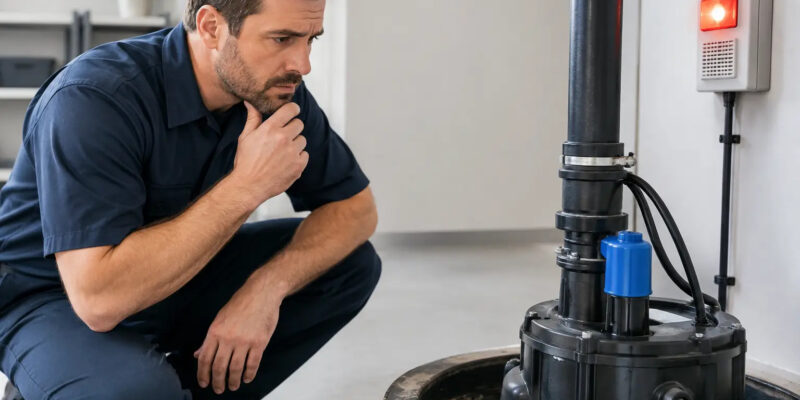
A grinder pump alarm is not an appliance alert to ignore until morning. It usually means wastewater in the pump basin has risen above its normal operating level. If you are asking, “why does a grinder pump alarm go off?” the short answer is that the pump is not moving sewage out of the basin as it should – or the alarm system is detecting a condition that needs attention.
For homes and facilities served by a grinder pump, fast action can prevent an unpleasant and expensive backup. The alarm does not always mean the pump has failed beyond repair, but it does mean the system needs to be used carefully until the cause is identified.
What a Grinder Pump Alarm Is Telling You
A grinder pump collects wastewater from toilets, sinks, showers, washing machines, and other plumbing fixtures in a sealed basin. When the wastewater reaches a preset level, a float switch starts the pump. The pump grinds solids into a slurry and sends the wastewater through a pressurized discharge line to the public sewer or septic connection.
The alarm float is set higher than the normal pump-on level. When the wastewater rises to that point, it activates an audible alarm, a light, or both. In other words, the alarm is warning that the basin is getting too full.
Many systems have enough basin capacity to provide a limited window for response. That window depends on the basin size, how much water the building uses, and whether the pump is still operating at all. Continuing normal water use can fill the basin quickly.
Why Does a Grinder Pump Alarm Go Off?
Several conditions can trigger a grinder pump alarm. Some are simple electrical problems. Others require pump repair, line cleaning, or replacement of worn components.
A Power Outage or Tripped Breaker
A grinder pump cannot operate without electricity. After a storm, utility interruption, or electrical issue, wastewater continues entering the basin but cannot be pumped out. The high-water alarm sounds once the water reaches the alarm float.
Check whether the home or building has power and inspect the pump circuit breaker. If the breaker has tripped, reset it once. If it trips again, leave it off and arrange for service. Repeated tripping can point to a short circuit, a failing motor, moisture in electrical components, or a seized pump.
A portable generator may help during an extended outage, but only if it is properly sized and safely connected. Never use improvised wiring or run a generator in a garage, basement, or other enclosed area.
Too Much Water Entering the Basin
Heavy water use can temporarily overwhelm a pump system, particularly if several fixtures are used at once. Back-to-back showers, laundry loads, dishwasher cycles, and toilet flushing can add up quickly. A large gathering at a home or a busy period in a commercial property can expose a pump that is undersized, aging, or already operating below capacity.
Groundwater infiltration can also be a factor in some systems. During heavy rain or snowmelt, water entering through damaged connections or improperly routed drainage can add unnecessary volume to the basin. Sump pumps, roof drains, and foundation drains should not discharge into a grinder pump basin unless the system was specifically designed for that purpose.
A Clog in the Pump or Discharge Line
Grinder pumps are designed for wastewater and toilet paper, not for every item that can fit down a drain. Wipes labeled “flushable,” paper towels, feminine hygiene products, dental floss, diapers, grease, and cat litter can jam the grinding mechanism or create a blockage in the discharge line.
Grease deserves special attention in homes, restaurants, and break rooms. It may leave a kitchen drain as a liquid, but it cools and hardens inside pipes and pump components. Over time, grease buildup restricts flow and forces the system to work harder.
A blocked discharge line may allow the pump to run without lowering the basin level. You might hear the motor running longer than usual, notice the alarm returning shortly after it is silenced, or see no reduction in water level. This is a service issue, not a condition to solve by repeatedly resetting the panel.
A Failed Float Switch or Control Panel Issue
Float switches tell the system when to start the pump and when to activate the alarm. A float can become tangled, coated with debris, stuck in one position, or worn out after years of use. If the pump-on float fails, the basin can fill until the higher alarm float activates.
Control panels, relays, fuses, and alarm circuits can also fail. In some cases, the pump may be working normally but the alarm continues due to a defective float or alarm component. That still calls for repair. A silent or unreliable alarm removes an essential early warning system.
Pump Motor or Mechanical Failure
Grinder pumps operate in demanding conditions. Motors, impellers, seals, capacitors, and grinding components eventually wear. A pump can also overheat, seize, or lose the ability to develop enough pressure to push wastewater through the discharge line.
A humming sound without pumping, unusual grinding noise, frequent cycling, or a pump that runs continuously are all signs that should be evaluated by a qualified pump technician. The right repair depends on the pump model, its condition, the basin setup, and the source of the failure. Sometimes replacing a failed component makes sense; on an older unit with repeated problems, replacement may be the more dependable choice.
What to Do When the Alarm Sounds
Start by reducing water use immediately. Avoid flushing toilets, taking showers, running washing machines, operating dishwashers, or draining sinks unless absolutely necessary. Every gallon sent down a drain enters the basin.
Next, check for an obvious power issue. Look for a household outage, a tripped breaker, or a disconnected plug if the unit uses a plug connection. Do not open the electrical control panel, remove the basin cover, or reach into the tank. Grinder pump basins contain wastewater, harmful gases, and moving equipment.
If the alarm has a silence or reset button, it may be used to stop the audible signal temporarily. Silencing the alarm does not correct the underlying high-water condition. Keep water use restricted and monitor whether the alarm returns.
If the alarm follows a brief outage and the pump begins operating after power returns, allow time for the basin level to drop. Continue limiting water use until the alarm is off and the system has returned to normal. If the alarm remains on, the pump does not run, the breaker trips, or wastewater backs up into fixtures, request professional service promptly.
When a Grinder Pump Alarm Is an Emergency
Treat the situation as urgent when sewage is backing up into a tub, shower, floor drain, or toilet; when the basin is visibly overflowing; or when the pump will not run and the property cannot safely limit water use. Commercial properties, multi-unit buildings, and facilities with restrooms in active use can reach that point especially quickly.
If wastewater has entered living or work areas, keep people and pets away from the affected space. Sewage cleanup requires proper sanitation and may involve more than pump repair. Addressing the pump is the first step, but contaminated materials and surfaces also need to be handled safely.
Preventing Future Grinder Pump Alarms
Most grinder pump alarms are easier to prevent than to manage during a backup. Use the system only for human waste and toilet paper. Keep wipes, grease, food scraps, hygiene products, and other non-pumpable materials out of toilets and drains.
A preventative inspection can identify worn floats, electrical concerns, check-valve problems, restricted discharge piping, and pump wear before an alarm becomes a disruption. For properties with high wastewater demand, a technician can also evaluate whether the basin, pump capacity, and controls are appropriate for the building’s actual use.
For homeowners and property managers across Northeastern Pennsylvania, Hydrodynamics Inc. can diagnose grinder pump alarms, repair pump-system components, and help plan practical maintenance for dependable wastewater service. When the alarm sounds, reduce water use first, then get the cause addressed before a manageable warning becomes a sewage problem.