Multi-Zone HVAC Balancing Guide

Ultimate Guide to Multi-Zone HVAC Balancing

Balancing your multi-zone HVAC system ensures efficient performance, protects equipment, and eliminates temperature inconsistencies.

Key takeaways:

  • Multi-zone systems allow independent temperature control across areas using multiple thermostats.
  • Proper balancing prevents issues like frozen coils, overheated heat exchangers, and high energy bills.
  • Tools like balancing hoods, anemometers, and manometers are essential for accurate airflow measurement.
  • Following the 35% Rule: The smallest zone must handle at least 35% of total airflow to avoid static pressure problems.
  • Balancing reduces energy use by up to 35%, extends equipment life, and improves indoor comfort.

If your system struggles with uneven airflow, high utility costs, or frequent cycling, professional balancing services can help. Start by checking for blockages, adjusting dampers, and ensuring proper system design. For long-term reliability, consider expert evaluation and maintenance.

Flow Hood: How to Properly Balance an HVAC System

Tools and Equipment for Balancing

Balancing HVAC systems effectively depends on accurate measurement tools to ensure proper airflow and protect equipment from damage. Today, a wide range of instruments is available, from budget-friendly smartphone-compatible meters to advanced professional systems. Below are the key tools you’ll need for precise airflow measurement in multi-zone HVAC systems.

Balancing Hood

A capture hood, also known as a flow hood, is one of the most straightforward tools for measuring airflow at diffusers and grilles. Simply place the hood over the terminal, and it will display the airflow in cubic feet per minute (CFM).

For diffusers with uneven velocity patterns, applying manufacturer-specific K-factors ensures accurate readings. Entry-level models of capture hoods start at about $494, while professional-grade units can cost up to $3,510.

Anemometers and Manometers

Anemometers are used to measure air velocity at specific points. Rotating vane anemometers require multiple readings to calculate total CFM, whereas thermal anemometers provide high resolution for low-velocity variable air volume (VAV) applications, though they can be sensitive to environmental conditions.

Pressure measurement is equally important. Pitot tube manometers are commonly used to determine total and static pressure within ductwork. By subtracting static pressure from total pressure, you can calculate velocity pressure and determine air velocity using the formula V = 4005 × √VP. For larger rectangular ducts, at least 16 traverse points are needed to ensure accuracy. While this method is ideal for trunk ducts, it’s not suitable for low-velocity scenarios.

Additional Measurement Tools

Digital airflow meters combine several functions – measuring velocity, volume, temperature, pressure, and humidity – in one device. Accessories like the velocity matrix allow for area-averaged, multi-point measurements, making them indispensable for ensuring even airflow distribution across zones.

To confirm fan performance, use tachometers to measure fan RPM and compare it to the manufacturer’s specifications before making damper adjustments. Keep in mind that duct leakage in commercial buildings can reduce delivered airflow by 10%–25%.

How to Balance a Multi-Zone HVAC System
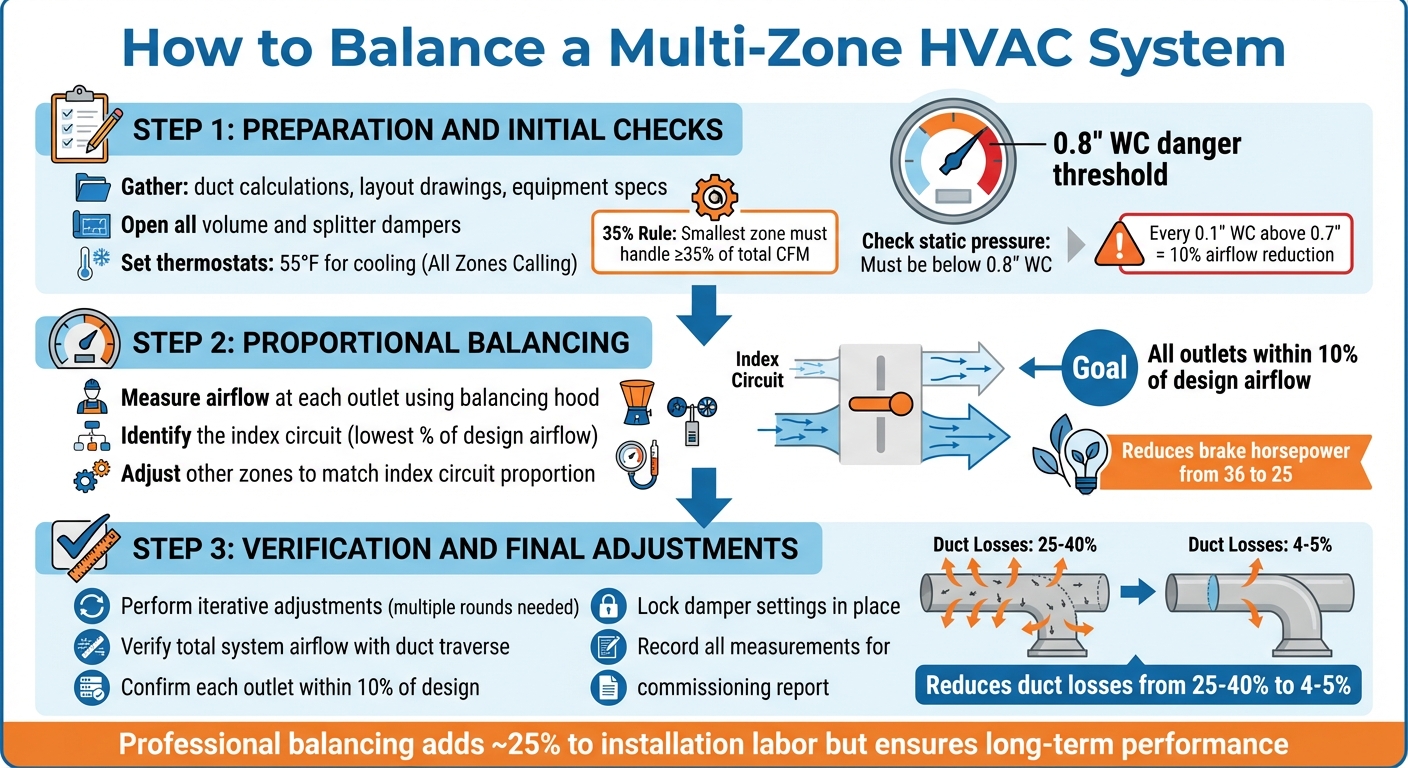
3-Step Multi-Zone HVAC Balancing Process with Key Measurements

3-Step Multi-Zone HVAC Balancing Process with Key Measurements

Preparation and Initial Checks

Start by gathering key documents like duct calculations, layout drawings, equipment specifications, and control details. If your system is older and lacks documentation, sketch the duct layout, note nameplate data, and create a chart to track design airflow against actual measurements.

Before diving in, ensure all volume and splitter dampers are open, the blower is running at the correct speed, filters are clean, and all accessories are properly installed. For multi-zone systems, set all thermostats to create an “All Zones Calling” condition – typically 55°F for cooling or high heat for heating mode. This setup allows you to measure maximum airflow at each register. Take baseline static pressure readings to confirm your system is below the 0.8″ WC danger threshold, as exceeding this can significantly reduce airflow. For context, every 0.1″ WC increase above 0.7″ cuts airflow (CFM) by about 10%.

“Air balancing is a critical step in HVAC commissioning that often gets overlooked until problems arise.” – Jason Rende, HVAC Designer and Air Balancing Specialist

Keep in mind a crucial rule: with single-stage equipment, the smallest zone must handle at least 35% of the total system CFM to avoid excessive static pressure that could damage the equipment. Also, check that the bypass duct is installed at least 8 feet away from the supply and return plenums, and make sure its balancing damper is accessible for adjustments.

Proportional Balancing Method

Once the system is running at design speed with all dampers open, measure airflow at each outlet using a balancing hood or anemometer. Identify the index circuit, which is the zone receiving the lowest percentage of its design airflow. This zone serves as the benchmark for balancing the rest of the system.

Next, adjust the dampers in other zones to match the index circuit’s airflow proportion. Focus first on outlets delivering significantly more than their design airflow, as reducing their output naturally redirects air to underperforming zones. The aim is to bring all outlets within 10% of their design airflow values. By following this proportional balancing method, you minimize overall system pressure while ensuring all zones are adequately served. This approach can also reduce energy consumption, as seen in typical applications where brake horsepower drops from 36 to 25.

“The task of proportional balancing is the first step to achieving an energy efficient pumping system.” – Chad Edmondson, JMP Equipment Company

After completing proportional adjustments, proceed to verification and fine-tuning.

Verification and Final Adjustments

With the proportional balance established, iterative adjustments will help fine-tune the system. Air balancing is not a one-and-done process – every adjustment affects the entire system, so multiple rounds of measurement and tweaking are often necessary. Once proportional balance is achieved, verify total system airflow with a duct traverse or static pressure reading to ensure both airflow and pressure stay within design limits.

Check that each outlet remains within 10% of its design airflow, and secure all damper settings. Ensure the damper or valve in the most critical zone stays fully open to minimize system resistance. Finally, record all measurements for the commissioning report. Properly balanced airflow not only optimizes performance but also reduces energy losses. In fact, balancing and sealing ducts can lower heating and cooling losses from an average of 25%–40% to just 4%–5%.

Common HVAC Balancing Problems and Solutions

Blockages and Obstructions

A large number of airflow complaints in multi-zone HVAC systems can be traced back to physical blockages. For example, dirty air filters alone account for 20% of airflow issues, while closed vents contribute to 30% of uneven temperatures. A simple test for a clogged filter? Hold it up to a light source – if no light passes through, it’s time for a replacement. Also, walk through your home and ensure all vent dampers are open, with their levers aligned to the airflow direction.

Blockages aren’t always obvious. In attics and crawl spaces, you might find crimped flex-ducts, disconnected sections of ductwork, or ducts with excessive bends – all of which can choke airflow before it even reaches your rooms. Use a flashlight to inspect the ductwork and seal any cracks or gaps to avoid air loss. While the system is running, check for leaks at visible duct joints. Sealing these with duct mastic is a relatively low-cost fix, ranging from $5 to $30 for DIY materials, though professional repairs for extensive damage can cost $300–$800.

Another common culprit? Closed interior doors, which cause 15% of circulation issues. When doors to bedrooms or closets stay shut, conditioned air gets trapped and can’t return to the furnace, creating pressure imbalances. To fix this, keep doors open during peak heating or cooling seasons. Alternatively, you can install transfer grilles ($50–$150) or make door undercuts to ensure steady air circulation.

Once physical obstructions are resolved, fine-tune airflow by adjusting damper settings.

Incorrect Damper Settings

Improper adjustments to dampers often lead to hot and cold spots throughout a home. The key is to identify zones with excessive airflow and restrict them to balance the system. Start by pinpointing which areas receive too much air – these zones typically exceed their design specifications. Adjust their dampers first to redirect airflow to underperforming zones without over-restricting the system.

“Adjust branch dampers until all outlets are within 10% of design airflow values.” – Jason Rende, Air Balancing Specialist

In single-stage zoned systems, the bypass damper is essential for protecting your equipment. When only the smallest zone is calling for air, the bypass damper must relieve excess pressure to keep static pressure below the danger threshold of 0.8″ WC. If the bypass duct is undersized or its damper is misaligned, you risk frozen coils during cooling or overheated heat exchangers in heating mode. Once you’ve determined the correct damper positions, lock them in place to prevent future shifts.

However, even with perfect damper settings, underlying design flaws can still lead to balancing issues.

Design and Installation Problems

Some HVAC balancing problems are rooted in system design flaws that dampers alone can’t fix. For instance, having a thermostat on just one floor of a multi-story home causes about 35% of balancing issues, as it fails to account for temperature variations on other levels. Moving the thermostat to a central location can make a big difference, with professional relocation costing $100–$300.

Another common issue is excessively long duct runs, which lose pressure before air reaches distant rooms. An inline duct booster fan ($150–$300) can temporarily improve airflow in these cases, but it’s not a permanent fix. For more severe issues, like undersized main trunks or excessively long ductwork, a complete redesign may be necessary. This type of professional ductwork overhaul typically costs between $2,000 and $5,000.

Additionally, ensuring the smallest zone handles at least 35% of the total system CFM is critical in single-stage systems. Falling short of this threshold can lead to excessive static pressure and long-term equipment damage. Variable-speed systems offer a more efficient solution – they adjust capacity to match zone demands, often eliminating the need for bypass ducts altogether.

These solutions complement earlier proportional balancing techniques and help ensure a more reliable and efficient HVAC system.

Hydrodynamics Multi-Zone HVAC Balancing Services
Hydrodynamics

Full-Service HVAC Solutions

Since 1994, Hydrodynamics has been a trusted name in Northeastern Pennsylvania, bringing more than three decades of expertise to multi-zone HVAC balancing. Their team of factory-trained technicians holds advanced certifications, such as EPA 609, A.S.S.E Backflow Testing, and Trac Pipe & Gas Tite. This ensures they’re equipped to handle everything from adjusting residential dampers to commissioning large-scale industrial systems.

“We have all your HVAC service needs covered throughout the year, ranging from repairs and replacements to maintenance and installations.”
– Hydrodynamics Inc.

Their services span a wide range of equipment, including central air conditioning, ductless mini-split systems, heat pumps, and specialized HVAC setups for residential, commercial, and industrial spaces. Customers consistently commend Hydrodynamics for their dependable service. This reputation for reliability is matched by their dedication to energy-efficient system solutions.

Energy-Efficient Systems

Hydrodynamics prioritizes eco-friendly practices to maximize resource efficiency. Their services go beyond basic temperature control, addressing combustion pollutants, conducting high-pressure leak tests, and installing variable-speed equipment that adapts to zone-specific demands. This often eliminates the need for bypass ducts.

By performing Manual J calculations for each zone rather than relying on a single whole-house estimate, they can apply diversity factors that cut peak loads by 7%. Their installations also include power dampers with Belimo actuators, which consume 25% less energy than traditional spring-return models. These thoughtful upgrades allow Hydrodynamics to deliver solutions tailored to each client’s unique energy and comfort requirements.

Custom Service Plans

Hydrodynamics designs service plans to meet the specific needs of residential, commercial, and industrial clients across Northeastern Pennsylvania. Industrial clients, in particular, benefit from the expertise of technicians trained to handle complex systems that are beyond the scope of general contractors.

“Our factory trained technicians are available to service all of your industrial needs.”
– Hydrodynamics Inc.

Their year-round maintenance ensures that multi-zone systems stay balanced through seasonal changes. Additionally, integrated services like water conditioning and grinder pump maintenance help optimize overall building performance by aligning HVAC systems with other critical infrastructure needs.

Conclusion

Key Takeaways

Balancing a multi-zone HVAC system is crucial for protecting your equipment and cutting down on energy costs. A key principle to remember is the 35% Rule: the smallest zone should manage at least 35% of the total system CFM. This helps avoid dangerous static pressure issues that can lead to frozen evaporator coils or overheated heat exchangers. For context, every 0.1″ WC increase above 0.7″ reduces airflow by 10%.

Using zone-specific Manual J calculations allows you to factor in diversity, which can reduce peak loads by about 7%. Additionally, variable-speed systems are excellent at adjusting capacity to meet demand, often making bypass ducts unnecessary. While professional commissioning may add approximately 25% to installation labor costs, it ensures your system is properly balanced for long-term performance and equipment protection. As Ben Reed, Principal at Teal Maker Consulting, puts it:

“Zoning isn’t just about adding dampers – it’s about creating a complete system that respects equipment limitations while delivering promised comfort.”

By applying these principles and techniques, you can achieve immediate and effective improvements in your HVAC system’s performance.

Next Steps

If you’re dealing with uneven temperatures, high energy costs, or frequent cycling of your HVAC system, it might be time for professional balancing. Hydrodynamics, with nearly 30 years of expertise, specializes in this area. Their comprehensive services include static pressure monitoring, bypass duct sizing calculations, and detailed Testing, Adjusting, and Balancing (TAB) reports to ensure proper airflow at every register. Contact Hydrodynamics today to schedule an evaluation and optimize your system for better performance, longer equipment life, and compliance with manufacturer specifications.

FAQs

Can I balance my zones without professional tools?

Balancing zones in an HVAC system without the right tools is a risky move. It involves precise tasks like adding dampers or figuring out bypass duct needs – things that demand specialized equipment and expertise. Trying to handle this on your own could result in pressure problems or even damage to your system. To ensure everything runs smoothly and efficiently, it’s best to rely on professional tools and know-how.

How do I know if my system’s static pressure is too high?

To see if your system’s static pressure is too high, use a manometer to measure it. Then, compare the reading to the system’s rated pressure, which is usually between 0.4 to 0.5 inches of water column (in. WC) for most residential systems. If the reading exceeds this range, it could point to problems like dirty filters, blocked ducts, or coil issues. These issues can cause weak airflow, noisy vents, and increased energy consumption.

Do I need a bypass duct with a zoned system?

Whether or not a bypass duct is necessary comes down to the design of your HVAC system. In older or more traditional setups, bypass ducts play a role in controlling static pressure and maintaining proper airflow. However, with advancements in technology, many modern zoning systems now rely on sophisticated dampers and controls, making bypass ducts less common. To figure out what’s right for your system, it’s best to consult an HVAC professional who understands your specific setup.
Water Treatment Systems: RO, UV, Softeners

Specialty water treatment systems

Specialty water treatment systems are designed to address specific water quality issues that standard filters can’t handle. Whether you’re dealing with heavy metals, bacteria, or hard water, these systems offer targeted solutions for homes, businesses, and industries. Here’s what you need to know:

  • Reverse Osmosis (RO): Removes 95–99% of dissolved solids, heavy metals, and salts. Ideal for high-contaminant areas but produces wastewater.
  • UV Purification: Kills 99.99% of bacteria and viruses using UV-C light without chemicals. Best for clear water with microbial risks.
  • Water Softeners: Combat hard water by removing calcium and magnesium, protecting appliances and plumbing.

For private well users and industries, these systems are critical for ensuring safe, high-quality water. Always test your water first to choose the right system for your needs.

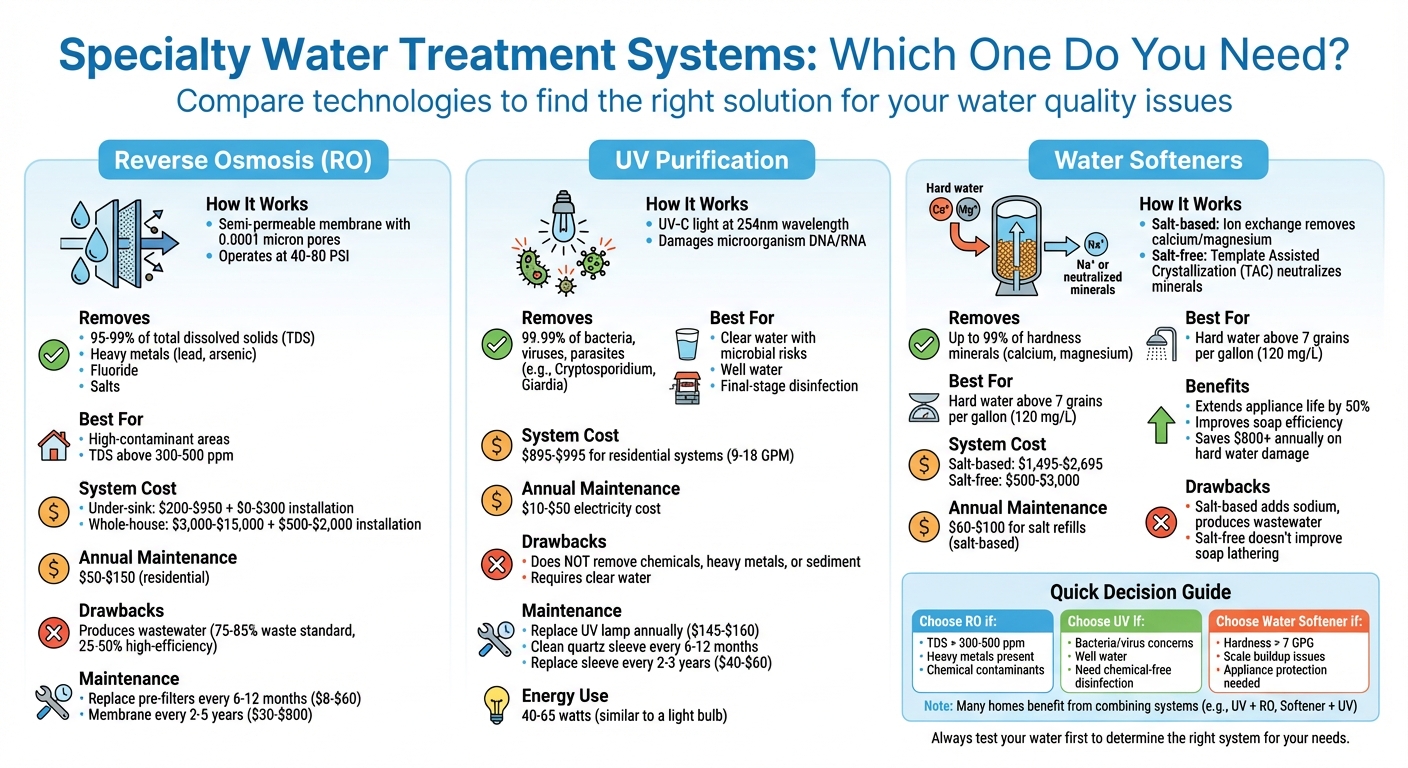
Comparison of Specialty Water Treatment Systems: RO, UV, and Water Softeners

Comparison of Specialty Water Treatment Systems: RO, UV, and Water Softeners

Choosing the Right Water Purification System

Reverse Osmosis Systems

Reverse osmosis (RO) systems work by pushing water through a semi-permeable membrane with a pore size of just 0.0001 microns, using pressure between 40 and 80 PSI. This process separates water from dissolved molecules, letting only clean water pass through.

The system operates in three main stages. Pre-filtration removes large particles with sediment filters and eliminates chlorine and chloramines using activated carbon filters, which helps protect the membrane from damage. During the membrane stage, water is split into two streams: the purified “permeate” and the waste “concentrate” that carries away the contaminants. Finally, post-filtration uses carbon polishing filters to remove any remaining tastes or odors before delivering the water.

RO systems can remove 95% to 99% of total dissolved solids (TDS), including harmful substances like lead, arsenic, and fluoride. The EPA considers reverse osmosis one of the best technologies for reducing regulated contaminants such as radium, nitrate, and arsenic.

“Reverse osmosis is the gold standard of home water filtration. It’s the only widely available technology that removes 95-99% of dissolved contaminants from your drinking water”.

Most residential RO systems have a recovery rate of 15% to 25%, meaning they waste 75% to 85% of the water that enters the system. However, newer high-efficiency models can recover 50% to 75% of the water. Industrial systems, like those used for seawater desalination, require much higher pressures – between 600 and 1,200 PSI – to handle the stronger osmotic pressure of saltwater. Globally, around 16,000 desalination plants were operational as of 2019, producing about 95 million cubic meters of water daily.

Where Reverse Osmosis Works Best

For most homeowners, under-sink systems are the most practical option. These point-of-use systems, designed to purify water for drinking and cooking, typically cost between $200 and $950, with installation fees ranging from $0 to $300. Maintenance costs are relatively modest, running between $50 and $150 annually.

Whole-house RO systems, on the other hand, treat all the water entering your home but come with a much steeper price tag. Equipment costs range from $3,000 to over $15,000, with installation fees between $500 and $2,000. Annual maintenance can add another $400 to $700.

“In 32 years, I’ve recommended whole-house RO to fewer than a dozen residential customers. It’s almost always overkill”.

Whole-house systems are generally only necessary when TDS levels exceed 1,000 mg/L or for specific industrial purposes. Industrial uses include preparing boiler feedwater, pharmaceutical rinse water, and laboratory reagents. Proper installation tailored to your water quality needs, along with regular maintenance, ensures optimal performance.

Maintaining Your Reverse Osmosis System

Keeping your RO system in top shape requires regular maintenance. Sediment and carbon pre-filters should be replaced every 6 to 12 months to prevent membrane clogging and damage from chlorine. These filters typically cost between $8 and $60 each. The RO membrane itself lasts 2 to 5 years, depending on water quality and pre-filter care, with replacement costs ranging from $30 to $800 based on system size.

Monitoring performance is crucial. Use a TDS meter to check water quality – if readings rise 20% to 30% above the baseline, it’s time to replace the membrane. Water pressure is another critical factor; RO systems need 40 to 80 PSI to function properly. Homes with lower pressure should consider adding a booster pump. For well water users, pre-treatment systems are necessary to address issues like iron, hardness, and acidity, which can damage the RO membrane. Additionally, sanitize the storage tank annually to prevent biofilm buildup.

After replacing filters, flush the system by running the first one to two full tanks of water. This step removes any carbon fines or leftover debris from manufacturing.

UV Purification Systems

UV purification uses UV‑C light at a wavelength of 254 nm to disinfect water without the need for chemicals. This process works by damaging the DNA or RNA of microorganisms like bacteria, viruses, and parasites, making them unable to reproduce or cause infections. This method is the foundation of the stringent disinfection standards upheld by NSF/ANSI 55 Class A systems.

Here’s how it works: as water passes through a chamber containing a UV lamp encased in a quartz sleeve, any microorganisms in the water are exposed to a precise UV dose. NSF/ANSI 55 Class A systems ensure a minimum dose of 40 mJ/cm², which is sufficient to treat microbiologically unsafe water sources, such as wells. These systems inactivate 99.99% of harmful pathogens, including chlorine-resistant parasites like Cryptosporidium and Giardia.

“UV light at 254 nanometers destroys 99.99% of bacteria, viruses, and cysts in water by scrambling their DNA.”
– Aidan, Water Treatment Expert, Mid Atlantic Water

However, water clarity plays a big role in the effectiveness of UV disinfection. Suspended particles or high levels of iron and hardness can block UV rays, reducing their ability to disinfect. To address this, a 5‑micron sediment filter and additional pre-treatment for hard or iron-rich water are essential.

Residential UV systems, such as the Viqua VH200 (9 GPM) priced around $895 and the VH410 (18 GPM) for about $995, are designed to be energy-efficient. They consume 40 to 65 watts – similar to a standard light bulb – and add only $10 to $50 annually to electricity costs. Maintenance is straightforward: the UV lamp needs replacement every 12 months (or after 9,000 hours of use) because its UV‑C output diminishes over time. Replacement lamps typically cost between $145 and $160.

Benefits of UV Purification

UV purification stands out for its ability to disinfect water without chemical additives. Unlike chlorine, it doesn’t produce disinfection byproducts (DBPs), nor does it affect the taste, odor, or pH of water. This makes it an attractive option for households concerned about chemical exposure. It’s also highly effective against pathogens that resist chlorine, such as Cryptosporidium and Giardia. Another plus? These systems are energy-efficient, using power comparable to a 40‑ to 65‑watt light bulb.

Maintenance is simple. Replace the UV lamp annually and clean or replace the quartz sleeve every 2–3 years. To prevent mineral buildup, the quartz sleeve should be cleaned every 6 to 12 months with a mild acid like white vinegar. Replacement quartz sleeves generally cost between $40 and $60. Many modern systems include features like timers or LED displays to alert users when maintenance is needed.

Combining UV with Other Treatment Methods

UV systems work best as the final step in a multi-stage water treatment process. While they excel at disinfection, they don’t remove dissolved chemicals, heavy metals, or sediment. For complete water treatment, UV systems are often paired with pre-treatment solutions like sediment filters, water softeners, and iron filters.

For instance, well water often contains both microbial and chemical contaminants. In such cases, a sediment filter removes particles, a water softener prevents scale buildup on the quartz sleeve, and the UV system eliminates any remaining microorganisms. If iron levels exceed 0.3 ppm, an iron filter is essential to prevent fouling of the quartz sleeve.

“You cannot put a UV light on dirty water and expect it to work. The iron will foul the quartz sleeve within weeks, the crystal will cloud over, and the UV dose drops below the threshold needed for disinfection.”
– Aidan Walsh, Water Treatment Expert

When combined with reverse osmosis (RO) systems, UV purification offers a comprehensive solution. UV systems handle whole-house disinfection at high flow rates, while RO systems focus on point-of-use removal of dissolved chemicals like lead, arsenic, and fluoride. Although RO systems typically operate at under 1 GPM, pairing them with UV ensures both microbiological and chemical water quality concerns are addressed – without relying on additional disinfectants. This combination of UV and advanced pre-treatment methods showcases how tailored solutions can meet a wide range of water quality needs in homes, businesses, and industrial settings.

Water Softening Systems

Water softening systems are a specialized solution for combating hard water, which affects over 85% of homes in the U.S. Hard water contains dissolved calcium and magnesium that can wreak havoc on plumbing systems and appliances.

Salt-based systems work by using ion exchange to replace calcium and magnesium with sodium or potassium. This process removes up to 99% of the minerals responsible for water hardness. However, these systems require regular maintenance, including brine regeneration to recharge the resin beads.

Salt-free conditioners, on the other hand, use Template Assisted Crystallization (TAC) to transform calcium and magnesium into tiny crystals. These crystals remain suspended in the water, preventing scale buildup without actually removing the minerals. Because they don’t add sodium or produce wastewater, salt-free systems are a good choice for those on sodium-restricted diets.

Hard water can reduce the efficiency of water heaters by as much as 50% and cut the lifespan of appliances in half. Softened water also improves soap usage, making it more effective and reducing waste.

“Hardness can dry out skin, and there’s some evidence that high hardness can be a risk factor in exacerbating eczema.”
– Sam Bear, Senior Research Scientist, Tap Score

Let’s compare salt-based and salt-free systems to understand their benefits and maintenance needs.

Salt-Based vs. Salt-Free Softeners

Water is considered “very hard” when its hardness exceeds 10.5 grains per gallon (GPG) or 180 mg/L. For water with hardness above 7.5 GPG, salt-based systems are typically recommended for effective treatment.

Salt-based softeners provide water with a slippery feel and enhance soap lathering. These systems require monthly salt refills, which cost about $60–$100 annually, and they produce wastewater during regeneration cycles. Modern systems, like the Fleck 5600SXT, use demand-initiated regeneration to improve efficiency, regenerating only when needed.

Salt-free conditioners, in contrast, leave water feeling natural and require only an annual filter change. They don’t use electricity, produce no wastewater, and don’t add sodium to drinking water. However, these systems are best for moderate water hardness (3.5 to 7 GPG) and don’t offer the same improvement in soap sudsing as salt-based systems.

Feature Salt-Based Softener Salt-Free Conditioner
Primary Action Removes minerals (Ion Exchange) Neutralizes scale (Crystallization)
Water Texture Slippery/Silky Natural
Maintenance Monthly salt refills Annual filter changes
Wastewater Produced during regeneration None
Best For Hard water (above 7.5 GPG) Moderate hardness; eco-conscious

In some areas, such as parts of California, Texas, and Arizona, municipal regulations restrict salt-based softeners due to environmental concerns over chloride discharge.

“A good practice is not to have your soft water plumbed to your cold water tap in the kitchen. People tend to prefer the taste of the hard water.”
– Bruce Dvorak, Drinking Water Treatment Researcher, University of Nebraska-Lincoln

Common Uses for Water Softeners

Once you’ve weighed the differences between salt-based and salt-free systems, it’s important to consider how they’ll fit your specific needs.

For most households, whole-house systems are the go-to choice. A family of four typically requires a system with a 33,000-grain capacity to handle daily water usage. Salt-based systems for residential use generally cost between $1,495 and $2,195, while dual-tank models average around $2,695. Salt-free conditioners are priced from $500 to $3,000, with high-capacity models nearing $2,895.

Before buying, test your water to determine its hardness (in GPG), pH, and iron levels. To size your system, multiply the number of household members by 75 gallons (daily usage) and then factor in the water’s GPG hardness. For flow rate, aim for 10 GPM for homes with 1–2 bathrooms, 15 GPM for 3–4 bathrooms, and 20 GPM for 5 or more bathrooms.

If you’re using well water and the iron levels exceed 0.3 ppm, it’s essential to install an iron filter before the softener to prevent resin fouling. Premium systems with 10% crosslink resin offer better resistance to fouling caused by iron and chlorine.

In commercial and industrial settings, high-capacity dual-tank systems are ideal for providing continuous soft water, even during regeneration cycles. These systems are crucial for protecting equipment like boilers, cooling towers, and commercial dishwashers from scale damage. Routine maintenance involves keeping brine tank salt levels at least one-third full and addressing salt bridges that can interfere with proper salt dissolution.

“[Hard water] can shorten the life of any appliance that uses hot water.”
– Dave Jones, Master Plumber, Roto-Rooter

Treatment Systems for Well and Industrial Water

Specialized systems for well and industrial water tackle challenges that go far beyond what residential setups typically handle. Well water systems often deal with high iron levels exceeding the EPA’s recommended limit of 0.3 ppm, along with other issues like manganese, hydrogen sulfide, and pH imbalances. On the industrial side, treatment systems are designed to manage enormous volumes – anywhere from 50,000 to over 5 million gallons daily – all while adhering to strict regulatory guidelines. The primary difference between residential and industrial systems lies in their scale and complexity: residential systems operate at 5–20 GPM, whereas industrial systems handle 100–5,000+ GPM. Both types of systems use multi-stage treatment processes, but industrial setups must also accommodate specific needs, such as boiler feed water preparation or achieving pharmaceutical-grade water purity. Below, we’ll dive into solutions for common well water problems, starting with iron removal.

Treating Common Well Water Problems

One of the biggest challenges in treating well water is iron removal. Air injection oxidation (AIO) systems have become a popular solution because they don’t require chemicals and require minimal maintenance. These systems use a Venturi nozzle to create an air pocket that oxidizes dissolved iron into solid particles, which are then trapped by media like Katalox Light. AIO systems can handle up to 30 ppm of iron, 15 ppm of manganese, and 10 ppm of hydrogen sulfide.

For example, a homeowner successfully tackled high iron levels by installing two Fleck 2510AIO Iron Filter tanks.

“Choosing the right iron removal method starts with knowing what you’re dealing with. Without a water test, you’re guessing, and guessing is the most expensive mistake in water treatment.”
– Aidan Walsh, 32-Year Water Treatment Expert

If iron levels exceed 30 ppm or hydrogen sulfide levels go beyond 10 ppm, chemical injection systems using chlorine or hydrogen peroxide are recommended. These systems cost between $2,500 and $5,000 upfront, with annual operating costs of $200 to $400. In comparison, AIO systems cost about $2,600 over a 10-year period.

Maintaining a balanced pH is also crucial for oxidation-based treatments. A pH of 7.0 or higher ensures effective oxidation of iron and sulfur while preventing corrosion in pipes.

Hydrogen sulfide is another common issue, producing a “rotten egg” smell at concentrations as low as 0.5 ppm. Levels between 3–5 ppm are often unbearable. If the smell is only noticeable in hot water, the culprit may be a reaction involving the water heater’s magnesium anode rod.

A proper treatment sequence for well water includes the following steps: sediment pre-filter, iron/sulfur filter, acid neutralizer, water softener, carbon post-filter, and UV purifier. Installing components out of order can lead to fouling and shorten the system’s lifespan. For instance, water softeners work best when clear water iron levels are below 2 ppm. If levels are higher, the softener’s lifespan can shrink from over 15 years to just 5 years.

Industrial Water Treatment Solutions

Industrial water treatment systems are built to handle massive volumes and meet strict efficiency and compliance standards. For example, a manufacturing facility using 100,000 gallons of water daily could save between $150,000 and $450,000 annually by switching from municipal water – priced at $8 to $16 per 1,000 gallons in San Diego County – to a private well system.

“Industrial and manufacturing operations often have water demands that dwarf residential use – hundreds of thousands to millions of gallons per day.”
– Southern California Well Service

To avoid production downtime, industrial systems often include redundancy, such as multiple wells and backup pumps. Costs for these systems range from $50,000 to over $500,000 depending on complexity, while individual wells can cost $75,000 to $300,000.

Multi-stage filtration is essential for protecting industrial equipment. Sediment pre-filters (usually rated at 5 microns) remove particles that could damage sensitive components like reverse osmosis membranes. Carbon post-filters, on the other hand, provide a finishing touch by eliminating residual tastes, odors, and chemicals.

The treatment process varies depending on the application. For instance:

  • Boiler feed water systems focus on preventing scale buildup.
  • Cooling towers require corrosion control.
  • Pharmaceutical operations must meet United States Pharmacopeia (USP) standards for purity.
  • Food processors must adhere to FDA and FSMA regulations.
  • Wastewater discharge must comply with NPDES or industrial user permits.

“To achieve and meet the industrial water treatment process standards… it is necessary to understand the water’s application and what contaminants will be harmful if left untreated.”
– DeLoach Industries

Operating costs for industrial well systems typically range from $1.00 to $4.00 per 1,000 gallons, covering electricity, treatment chemicals, and maintenance. Before investing in high-capacity wells, a hydrogeological study is recommended to ensure the aquifer can sustain the required flow rate without excessive depletion.

These systems demonstrate how tailored water treatment solutions can address the diverse challenges of both private wells and large-scale industrial operations.

Hydrodynamics Water Treatment Services

Since 1994, Hydrodynamics Inc. has been providing tailored water conditioning solutions to residential, commercial, and industrial clients across Northeastern Pennsylvania. Their expertise goes beyond water treatment, incorporating plumbing, well pump, and grinder pump services to deliver complete water system management solutions.

The company’s offerings include water softeners, UV purification systems, and reverse osmosis installations. These services are carried out by factory-trained technicians who hold certifications like A.S.S.E. Backflow Testing and EPA 609. This level of technical skill ensures systems are installed to meet regulatory standards and operate reliably, whether for a single-family home or a large industrial facility. Their integrated approach also allows for flexible maintenance options to suit different client needs.

Service Plans and Maintenance Options

Hydrodynamics provides three service plans – Basic, Advanced, and Premium – designed to cater to varying system complexities and client requirements:

  • Basic Service focuses on standard repairs, installations, and routine maintenance for residential setups.
  • Advanced Service is tailored for commercial and industrial clients, offering more extensive support, including industrial heating integration and rooftop system coordination.
  • Premium Service delivers comprehensive support across all water conditioning technologies, including geothermal systems and specialized grinder pump maintenance.

Preventative maintenance is a key component of all plans, particularly for critical systems like grinder pumps, which require regular upkeep to prevent expensive breakdowns. Factory-trained technicians conduct scheduled inspections and adjustments, helping to prolong system life and maintain optimal performance.

Energy-Efficient Water Treatment

Hydrodynamics prioritizes energy efficiency in their water treatment designs. They use Variable Frequency Drive (VFD) pump controls, which adjust motor speed based on demand rather than operating at a constant speed. Considering that pumps account for over 30% of electricity use in U.S. industries, this approach significantly reduces energy consumption compared to fixed-speed pumps.

Additionally, the company installs systems featuring non-electric valves powered by the kinetic energy of moving water. These systems also use demand-operated regeneration, which cleans resin only when necessary based on water usage, rather than relying on a preset timer. This approach helps conserve salt, reduce wastewater, and lower energy use.

For residents of Northeastern Pennsylvania, Hydrodynamics offers free water analysis to identify specific contaminants and recommend the most energy-efficient treatment solutions [47, 50].

How to Choose the Right Water Treatment System

What to Consider When Selecting a System

Choosing the right water treatment system starts with understanding your water’s unique characteristics and matching them to the correct solution.

The first step? Test your water. If you’re using municipal water, check your annual Consumer Confidence Report for a quality overview, but also perform home testing to identify specific issues like lead contamination from aging pipes. For well water, a more thorough test is necessary to detect bacteria, iron, manganese, and sulfur levels. This helps determine whether you’ll need a multi-stage treatment approach.

Once you know what’s in your water, you can decide on the right technology. For example:

  • If your Total Dissolved Solids (TDS) exceed 300–500 ppm, a reverse osmosis (RO) system is a strong choice.
  • Water with hardness above 7 grains per gallon (or 120 mg/L) benefits from a water softener.
  • For clear water with bacterial contamination, a UV purifier offers a chemical-free solution.

Next, consider system specifications like gallons per day (GPD) and water pressure. For households of 1–4 people, a system that produces 50–100 GPD is typically sufficient. RO systems also require at least 40 psi to function effectively. Keep in mind, under-sink RO systems need space for filter assemblies and storage tanks (usually 2–4 gallons), while whole-house systems require professional plumbing for installation.

Budgeting is another critical factor. Equipment costs range from $200 to $1,500 depending on the features, with professional installation adding $0–$400. Maintenance costs, such as filter replacements, typically run between $50 and $300 annually. RO membranes, which last 2–5 years, cost $50–$200 to replace.

“A neglected filter can actually make water quality worse by harboring bacteria or releasing trapped contaminants”.

Comparing Treatment System Options

Once your water test results are in and practical factors are considered, compare treatment systems to find the best match for your needs.

System Type Primary Mechanism Pros Cons Ideal Setting
Reverse Osmosis (RO) Molecular separation via semi-permeable membrane Removes up to 99% of TDS, heavy metals, and chemicals Produces wastewater (3:1 to 4:1 ratio); removes beneficial minerals High TDS areas; concerns like arsenic or fluoride
UV Purification UV-C light disinfection at 254nm Chemical-free; kills 99.99% of bacteria and viruses Does not remove physical or chemical contaminants; requires electricity Clear water with microbial risks; final-stage disinfection
Water Softening Ion exchange (salt-based) Prevents scale buildup; extends appliance life, saving over $800 annually on hard water damage Adds small amounts of sodium; requires regular salt refills Households with hard water (above 7 grains per gallon)

After installation, it’s important to monitor system performance. For RO systems, use a handheld TDS meter to check water quality – if readings begin to rise, it may signal membrane degradation. Also, look for certifications like NSF/ANSI 58 for RO systems and NSF 53 for health-related contaminant reduction to ensure the product meets performance standards.

Conclusion

Specialty water treatment systems are designed to tackle specific water quality issues. As mentioned earlier, technologies like reverse osmosis, UV disinfection, and water softening each target different types of contaminants. Whether you’re dealing with high total dissolved solids, bacterial contamination, or hard water, the first step is always professional water testing. This is especially important for private well users, including the 43 million Americans who rely on wells not covered by federal SDWA regulations.

Investing in these systems protects both your health and your property. In Northeastern Pennsylvania, for instance, mineral content can range from 12–18 grains per gallon, which can damage pipes, corrode appliances, and drive up energy costs. Reverse osmosis systems, equipped with 0.0001-micron membranes, can remove up to 99% of contaminants and are effective against emerging threats like PFAS, which have been found in at least five streams in the Lehigh Valley. These examples highlight the importance of expert water treatment tailored to local challenges.

Since 1994, Hydrodynamics Inc. has been providing comprehensive water treatment solutions across Northeastern Pennsylvania. Their factory-trained technicians hold certifications such as A.S.S.E. Backflow Testing and EPA 609, ensuring high-quality service. They also offer free water testing for homeowners in the region, helping identify specific water issues before recommending a treatment system.

“They were prompt and knowledgeable and efficient. Very pleased with their work.” – Emma K., Customer from Drums, PA

To maintain long-term water quality, regular system upkeep is essential. Advanced systems like reverse osmosis require filter changes every 6–12 months and membrane replacements every 2–5 years to ensure optimal performance and compliance with safety standards like NSF/ANSI 58 for residential systems.

FAQs

Do I need RO, UV, or a water softener?

The best system for you depends on the specific issues with your water quality. Here’s a quick breakdown of popular options:

  • Water Softeners: These are ideal for handling hard water by removing minerals like calcium and magnesium that cause buildup and scaling.
  • UV Systems: Perfect for disinfecting your water, they eliminate bacteria and viruses, making your water safer to consume.
  • Reverse Osmosis (RO) Systems: These systems offer deep filtration, removing dissolved solids, chemicals, and even some microorganisms.

Sometimes, combining systems is the way to go. For example, pairing a water softener with a reverse osmosis or UV system can address multiple concerns effectively, depending on your water source and specific needs.

What should I test for before choosing a system?

Before choosing a water treatment system, it’s essential to test for contaminants and evaluate water quality factors to ensure the system fits your needs. If you’re on public water, check the Consumer Confidence Report (CCR) for detailed information. For those using well water, have it tested by a certified laboratory. Testing can reveal impurities such as bacteria, chemicals, or heavy metals. This information helps you decide on the right technology – whether it’s reverse osmosis, UV purification, or water softening – to tackle specific water quality concerns.

Can I combine RO, UV, and softening in one setup?

Yes, it’s possible to combine reverse osmosis (RO), ultraviolet (UV) purification, and water softening systems into one setup. Modern water treatment systems are often designed to integrate these technologies seamlessly. Together, they tackle a range of water quality issues – removing dissolved solids, eliminating microbes, and reducing hardness-causing minerals. The result? Clean, safe, and softened water, whether for your home or business.