
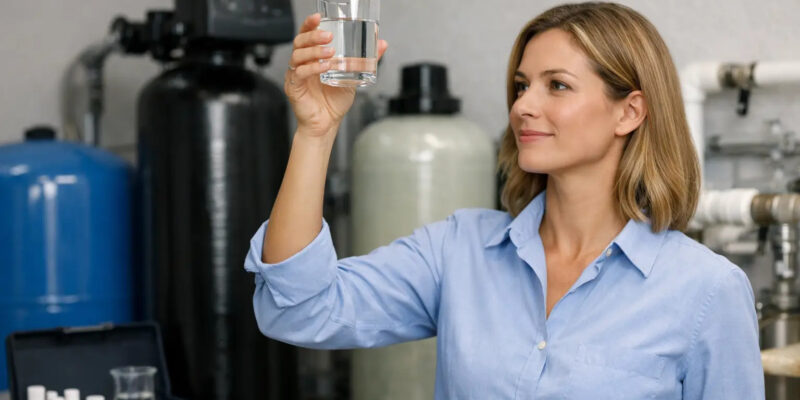
A glass of water can look perfectly clear and still create problems throughout a home or facility. Orange staining on fixtures, scale inside a water heater, a sulfur smell at the tap, or recurring sediment in filters all point to a water-quality issue that deserves more than a guess. Water conditioning addresses the specific minerals, particles, odors, and contaminants affecting your supply, helping protect both the people using the water and the equipment that depends on it.
For properties across Northeastern Pennsylvania, the right approach often depends on whether water comes from a private well or a public system. A well may produce hard water, iron, manganese, sediment, sulfur, or bacteria concerns. Municipal water may be disinfected and safe to drink but still have hardness, chlorine taste, or mineral content that affects plumbing fixtures and appliances. The solution should fit the water, the building, and the way the property is used.
What Water Conditioning Actually Does
Water conditioning is a broad term for equipment and treatment methods that improve water quality or reduce the effects of undesirable water characteristics. It is not one single product. A properly designed system may include a sediment filter, a water softener, an iron-removal unit, carbon filtration, ultraviolet disinfection, or several components working together.
The goal is practical: cleaner-feeling water, fewer stains, better-performing fixtures, and less wear on mechanical equipment. For homeowners, that may mean soap rinses more easily and white laundry stays brighter. For a restaurant, apartment building, or industrial facility, it can mean less scale on water heaters, boilers, ice machines, process equipment, and plumbing components.
Not every concern requires the same level of treatment. Water that is hard but otherwise clean calls for a different system than water with elevated iron, bacterial risk, or heavy sediment. Installing equipment before identifying the actual issue can lead to disappointing results and unnecessary service costs.
Start With the Water Source and a Proper Test
A water test provides the starting point for any water-conditioning decision. Appearance and taste can offer clues, but they cannot confirm what is in the water or how much of it is present. Iron can turn water yellow, orange, or brown. Manganese may leave dark stains. Hydrogen sulfide can create a rotten-egg odor. Hardness often shows up as white scale, cloudy glassware, dry skin, and reduced soap performance.
A thorough evaluation can also identify pH, sediment, total dissolved solids, and other factors that affect treatment equipment selection. This matters because treatment components interact. For example, ultraviolet equipment works best when water is clear enough for UV light to reach microorganisms. If sediment or iron is present, prefiltration may be needed before the UV unit.
Private well owners should also recognize that water quality can change. Heavy rain, flooding, nearby construction, a damaged well cap, seasonal groundwater changes, or a shift in well performance can alter the supply. Testing is particularly worthwhile after a property has been vacant, after well or pump work, or when a new odor, taste, stain, or health concern appears.
Common Signs Your Property May Need Treatment
Hard water and iron issues often build gradually, so the warning signs can be easy to dismiss. Consider an evaluation if you notice persistent scale around faucets, shortened water-heater life, staining in toilets or sinks, reduced water flow from fixtures, unpleasant odor, cloudy water, or frequent sediment in aerators and appliance screens.
For commercial and industrial properties, the signs may appear as higher maintenance needs, inefficient water heating, damaged valves, inconsistent equipment performance, or scale buildup on equipment surfaces. These issues are not always caused by water quality, but untreated water should be part of the investigation.
Choosing the Right Water-Conditioning Equipment
The best water-conditioning system is based on the test results, water usage, flow rate, plumbing layout, and service needs of the property. A household with two occupants and a well has different demands than a busy commercial kitchen, multi-unit property, or manufacturing operation.
Water Softeners for Hard Water
A water softener is one of the most common water-conditioning solutions. It reduces hardness minerals, primarily calcium and magnesium, that create scale. Softened water can help extend the service life of water heaters, dishwashers, washing machines, tankless water heaters, faucets, and fixtures.
Most conventional softeners use ion exchange and require periodic salt replenishment. This is an effective and proven approach, but it does require regular attention. The unit must be sized correctly so it can handle expected water use without regenerating excessively or running out of capacity during high-demand periods.
Some properties need a softener alone. Others need iron treatment before or alongside softening. High iron levels can foul softener resin over time if the system is not designed for the actual water conditions.
Iron, Manganese, Sulfur, and Sediment Treatment
Iron and manganese can stain plumbing fixtures, laundry, and equipment. Sulfur odors can make otherwise clear water unpleasant to use. Sediment can clog filters, reduce flow, and interfere with valves, water heaters, and ultraviolet treatment.
Treatment may involve filtration media, oxidation, aeration, chemical-free systems, or specialty equipment selected for the concentration and type of contaminant. There is no universal answer. Clear-water iron behaves differently from iron that is already visible as particles, and sulfur treatment can depend on whether the odor comes from the well water, plumbing, or a water heater.
A well-planned system also considers maintenance access. Filters need replacement, treatment media has a service life, and control valves need inspection. Equipment that cannot be easily serviced is less likely to provide dependable long-term results.
Ultraviolet Water Treatment for Added Protection
Ultraviolet, or UV, water-treatment equipment uses UV light to deactivate microorganisms. It is often installed on private well systems when bacterial protection is a concern or when a treatment plan calls for an added disinfection barrier.
UV is not a filter and does not remove hardness, iron, sediment, or chemical contaminants. It also does not leave a residual disinfectant in the plumbing. That makes system design especially important. The water reaching the UV chamber must be adequately pretreated, and the lamp and sleeve must be maintained according to the equipment requirements.
For well owners, UV treatment can be a valuable part of a broader plan, especially after water testing and after any well or plumbing conditions that raise concerns about bacteria. It should not replace proper well construction, a secure well cap, sound plumbing practices, or appropriate testing.
Why Water Quality Affects More Than the Faucet
Water moves through much more than a kitchen sink. It feeds water heaters, boilers, ice makers, humidification equipment, dish machines, washing machines, mop sinks, break rooms, and process systems. When hardness or sediment is left untreated, the damage often develops where it cannot be seen.
Scale acts as insulation on heat-transfer surfaces. A water heater or boiler may need more energy to do the same work, while components experience higher operating stress. Sediment can settle in tanks, clog strainers, and reduce the performance of valves and fixtures. For businesses, these issues can become an uptime problem rather than a simple water-quality complaint.
There are trade-offs to consider. More treatment is not automatically better treatment. A system should address the documented problem without adding unnecessary complexity, water use, salt use, or maintenance demands. The right equipment is the equipment that performs reliably for the property and can be properly supported over time.
Plan for Service, Not Just Installation
Water-conditioning equipment is not a set-it-and-forget-it purchase. Salt levels, filters, UV lamps, treatment media, bypass valves, pressure settings, and system controls all need periodic attention. Preventative maintenance helps avoid the common situation where a system is still in place but no longer delivering the water quality it was installed to provide.
For homeowners, a service plan can keep routine tasks from being overlooked and help catch changes in water conditions before staining or equipment damage returns. For commercial and industrial facilities, maintenance scheduling can be coordinated with plumbing, heating, pump, and mechanical service needs to reduce unexpected disruptions.
Hydrodynamics Inc. helps property owners throughout Northeastern Pennsylvania evaluate water concerns and install, repair, and maintain treatment systems suited to the property. Whether the issue is hard water, iron staining, sediment, odor, or the need for ultraviolet treatment, the most dependable next step is to test the water and build the solution around what the results show.
Clean, usable water supports everyday comfort and protects the systems that keep a property running. When the water changes, or the signs of trouble begin to show, early evaluation is usually easier and less costly than waiting for plumbing fixtures, pumps, water heaters, or production equipment to feel the effects.