
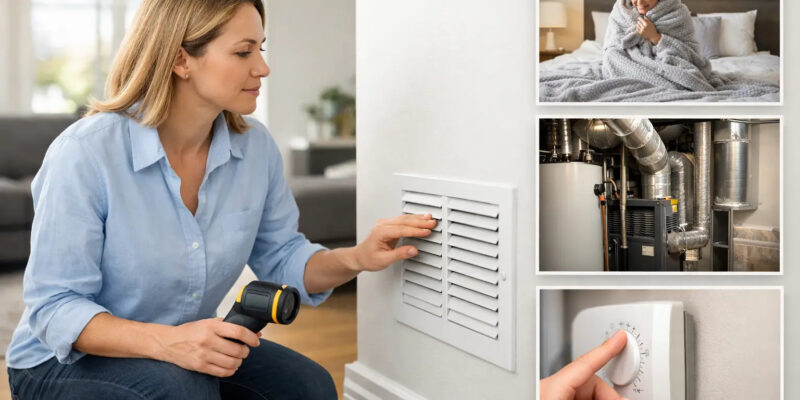
A living room that feels comfortable while an upstairs bedroom stays chilly is more than a minor annoyance during a Northeastern Pennsylvania winter. It can point to heat loss, restricted airflow, an improperly balanced system, or equipment that is no longer delivering heat as intended. Understanding what causes uneven home heating helps you separate simple adjustments from problems that need professional attention before they affect comfort, energy costs, or equipment reliability.
What Causes Uneven Home Heating in a House?
Uneven heating happens when heat is not produced, distributed, or retained consistently throughout the building. The source may be inside the furnace, boiler, heat pump, ductwork, radiators, controls, or the home itself.
A useful first clue is the pattern. If one room is always cold, the issue may be related to that room's duct run, radiator, insulation, windows, or exposure to wind. If several rooms become uncomfortable at the same time, the heating system may have an airflow, fuel, control, or capacity problem. A room that is cold only on the second floor or over a garage often has a different cause than a room that is cold throughout the entire heating season.
1. Leaky, Damaged, or Poorly Designed Ductwork
Forced-air systems depend on ducts to move conditioned air from the furnace or air handler to each room. Ducts that leak in an attic, crawlspace, basement, or wall cavity can lose a surprising amount of heated air before it reaches a register. Loose connections, crushed flexible duct, gaps at joints, and disconnected runs can all reduce airflow.
Duct design matters as well. A long run with too many turns may receive less air than a short, straight run near the equipment. In some older homes, additions and remodeled spaces were connected to the original system without fully accounting for the added heating load. The result is often a cold addition, converted attic, or distant bedroom.
2. Airflow Restrictions at Registers, Filters, or Equipment
A dirty furnace filter is one of the most common and avoidable causes of poor heating performance. As the filter fills with dust, pet hair, and debris, it limits the volume of air moving through the system. Rooms farthest from the furnace are frequently the first to show the effect.
Closed or blocked supply registers can create a similar problem. Furniture, rugs, curtains, and storage boxes can prevent warm air from circulating into the room. Return-air grilles need clear space too. A forced-air system cannot distribute heat effectively if it cannot pull air back to the equipment for reheating.
Closing multiple vents to force more heat into another area is rarely a good long-term solution. It can increase duct pressure, reduce system efficiency, and create uneven temperatures elsewhere. If a room needs less heat, balancing dampers or thermostat controls should be evaluated instead.
3. Thermostat Location or Control Problems
Your thermostat measures the temperature where it is installed, not throughout the entire house. If it is located near a sunny window, exterior door, kitchen, fireplace, or supply register, it may sense a temperature that does not represent the rest of the home. The system can shut off before distant rooms warm up, or run longer than necessary because the thermostat is in a colder area.
Incorrect thermostat settings, weak batteries, calibration issues, and outdated controls can also contribute. In a multi-level home, a single thermostat may not be enough to manage different temperature zones effectively. Zoning equipment, additional thermostats, or properly installed ductless mini-splits may be practical options, depending on the building layout and existing system.
4. Heat Loss Through Windows, Doors, Insulation, and Air Leaks
Sometimes the heating system is operating normally, but the building envelope is losing heat faster than the system can replace it. Rooms over garages, above unconditioned basements, near drafty doors, and on the north or wind-facing side of a home commonly feel colder.
Insufficient attic insulation is a major concern because warm air rises. Gaps around plumbing penetrations, recessed lights, attic hatches, and wiring can allow conditioned air to escape. Older windows, poorly sealed doors, and uninsulated exterior walls can create cold surfaces that make a room feel uncomfortable even when the thermostat reading appears normal.
Weatherstripping and insulation improvements may help, but they are not always the complete answer. If the room has always been cold, an HVAC professional may need to determine whether the system was sized and designed for that space in the first place.
5. An Oversized or Undersized Heating System
Heating equipment must be matched to the home's heat loss, layout, insulation levels, and distribution system. An undersized furnace, boiler, or heat pump may run for long periods and still struggle to keep distant rooms warm during severe weather. This can happen after an addition is built, insulation conditions change, or a replacement unit is selected based only on the size of the old equipment.
Oversized equipment can cause different issues. A furnace that heats the thermostat area very quickly may short cycle, shutting down before heat reaches farther rooms. Short cycling also increases wear on equipment and can reduce efficiency.
Proper sizing requires more than a square-foot estimate. A professional load calculation considers windows, construction, orientation, insulation, air leakage, occupancy, and local winter conditions. In the Hazleton area and surrounding communities, the demands of a cold, prolonged heating season make accurate sizing particularly valuable.
6. Boiler, Radiator, or Hydronic Circulation Issues
Homes with boilers and radiators can develop uneven heating for reasons different from forced-air systems. Air trapped in radiators or baseboard loops can prevent hot water from circulating properly. A failing circulator pump, stuck zone valve, low system pressure, sediment buildup, or an out-of-balance hydronic system may leave one zone cold while another overheats.
Steam systems can also experience uneven heat when vents, traps, or piping components are not operating correctly. These systems need specialized diagnosis. Turning up the thermostat may make the warm rooms hotter without fixing the rooms that are not receiving heat.
If you notice banging pipes, water leaks, gurgling sounds, repeated pressure issues, or radiators that remain cold at the top, arrange service rather than attempting significant adjustments yourself. Boiler systems contain hot water, pressure, electrical components, and in many cases fuel-fired equipment.
7. Heat Pump Performance and Auxiliary Heat Problems
Heat pumps provide efficient heating in many homes, but their performance depends on proper refrigerant charge, airflow, outdoor-unit condition, defrost operation, and control settings. A dirty indoor coil, restricted filter, failing blower component, or refrigerant issue can reduce heat delivery to certain areas.
During colder weather, the system may rely on auxiliary or backup heat. If that backup stage is not engaging when needed, the home may feel unevenly heated or slow to recover after the thermostat is adjusted. On the other hand, frequent auxiliary heat operation can signal that the system needs evaluation, especially if utility costs rise sharply.
Ductless mini-splits can be a strong solution for difficult rooms, additions, or areas without practical duct access. Their placement and capacity still matter. A unit that is too small, poorly located, or blocked by furnishings will not solve the comfort problem as intended.
8. Aging Equipment or Deferred Maintenance
A heating system does not have to fail completely to lose performance. Worn blower motors, weak capacitors, dirty burners, a clogged condensate drain, deteriorated belts, failing zone controls, and dirty coils can all affect how heat moves through a building. Fuel-fired equipment may also operate less efficiently when burners, heat exchangers, venting, or combustion settings need attention.
Preventative maintenance gives a technician an opportunity to inspect these components before a minor loss of performance becomes a no-heat call. It also helps identify safety concerns, including venting or combustion issues, that should never be ignored.
How to Tell Whether You Need Heating Service
Start with the simple checks: replace a dirty filter, confirm that supply and return vents are open and unobstructed, and verify that the thermostat is set correctly. Note which rooms are cold, when the problem occurs, and whether the issue is worse during windy weather or at certain times of day. Those details make diagnosis more efficient.
Schedule professional service if the issue persists, if temperatures vary significantly between rooms, or if you see warning signs such as unusual noises, frequent cycling, weak airflow, cold radiators, water leaks, rising fuel bills, or a system that cannot maintain its setting. A qualified technician can evaluate equipment operation, airflow, duct condition, controls, combustion performance, and the home's heating load rather than guessing at a single cause.
Hydrodynamics Inc. helps homeowners and property managers address heating problems with practical repairs, maintenance, system improvements, and custom solutions across the systems that keep a building comfortable. The right fix may be as straightforward as restoring airflow, or it may involve duct corrections, zoning, boiler service, insulation coordination, or replacing equipment that no longer fits the property.
Comfort should not depend on which room you happen to be in. When a heating problem is identified early and evaluated as a whole-system issue, you can make a clear decision that supports dependable warmth through the season.