
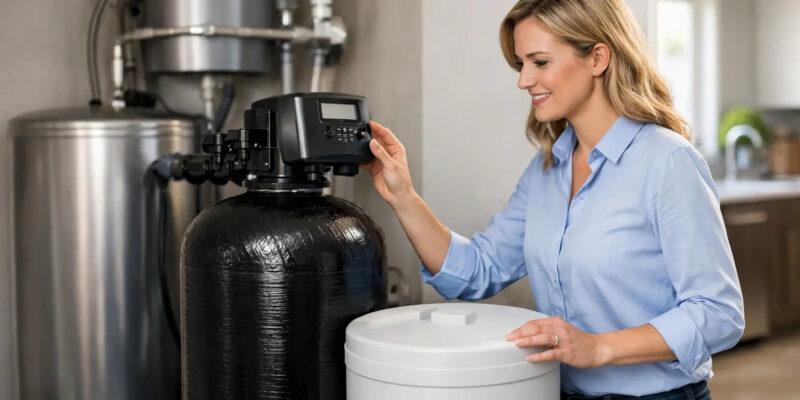
Water softeners address a problem many property owners notice long before they can name it: white buildup on fixtures, stiff laundry, spotty dishes, dry-feeling skin, and appliances that seem to lose efficiency too soon. In Northeastern Pennsylvania, especially for homes and facilities served by private wells, hardness can place a steady burden on plumbing and water-using equipment.
Hard water is not usually a health concern, but it can be an expensive maintenance concern. The minerals that cause hardness, primarily calcium and magnesium, collect inside pipes, water heaters, dishwashers, ice machines, boilers, and other equipment. The right treatment system can reduce that scale and help protect the systems your property depends on every day.
What Hard Water Does to a Property
Hardness minerals stay dissolved in cold water, but they become more troublesome when water is heated or evaporates. That is why scale often appears first around faucets, shower doors, humidifiers, coffee equipment, and water heater components. Over time, that buildup can restrict water flow, interfere with heat transfer, and shorten the service life of equipment.
At home, the effects are usually visible and frustrating. Soap may not rinse as cleanly, laundry can feel rough, and shampoo or body wash may not lather as expected. Homeowners may use more detergent and still see residue on glassware, tiles, and fixtures.
For a business or industrial facility, the stakes can be higher. Scale inside a water heater, boiler feed system, commercial dishwasher, process equipment, or refrigeration-related component can contribute to reduced performance, more frequent cleaning, and avoidable downtime. Water treatment is often a practical part of protecting mechanical equipment, not simply an upgrade for appearance.
How Water Softeners Work
Most conventional water softeners use ion exchange. Water flows through a tank containing resin beads that attract hardness minerals. The system exchanges calcium and magnesium for sodium or potassium ions, sending softened water to the plumbing system.
As the resin becomes loaded with hardness minerals, the softener must regenerate. During regeneration, a brine solution flushes the collected minerals from the resin and sends the wastewater to an appropriate drain connection. The unit then returns to service with renewed treatment capacity.
This process requires salt when a standard ion-exchange softener is used. The amount of salt and water consumed depends on several factors, including water hardness, daily usage, the system’s capacity, and how its regeneration controls are programmed. A properly sized system should regenerate based on actual demand whenever possible, rather than operating on an arbitrary schedule.
Softening Is Not the Same as Water Filtration
A common misunderstanding is that one piece of equipment treats every water-quality issue. Water softeners are designed to reduce hardness. They do not automatically remove bacteria, sediment, iron, sulfur odors, arsenic, or other contaminants that may be present in a private well.
A water test is the starting point for an effective recommendation. Depending on the results, a property may need sediment filtration ahead of the softener, specialized iron or sulfur treatment, ultraviolet disinfection, neutralization for acidic water, or another component. Treating the actual water conditions avoids spending money on equipment that does not solve the problem.
Signs You May Need a Water Softener
Visible scale is a clear warning, but it is not the only one. A household or facility may benefit from testing and treatment when hot-water equipment needs repeated service, fixtures develop crusty deposits quickly, or water spots return immediately after cleaning.
Other common signs include reduced water flow at showerheads, cloudy glassware, scratchy towels, frequent soap scum, and white deposits in humidifiers or coffee makers. If a water heater is making popping or rumbling sounds, sediment or mineral scale may be contributing. That condition should be evaluated rather than ignored, since it can affect efficiency and component life.
Private well owners should be especially careful about making assumptions based on taste or appearance alone. Water can look clear and still have enough hardness, iron, acidity, or microbial risk to warrant treatment. Periodic testing is useful after changes in taste, odor, staining, well repairs, flooding, or a change in household water use.
Choosing the Right Water Softener Size
Water softener sizing is not a matter of selecting the largest tank that fits in a basement or utility room. An oversized unit can cost more than necessary and may not operate efficiently. An undersized unit can run through its capacity too quickly, leading to frequent regeneration and inconsistent softened water.
The primary sizing factors are the hardness level measured in grains per gallon, the number of people or users, expected water consumption, plumbing demand, and any water-using equipment that needs protection. A restaurant, apartment property, medical office, or industrial operation may have very different peak demands than a single-family home, even if their total daily water use is similar.
Iron also matters. Iron can interfere with softener resin and may require pretreatment or a system designed for combined hardness and iron conditions. Likewise, low pH or heavy sediment can affect which equipment should be installed first in the treatment sequence.
Salt-Based and Salt-Free Options
Traditional salt-based water softeners are generally the appropriate choice when the goal is to remove hardness minerals and achieve the familiar benefits of softened water. They are effective for protecting fixtures, plumbing, and water-heating equipment when correctly installed and maintained.
Some salt-free products are described as conditioners or scale-control systems. These systems may change how minerals behave, helping reduce scale under certain water conditions, but they do not remove hardness in the same way as ion exchange. They can be a reasonable option where salt use, drainage limitations, or maintenance preferences rule out a conventional softener. They are not a direct substitute in every application.
The best choice depends on water-test results, local discharge considerations, equipment being protected, and the outcome the property owner expects. Clear expectations matter. If the goal is softer laundry and reduced soap scum, a conventional softener may be the better fit. If the goal is limited scale control with no salt, a conditioner may be worth considering.
Installation Details That Affect Performance
A water treatment system is only as dependable as its installation. The equipment needs a suitable location, stable power when required, a proper drain connection, adequate flow, bypass valves, and access for adding salt and servicing filters. Installing treatment equipment ahead of sensitive plumbing and water heaters is often necessary, while outside hose bibs may be left untreated for watering lawns or washing vehicles.
On a well system, the arrangement must also work with the well pump, pressure tank, pressure switch, and any existing filtration equipment. Commercial and industrial installations may require more detailed planning for peak flow, floor drainage, chemical compatibility, redundancy, and scheduled maintenance access.
Hydrodynamics Inc. evaluates water-conditioning equipment as part of the larger plumbing and mechanical system. That perspective helps identify issues that a softener alone will not correct, such as a failing well pump, poor pressure control, sediment intrusion, or a water heater already affected by heavy scale.
Maintaining Water Softeners for Consistent Results
Routine maintenance is straightforward, but it should not be neglected. Keep the brine tank supplied with the recommended salt, avoid creating a solid salt bridge above the water, and use clean salt appropriate for the equipment. If softened water suddenly feels different or scale returns, do not assume the system is working normally just because there is salt in the tank.
Resin can become fouled by iron, sediment, or other water conditions. Control valves can wear, drain lines can clog, and settings may no longer match the property’s actual water use. A service check can confirm that the softener regenerates correctly, draws brine properly, and delivers treated water where it is needed.
For facilities, preventative maintenance is particularly valuable. Checking water treatment before seasonal heating demand, busy operating periods, or scheduled equipment shutdowns can help avoid disruptions tied to scale buildup or treatment failures.
A water softener should solve a measured problem and support the life of the plumbing and equipment behind it. Start with a water test, consider how the property actually uses water, and choose a system that can be maintained reliably for years.