
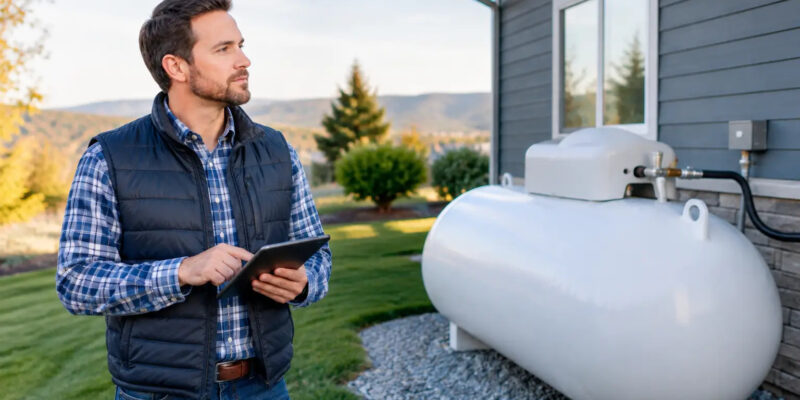
A cold Northeastern Pennsylvania morning quickly reveals whether a heating system is sized, maintained, and supplied correctly. For properties beyond the reach of natural-gas lines, propane heating can provide reliable, responsive warmth for a home, storefront, apartment building, workshop, or industrial space. The right result, however, depends on more than choosing a fuel. Equipment selection, fuel storage, installation quality, controls, and ongoing service all affect comfort and operating costs.
What Propane Heating Can Do for a Property
Propane is a liquid fuel stored in an outdoor tank and delivered to equipment through properly installed gas piping. It can power furnaces, boilers, unit heaters, fireplaces, space heaters, water heaters, cooking equipment, and certain standby generators. That flexibility is one reason it remains a practical choice for rural homes and facilities with multiple fuel needs.
For a homeowner, propane may support a central furnace and water heater while also supplying a gas range or fireplace. For a commercial or industrial customer, it may serve rooftop equipment, warehouse unit heaters, process-related heating, or a backup application. One fuel source can simplify some aspects of site planning, but the system still needs to be designed around the actual building load and equipment demand.
Propane equipment also delivers heat quickly. A properly operating gas furnace or unit heater produces warm air shortly after ignition, while a propane boiler can provide steady heat to hydronic baseboards, radiators, or in-floor systems. That response can be especially valuable during long cold spells, when buildings need consistent recovery rather than marginal performance.
Choosing Between a Furnace, Boiler, and Other Equipment
The best propane system is not the same for every property. A forced-air furnace is often a sensible choice when ductwork is already present and the building needs central air conditioning as well. The same duct system can distribute heated and cooled air, and filtration options can be incorporated into the overall HVAC design.
A boiler is a strong fit for properties with existing hydronic distribution, including baseboard, radiators, cast-iron systems, or radiant floor heating. Hydronic heat can provide even comfort and may be particularly well suited to homes where preserving the character of an older heating system matters. Boiler performance depends on correct piping, circulator operation, expansion control, venting, and water quality, not just the boiler itself.
For garages, shops, warehouses, and larger open areas, propane unit heaters may be more practical than extending a residential-style central system. These applications require careful consideration of building use, ceiling height, insulation levels, ventilation, and how often large overhead doors are opened. A heater that looks adequate on paper can struggle in a busy loading area or poorly insulated work space.
Some properties benefit from a combination of systems. A heat pump may handle moderate outdoor temperatures efficiently, while propane equipment provides dependable supplemental or backup heat during more severe weather. This type of dual-fuel approach can work well, but it requires properly configured controls so the systems change over at the right time.
Tank Size and Fuel Planning Matter
A propane heating system is only as dependable as its fuel supply. Tank capacity should account for the heating load, equipment connected to the system, delivery access, and the expected winter demand. A property using propane for heat alone has different storage needs than one using it for heat, water heating, cooking, a fireplace, and a generator.
Tank placement is also a practical and safety-focused decision. Required clearances, vehicle access, snow removal, regulator location, protection from damage, and local code requirements all need attention before installation. Underground tanks can preserve the appearance of a property, while above-ground tanks may offer simpler access for service and inspection. The better option depends on the site, budget, and long-term maintenance preferences.
Property owners should also understand their fuel delivery arrangement before the heating season. Automatic delivery can reduce the risk of an unexpected runout, while will-call delivery requires closer monitoring. A runout can shut down heating equipment and may require a qualified technician to inspect and restart the system safely. It is far better to address fuel planning before a winter storm is in the forecast.
Installation Details Affect Safety and Performance
Propane is a dependable fuel when the system is installed and serviced correctly. Safe operation depends on properly sized gas piping, approved shutoff valves, correct regulator settings, sound venting, combustion air, equipment clearances, and leak testing. These are not details to leave to guesswork or a quick equipment swap.
High-efficiency propane furnaces and boilers may use specialized venting materials and condensate drainage. Conventional equipment has different venting requirements. In either case, the venting path must be planned for the specific appliance and building conditions. Improper venting can affect equipment reliability and create serious safety concerns.
Combustion appliances should be paired with working carbon monoxide alarms placed according to manufacturer instructions and applicable requirements. Homeowners and facility managers should also know where the gas shutoff is located and recognize the odor added to propane. If a gas odor is present, leave the area, avoid switches and flames, and contact the propane supplier or emergency services from a safe location.
Maintaining Propane Heating Before It Fails
Preventative maintenance helps identify small problems before they lead to a no-heat call. For a propane furnace, service typically includes inspecting the burner and ignition system, checking heat exchanger condition, confirming gas pressure and combustion performance, testing safety controls, examining venting, and replacing or addressing the air filter as needed. A dirty filter alone can restrict airflow, reduce comfort, and place unnecessary strain on equipment.
Boiler maintenance involves a different set of checks. A technician may inspect burners, safeties, venting, pumps, pressure controls, relief components, piping condition, and system water pressure. Hydronic systems can develop issues such as air in the lines, circulation problems, leaking valves, or uneven heat in certain zones. Addressing those concerns early can protect both comfort and equipment life.
Commercial and industrial properties need maintenance schedules that reflect operating hours and the cost of downtime. A unit heater in a lightly used storage area does not face the same demands as heating equipment in an occupied facility, production space, or business that cannot close during a cold-weather failure. Maintenance planning should match the role the equipment plays in daily operations.
Signs Your System Needs Attention
A propane heating system rarely fails without giving some warning. Uneven room temperatures, delayed ignition, short cycling, unusual burner noise, soot, water around a boiler, rising fuel use, or frequent thermostat adjustments all deserve investigation. These symptoms can stem from something straightforward, such as a filter or thermostat issue, but they can also point to venting, combustion, airflow, circulation, or control problems.
Age is another factor. If repairs are becoming frequent, replacement parts are difficult to source, or the system no longer maintains comfort during cold weather, it may be time to compare repair and replacement options. The best decision depends on the condition of the equipment, expected repair cost, remaining useful life, building plans, and available efficiency improvements. Replacing equipment without evaluating ductwork, piping, controls, and insulation can leave underlying comfort problems unresolved.
A Local Plan for Reliable Winter Heat
For homes and businesses in and around Hazleton, winter heating decisions should account for real conditions: extended cold weather, rural fuel access, older building systems, and the need to keep operations moving. Hydrodynamics Inc. approaches propane equipment as part of the larger mechanical system, considering the heating appliance, distribution system, controls, venting, and service needs together.
Whether a property needs a furnace repair, a boiler replacement, a new propane unit heater, or a maintenance plan, the most useful next step is a clear evaluation of the building and its equipment. A well-planned system does more than produce heat. It gives the people responsible for the property confidence that comfort, safety, and day-to-day operations are supported when winter is at its hardest.