
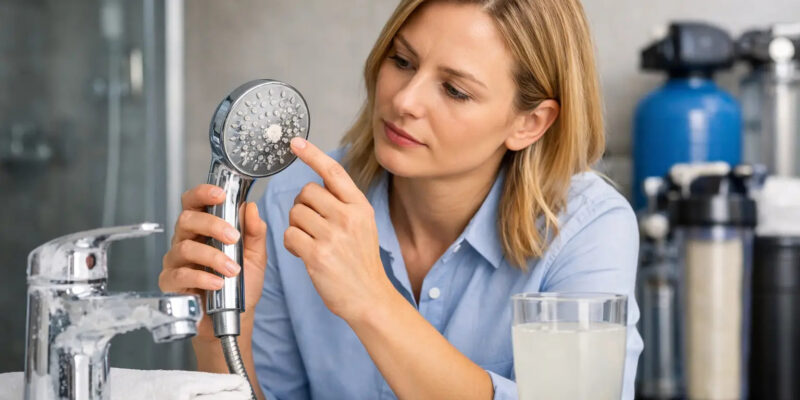
A white ring around the faucet, spots that return to clean glassware, and soap that never seems to rinse completely are more than housekeeping frustrations. Hard water is common in homes served by wells and in many municipal water supplies across Northeastern Pennsylvania. While it is not usually a health concern, the dissolved minerals in hard water can steadily affect plumbing, water-using equipment, cleaning results, and long-term operating costs.
The right solution starts with knowing what is in your water and how that water is used throughout the property. A treatment system should be matched to the water chemistry, household demand, plumbing layout, and equipment it is intended to protect.
What Makes Water Hard?
Water becomes hard when it dissolves minerals, primarily calcium and magnesium, as it moves through soil and rock. The mineral level is commonly measured in grains per gallon or milligrams per liter. The higher the number, the more likely you are to see scale buildup and notice changes in how soap, detergents, and appliances perform.
A private well can have water quality that differs significantly from a nearby property. Even properties on the same public supply may have different practical concerns because of plumbing age, water heater settings, daily usage, or equipment condition. That is why a water test is more useful than choosing a softener based on a neighbor's experience or a one-size-fits-all recommendation.
Hardness can also occur alongside iron, manganese, sediment, acidity, bacteria, sulfur odor, or other water-quality concerns. These issues may require separate treatment steps. A softener is highly effective for hardness minerals, but it is not automatically the complete answer to every water problem.
Signs of Hard Water in Your Property
Hard-water symptoms often appear gradually. Homeowners may first notice cloudy dishes or stiff laundry, while a business or facility may see repeated maintenance needs on water heaters, ice machines, dishwashing equipment, boilers, or other water-dependent systems.
Common signs include:
- White, chalky buildup on faucets, showerheads, sink edges, and glass shower doors
- Soap scum in tubs and showers that is difficult to remove
- Dry-feeling skin, dull hair, or laundry that feels rough after washing
- Reduced water flow through showerheads or fixture aerators
- Water heaters that make popping or rumbling sounds as sediment and scale accumulate
- Shortened appliance life, higher energy use, or frequent service needs on water-using equipment
None of these signs alone confirms hardness. White deposits can be caused by several mineral conditions, and low water pressure can result from plumbing restrictions, a failing well pump, or fixture-related issues. Testing identifies the actual cause before treatment equipment is selected.
Why Mineral Scale Matters
The most costly effect of hard water is often hidden inside equipment. When hard water is heated, minerals can separate from the water and settle on heat-transfer surfaces. Inside a tank-style water heater, that buildup can collect near the bottom of the tank. In tankless units, scale can form within the heat exchanger. Either condition forces the equipment to work harder to heat the same amount of water.
Scale also reduces the inside diameter of pipes, fittings, valves, and fixture components over time. A showerhead may be easy to replace, but buildup in a water heater, recirculation system, dishwasher, commercial kitchen equipment, or process-related plumbing can be more disruptive and expensive to address.
For commercial and industrial properties, the stakes can be higher. Equipment downtime affects staff, tenants, customers, and operations. Preventative water treatment and scheduled maintenance can help protect systems that depend on consistent water flow and efficient heat transfer.
There is a practical trade-off, however. Not every property with moderately hard water needs an extensive treatment system immediately. If scale is minimal, water-using equipment is properly maintained, and residents are satisfied with the results, monitoring may be appropriate. When buildup is recurring or equipment performance is being affected, treatment becomes a stronger long-term investment.
Testing Comes Before Choosing a Water Softener
A dependable water-treatment plan begins with a current water analysis. For a private well, testing should look beyond hardness when appropriate. Iron and manganese can stain fixtures and interfere with softener performance. Sediment can clog controls and reduce flow. Low pH can contribute to corrosion. Bacteria testing addresses a different concern entirely and may point to the need for ultraviolet treatment or corrective well work.
A water professional also needs to understand the property's demand. The number of occupants, bathrooms, fixture use, peak flow needs, and water-using appliances affect softener sizing. A system that is too small may regenerate too frequently or allow hardness to pass through during high demand. An oversized system can add unnecessary upfront cost and may not operate as efficiently as a properly sized unit.
Commercial applications require an even closer review. A restaurant, apartment building, office, manufacturing space, or facility with specialized equipment may need treatment designed around gallons used per day, peak demand, water temperature, equipment warranties, and the consequences of downtime.
Hard Water Treatment Options
For most residential hardness problems, an ion-exchange water softener is the standard treatment. Water passes through resin beads that exchange hardness minerals for sodium or potassium ions. The system regenerates periodically using a salt or potassium chloride solution, flushing captured minerals away and preparing the resin for continued use.
Salt-based softeners are effective, but they require ongoing attention. The brine tank needs the correct salt level, and the system needs power, drainage, and periodic inspection. Potassium chloride is an alternative for some households, though it typically costs more and may not perform identically in every situation. The best choice depends on water chemistry, equipment requirements, household preferences, and local considerations.
Salt-free conditioners are sometimes considered by people who want to avoid adding salt. These systems may alter how certain minerals behave and can reduce scale adhesion in specific conditions, but they do not remove hardness minerals in the same way an ion-exchange softener does. They are not interchangeable solutions. If the goal is truly soft water for laundry, bathing, and scale reduction, a conventional softener is often the more reliable option.
Additional treatment may be needed before or after a softener. Sediment filtration can protect valves and appliances from particulate matter. Iron treatment can prevent staining and fouling. Ultraviolet disinfection may be appropriate where bacteria treatment is needed. Drinking-water filtration can improve the water used at a dedicated tap, but it does not replace whole-property hardness treatment where scale protection is the main objective.
Protecting Plumbing and Equipment After Installation
Installing a softener is not the end of water-system care. Existing scale does not always disappear immediately, and equipment that has operated with untreated hard water may already need cleaning, flushing, or repair. Water heaters, tankless heat exchangers, faucets, showerheads, and appliance connections should be evaluated as part of the overall plan.
Routine service helps the system continue doing its job. This may include checking salt usage, confirming regeneration settings, inspecting bypass valves and drain connections, testing treated water hardness, and reviewing changes in household or facility water use. A growing family, a new bathroom, added laundry equipment, or expanded business operations can change the demand a system must handle.
For property owners with wells, it also makes sense to coordinate water treatment with well-pump and pressure-tank maintenance. Water quality, pressure performance, and plumbing reliability are connected. Addressing one part of the system without considering the others can leave the underlying problem unresolved.
When to Call for Professional Help
Call for an evaluation when scale returns quickly after cleaning, water heaters lose efficiency, fixtures repeatedly clog, or a current softener is using excessive salt, regenerating unpredictably, or no longer delivering soft water. A professional assessment is also worthwhile before replacing a water heater or installing a high-value appliance that will be exposed to untreated water.
For homeowners and facilities in the Hazleton area, Hydrodynamics Inc. can evaluate water conditions alongside the pumps, plumbing, water heaters, and mechanical equipment that depend on them. The goal is not simply to add a treatment unit. It is to provide a solution that supports reliable water service and protects the equipment you rely on every day.
Hard water rarely causes a single dramatic failure. Its effects build quietly, one scale deposit and one reduced-efficiency cycle at a time. Testing the water and addressing the results early can help keep a small maintenance concern from becoming a larger plumbing or equipment expense.