
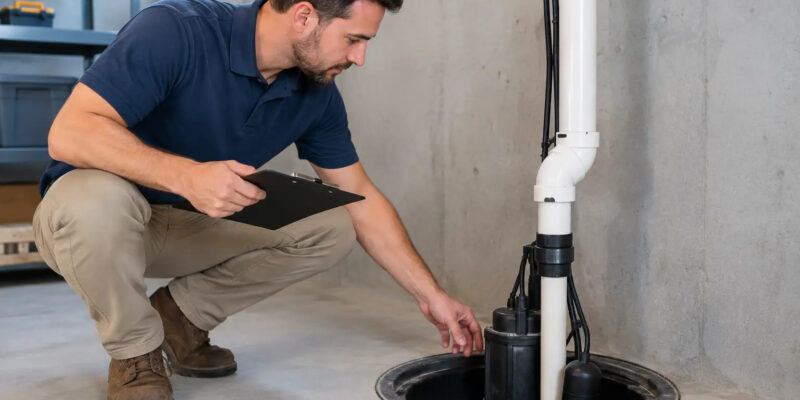
A sump pump can be quiet for weeks, then run several times in a single day after heavy rain or rapid snowmelt. That difference often leaves property owners asking: when should sump pump run, and when does its operation point to a problem?
The short answer is that a sump pump should run whenever groundwater or collected drainage water raises the level in the sump pit enough to activate its float switch. The longer answer depends on your property’s drainage, water table, weather conditions, foundation construction, and the condition of the pump system itself. A pump that runs during a storm may be doing exactly what it was installed to do. A pump that runs continuously in dry weather needs attention.
When Should a Sump Pump Run Under Normal Conditions?
A properly operating sump pump turns on when water in the basin reaches a preset level. The float rises with the water, activates the switch, and the pump sends water through a discharge pipe away from the foundation. Once the water level falls, the float drops and the pump shuts off.
For many homes in Northeastern Pennsylvania, sump pump activity is most common during sustained rainfall, spring thaw, rapid snowmelt, and periods when the ground is already saturated. Properties with a naturally high water table, lower elevations, or drainage directed toward the foundation may see more frequent cycles than nearby homes on higher, drier ground.
It is also normal for a pump to run multiple times during a severe storm. The key is whether it cycles on and off appropriately and actually lowers the water level in the pit. A working pump may run for a short period every few minutes during peak water conditions, then slow down as the rainfall eases and the surrounding soil drains.
A sump pump is not supposed to run on a fixed daily schedule. Its schedule is controlled by water. If it does not run for long stretches during dry weather, that alone is not a concern. In fact, infrequent operation can be normal for a home with effective grading, gutters, and exterior drainage.
How Often Is Too Often for a Sump Pump?
There is no single number of cycles per hour that applies to every property. During a major downpour, a pump may cycle frequently without indicating a defect. What matters is the pattern and the cause.
Frequent running deserves investigation when it continues after rain has stopped, occurs during dry weather, or seems to be increasing compared with previous years. A pump that turns on every few minutes all day may be handling an unusually high volume of groundwater, but it may also be short-cycling because of a switch issue, discharge problem, or water returning to the pit.
Continuous operation is more urgent. If the motor runs but the water level does not go down, the pump may be undersized, clogged, worn out, or unable to push water through the discharge line. If the basin is empty and the pump keeps running, shut off power to the unit if it is safe to do so and arrange for service. Running dry can overheat and damage the pump.
The discharge line can create a misleading problem
One common reason for frequent sump pump cycling is water that leaves the home but returns too close to the foundation. The discharge point should direct water well away from the house and slope so it continues away, not back toward the basement wall or sump pit.
A missing or failed check valve can cause a similar issue. The check valve is installed on the discharge pipe and prevents water from flowing backward into the basin after the pump shuts off. Without it, some water may fall back into the pit, raising the float again and forcing the pump to repeat the cycle.
Frozen discharge piping is another concern during Pennsylvania winters. The pump may activate, but water cannot exit properly. In that situation, water can back up in the pit and put the basement at risk just when access outside is difficult.
Signs Your Sump Pump May Need Service
A sump pump does not need to be loud to be working, but changes in sound or performance are worth paying attention to. Rattling, grinding, humming without pumping, or a motor that sounds strained can indicate mechanical trouble.
Watch for these conditions, especially before and during wet weather:
- The pump runs constantly or cycles repeatedly during dry conditions.
- Water in the pit rises above the pump’s normal activation level.
- The pump turns on but does not discharge water outdoors.
- The unit trips a breaker, loses power, or has a damaged power cord.
- A strong odor, visible rust, excessive vibration, or unusual noise develops.
- The float is tangled, obstructed, or does not move freely.
- Water appears on the basement floor near the sump basin.
An older pump can also become less dependable even if it still runs. Service life varies by pump quality, usage, water conditions, and maintenance history, but a unit that has handled years of heavy cycling should be evaluated before it fails during a storm.
Why a Sump Pump May Not Run When It Should
A silent pump is not always a healthy pump. If water is rising in the pit and the pump does not start, first check whether the unit has power. Confirm that it is plugged into a working outlet and that the breaker or ground-fault circuit interrupter has not tripped. A sump pump should generally have a dedicated, properly protected electrical connection rather than an extension cord or overloaded outlet.
If power is available, the float switch may be stuck or failed. Debris in the basin can interfere with the float, while sediment and mineral buildup can affect the pump intake or impeller. In some systems, the pump may be running but unable to move water because the discharge line is blocked, frozen, or damaged.
Do not assume a pump is functional just because it has not flooded recently. Dry weather can hide a problem until the next storm puts the system under demand.
A Simple Sump Pump Test for Homeowners
Testing a sump pump before the rainy season is a practical part of home maintenance. Start by checking that the basin is reasonably clean and the float can move without catching on the pump, power cord, or discharge pipe.
Then slowly pour water into the pit until the float rises and activates the pump. Watch to make sure the pump starts, the water level drops, and the unit shuts off after the water is removed. If possible, verify that water is leaving through the outdoor discharge point.
This basic test does not replace a full inspection, but it can reveal obvious trouble with the pump, switch, or discharge path. Avoid reaching into a wet basin or handling electrical connections with wet hands. If the system behaves unpredictably, trips electrical protection, or fails to clear water, professional service is the safer choice.
Do not overlook the backup system
A primary sump pump depends on utility power, which means the time it is needed most can also be the time it is most vulnerable. Heavy storms can cause outages while groundwater levels are rising. A battery backup sump pump, properly maintained standby power, or another suitable backup arrangement can provide added protection for homes where basement flooding would cause significant damage.
Backup systems need testing too. A dead battery, failed charger, or disconnected alarm offers little protection when the primary pump cannot run. Property managers and facility operators should include sump pump and backup checks in seasonal preventive maintenance plans, particularly for buildings with finished lower levels, equipment rooms, or stored inventory below grade.
The Pump Is Only One Part of Basement Water Control
A sump pump manages water that reaches the pit. It cannot correct every drainage issue around a building. Clogged gutters, short downspout extensions, negative grading, damaged foundation drainage, and leaking plumbing can all add water where it does not belong.
If your pump runs more often than expected, consider the overall water path around the property. Are roof runoff and surface water being directed away from the foundation? Does the discharge terminate far enough from the building? Has landscaping changed the slope near the house? In commercial settings, are roof drains, exterior drainage structures, and mechanical areas being inspected routinely?
Addressing the source of excess water can reduce stress on the pump and help extend its service life. Still, the pump must remain ready to do its job when groundwater rises.
When to Call for Sump Pump Help
Call for service promptly if the pump cannot keep up with incoming water, runs continuously without lowering the basin level, will not start when water rises, or shows signs of electrical or mechanical failure. It is also wise to schedule an inspection before spring thaw or a forecasted period of heavy rain if the pump is older, has a history of trouble, or protects a finished basement or critical building space.
Hydrodynamics Inc. helps homeowners, businesses, and facility teams assess pump performance, discharge issues, replacements, and preventive maintenance. A sump pump rarely announces a problem at a convenient time. Testing it before the ground is saturated gives you a better chance of keeping water where it belongs: outside.