
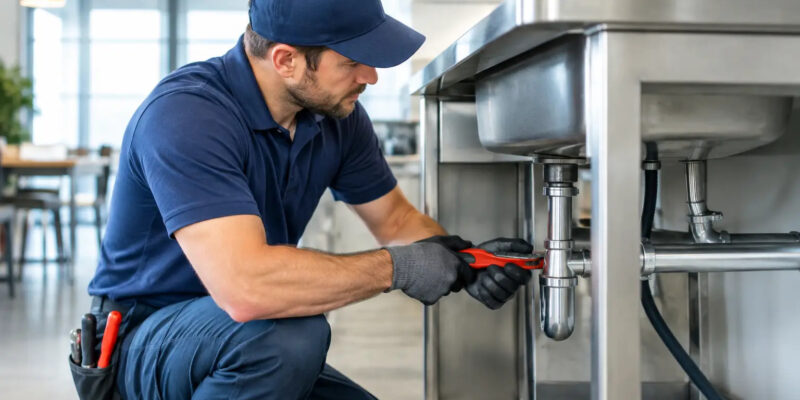
A restroom that will not drain, a leaking water line above finished space, or a failed sump or grinder pump can interrupt far more than a normal workday. For a business or facility, plumbing trouble can affect employees, customers, inventory, sanitation, and the ability to remain open. A qualified commercial plumber addresses the immediate problem while helping property owners understand what caused it and what is needed to prevent a repeat failure.
Commercial plumbing is not simply residential plumbing on a larger scale. Businesses often have more fixtures, heavier daily use, larger water demands, specialized equipment, and building systems that must work together. The right service approach considers the entire property, not just the visible leak or clogged drain.
What a Commercial Plumber Handles
A commercial plumbing contractor supports the water, drainage, and pumping systems that keep a property functional. The exact scope depends on the building. A small office, restaurant, apartment complex, warehouse, medical facility, and industrial operation each place different demands on their plumbing equipment.
Common service needs include leak repair, fixture replacement, clogged or slow drains, water heater service, water-line installation, backflow-related concerns, restroom upgrades, and drainage repairs. Commercial work may also involve sump pumps, sewage ejector systems, grinder pumps, circulating pumps, utility connections, and equipment serving process or washdown areas.
The visible symptom is not always the full problem. Water staining on a ceiling could point to a failed fitting, a drain issue, condensation from nearby mechanical equipment, or a roof-related concern. Low water pressure can come from a failing pressure tank, a supply restriction, treatment equipment, a pump issue, or aging piping. Proper diagnosis matters because replacing the wrong component only delays the real repair.
For facilities with wells or challenging water conditions, plumbing and water treatment frequently overlap. Hard water can shorten the life of valves, fixtures, water heaters, and other equipment. Sediment can reduce flow and affect pumps. In those cases, solving the issue may require more than a plumbing repair. It may involve water softening, filtration, ultraviolet treatment, or pump-system service.
Signs Your Building Needs Commercial Plumbing Service
Some plumbing failures are obvious. A burst pipe, overflowing fixture, or sewage backup requires prompt attention. Other warning signs are easier to overlook until they become costly disruptions.
Repeated drain clogs in the same area, gurgling fixtures, sewer odors, fluctuating water pressure, unexplained water bills, and damp spots around mechanical rooms all deserve investigation. So do fixtures that run continuously, toilets that frequently need repair, and pumps that cycle more often than usual.
Property managers should also pay attention to patterns. If employees report the same restroom problem every few weeks, a temporary fix may not be enough. If a drain backs up only during busy periods, the line may be undersized, partially obstructed, or affected by the way the space is being used. A careful evaluation can separate a routine service call from a system condition that needs correction.
Water Damage Is Often More Expensive Than the Repair
A small plumbing leak can cause outsized damage when it occurs above offices, retail displays, electrical systems, stored materials, or finished tenant areas. Even after the water source is stopped, wet insulation, drywall, flooring, and concealed framing may require attention.
That is why it makes sense to act when there are early signs of trouble. Repairing a valve, fitting, drain connection, or pump before it fails completely is generally less disruptive than managing emergency service and restoration work after hours. The goal is not to replace equipment prematurely. It is to make decisions based on condition, risk, and the consequences of downtime.
Repair, Replacement, or System Upgrade?
A practical commercial plumber should help you weigh the available options. Repair is often the right choice when a component has a clear, isolated failure and the surrounding system remains in good condition. Replacing a worn flush valve or repairing a localized leak can restore dependable operation without a major project.
Replacement becomes more reasonable when repairs are recurring, parts are no longer readily available, piping is significantly deteriorated, or the equipment no longer matches the building's needs. An older water heater that repeatedly fails during periods of high demand, for example, may cost more in service interruptions than a properly sized replacement.
An upgrade may be needed when the use of the building has changed. A converted retail space, expanded employee area, added commercial kitchen equipment, or renovated tenant suite can alter water and drainage demands. Fixture counts, hot-water capacity, pipe sizing, drainage layout, and pump capacity may need to be reviewed as part of the project.
Cost is naturally part of the decision, but it should not be the only factor. Consider service history, expected remaining life, energy use, available shutdown windows, and the impact a failure would have on operations. For some facilities, planned replacement during a slow period is far preferable to an emergency replacement when the system quits unexpectedly.
Why Plumbing and Mechanical Knowledge Matter
Plumbing equipment rarely operates in isolation. Water heaters may serve restrooms, kitchens, wash areas, or process equipment. Pumps depend on electrical controls and proper piping. A floor drain issue can affect mechanical rooms. Condensate drains from HVAC and refrigeration equipment can create water problems that look like plumbing failures.
Working with a contractor that understands both plumbing and broader mechanical systems can reduce confusion when several systems are involved. Instead of coordinating separate calls for a pump issue, water quality concern, heating equipment connection, and drainage problem, facility decision-makers can get a clearer view of how those systems affect one another.
This is particularly useful for commercial and industrial properties in Northeastern Pennsylvania, where older buildings, rural water sources, basement mechanical rooms, and seasonal temperature changes can add complexity. A frozen or poorly protected line, for example, is not just a plumbing concern. Building insulation, heat distribution, equipment-room conditions, and occupancy patterns may all contribute to the failure.
Preventative Maintenance Protects Operations
Emergency repairs cannot always be avoided, but a maintenance plan can reduce surprises. The appropriate schedule depends on the facility, its operating hours, the age of its equipment, and how critical the plumbing systems are to daily activity.
A restaurant or high-traffic public facility may need more frequent drain and fixture attention than a small professional office. A warehouse with limited plumbing demand may focus on pump testing, water heater checks, freeze protection, and inspections for leaks. Industrial facilities may need specialized maintenance based on their equipment, water use, or process requirements.
Useful maintenance may include checking exposed piping and shutoff valves, inspecting water heaters and relief components, testing pumps and alarms, identifying fixture leaks, monitoring water pressure, reviewing drain performance, and inspecting water-treatment equipment. Maintenance records are valuable because they show repeat failures and help establish whether a repair is holding or a larger correction is needed.
Plan for Access and Shutdowns
Commercial repairs often require coordination as much as technical skill. A repair in a public restroom may need to happen before opening, after closing, or during a lower-traffic period. Work above a production area may require protection for equipment and personnel. Water shutdowns should be planned so affected occupants know what to expect.
Before work begins, ask which areas will be affected, how long the interruption may last, whether temporary service is possible, and whether related equipment should be inspected at the same time. Clear planning helps avoid surprises and can make a necessary repair far less disruptive.
Choosing a Commercial Plumbing Contractor
The lowest initial quote is not always the lowest operating cost. Commercial properties benefit from a contractor that can diagnose the actual issue, explain the repair in plain language, and support the equipment after installation. Experience with pumps, water treatment, heating and cooling equipment, and specialized mechanical systems is also valuable when the problem crosses trade lines.
Look for a contractor that asks useful questions about the building, its use, the age of the system, previous repairs, and the impact of downtime. They should be willing to explain whether a repair is a sensible long-term solution or simply the fastest way to restore service while a larger project is planned.
Since 1994, Hydrodynamics Inc. has helped commercial, industrial, and residential customers address plumbing and mechanical system needs with that broader perspective. Whether the need is an urgent repair, a pump-system concern, a water-quality improvement, or planned equipment replacement, dependable service begins with understanding how the whole system is meant to work.
A plumbing problem does not need to become a building-wide disruption. Addressing warning signs early, maintaining critical equipment, and working with a contractor prepared to look beyond the immediate symptom can help protect your property, your people, and your daily operations.