
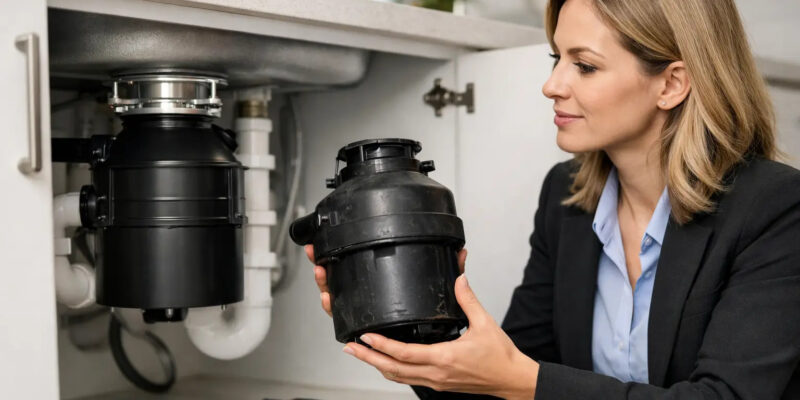
A garbage disposal that hums without grinding, leaks beneath the sink, or trips the breaker during dinner cleanup can turn a small kitchen inconvenience into a plumbing concern. Garbage disposal replacement is often the right answer when an older unit has repeated failures, but the best decision depends on the condition of the disposal, drain piping, electrical connection, and the way the kitchen is used.
For homeowners and property managers in Northeastern Pennsylvania, a properly selected and installed disposal helps keep kitchen cleanup moving without putting unnecessary strain on the sink drain. The goal is not simply to put a new appliance under the sink. It is to install a unit that fits the household, connects correctly to the plumbing, and can be serviced when needed.
When a Garbage Disposal Replacement Is the Better Choice
Not every disposal problem requires a new unit. A jam caused by a utensil, fruit pit, or other hard object may be resolved by safely removing the obstruction and resetting the unit. A unit that will not run may have a tripped reset button, a failed switch, or an electrical issue that needs diagnosis.
Replacement becomes more practical when problems keep returning. If the disposal is leaking from its lower housing, the internal seals are commonly worn out and are generally not repairable. A persistent metallic grinding sound, poor performance even after clearing the unit, or frequent breaker trips can also point to an aging motor or internal damage.
Age matters, too. Many residential disposals provide dependable service for roughly eight to 15 years, depending on the model, water conditions, frequency of use, and what is put through it. Replacing a unit near the end of that range can be more cost-effective than paying for repeated service calls on a disposal with limited remaining life.
A foul odor alone does not necessarily mean the disposal has failed. Food residue can collect around the splash guard and grinding chamber. Cleaning those areas properly may solve the issue. However, if odors persist alongside leaking, weak grinding, or drain backups, it is time to inspect the whole system.
Signs the Problem May Be Beyond the Disposal
A slow or backed-up kitchen sink is not always a garbage disposal failure. The restriction may be in the sink trap, branch drain, dishwasher connection, or a larger section of kitchen piping. Replacing the disposal without addressing that blockage will not restore drainage.
This distinction is especially important in older homes, rental properties, and buildings with long kitchen drain runs. Grease buildup, food waste, mineral deposits, and aging pipe materials can restrict flow over time. A technician should evaluate the drain before assuming the disposal itself is the source of the problem.
Water under the cabinet also deserves careful attention. Leaks can occur at the sink flange, discharge connection, dishwasher drain hose, water supply lines, or the disposal body. Moisture beneath a kitchen sink can damage cabinetry, flooring, and electrical components. Finding the exact source before installation prevents a new disposal from being connected to a compromised drain assembly.
Choosing the Right Replacement Unit
The right garbage disposal replacement should match the kitchen’s workload. A small household that uses the disposal occasionally may be well served by a basic unit with a lower-horsepower motor. A busy family, shared residence, or employee break room may benefit from more grinding power and improved sound insulation.
Horsepower is one factor, but it is not the only one. The unit must fit the available cabinet space and align with the existing drain outlet. Taller or larger models can interfere with shelving, water filters, or under-sink storage. If a dishwasher is connected, the replacement must also be configured correctly for that drain connection.
Homeowners should also consider noise level and ease of service. More insulated models can reduce the sound of grinding, which may be worthwhile in open kitchens or homes where the sink is close to living areas. A quality splash guard and corrosion-resistant grinding components can support longer service life, particularly in kitchens where the disposal sees regular use.
It is also worth considering how the household handles food waste. A disposal is designed for small scraps washed away with a steady flow of cold water. It is not a substitute for the trash or compost bin. Grease, cooking oil, fibrous vegetables, coffee grounds, eggshells, pasta, rice, bones, and large quantities of food can contribute to jams or drain restrictions. Even a powerful new unit has limits.
Homes served by septic systems need extra care. A disposal adds organic material and water to the system, which may affect maintenance needs. The right approach depends on the septic system’s size, condition, household use, and local recommendations. In some cases, reducing the amount of food waste sent down the drain is the better long-term choice.
Why Professional Installation Protects the Kitchen Plumbing
A garbage disposal involves both plumbing and electrical connections in a confined space. The new unit must be mounted securely to the sink, connected to the drain at the correct angle, and tested for leaks while the dishwasher connection and trap assembly are in place. If the disposal is hardwired or connected through a switched outlet, the electrical setup must also be safe and code-appropriate.
Improper installation can lead to nuisance leaks, vibration, poor drainage, or a disposal that will not operate correctly. A discharge pipe that is misaligned may place stress on the unit or drain fittings. Loose connections can leak only when the sink is full or the dishwasher drains, making the problem easy to miss until cabinet damage appears.
Professional installation also provides an opportunity to inspect related components under the sink. Worn shutoff valves, deteriorated supply lines, corroded trap fittings, and an aging dishwasher drain hose can all create separate problems after the new disposal is installed. Addressing obvious concerns during the same visit can help avoid another interruption later.
For commercial kitchens, break rooms, and managed properties, installation planning may need to account for higher usage, multiple users, cleaning procedures, and business hours. The disposal should be suitable for its intended use, but staff should still understand what should stay out of the sink. In facilities with food preparation needs, improper disposal use can create drain issues that affect operations well beyond one fixture.
Keeping a New Disposal Working Reliably
Once a replacement is installed, everyday habits make a meaningful difference. Run cold water before turning the disposal on, feed only small amounts of food waste into the chamber, and continue running water briefly after grinding stops. Cold water helps carry ground material through the drain while keeping fats more solid than they would be under hot water.
Do not use chemical drain cleaners in a disposal or kitchen drain unless a qualified plumbing professional recommends a specific product. These chemicals can damage components, create hazards during service, and may not remove the underlying blockage. If the sink is draining slowly, diagnosing the restriction is safer than repeatedly adding chemicals.
A disposal should also be cleaned gently rather than treated with harsh products. Removing residue from the splash guard and flushing the unit with water can help control odors. If the unit jams, turn it off and disconnect power before any attempt is made to clear it. Never reach into the grinding chamber.
A dependable kitchen sink depends on more than the appliance below it. When recurring leaks, motor problems, or drain concerns make garbage disposal replacement necessary, Hydrodynamics Inc. can help evaluate the full under-sink setup and install a solution built for reliable everyday use.