
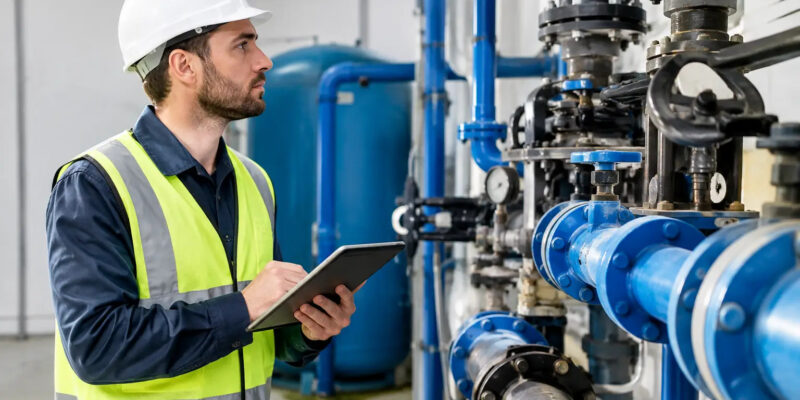
A building can have dependable heat and cooling yet still face a serious disruption when the water serving its fixtures or equipment is not doing its job. Low pressure at sinks, inconsistent hot water, scale inside equipment, recurring pump cycling, or a sudden leak can quickly affect a home, tenant space, restaurant, office, or industrial operation. Service water is the part of a building’s mechanical system that delivers water where it is needed, and it deserves the same attention as the heating and cooling equipment that gets more of the spotlight.
The right approach is not simply to repair the visible problem. It is to understand the water source, piping, pressure, treatment needs, equipment demands, and maintenance history behind it. That is how property owners avoid repeating the same service call and make sound decisions about repairs and upgrades.
What Does Service Water Mean?
The term service water can mean slightly different things depending on the building, the equipment, and the project documents. In many plumbing applications, it describes the water distribution system serving plumbing fixtures, water heaters, mechanical equipment, and other building uses. In a residence, that may include the cold and hot water reaching showers, faucets, toilets, laundry equipment, and outdoor connections.
In commercial and industrial facilities, the system may be more involved. Water may serve restrooms and break areas, but it can also support process equipment, refrigeration components, humidification, cleaning stations, cooling equipment, or specialized machinery. Some systems use potable water suitable for drinking and food preparation. Others use nonpotable, treated, reclaimed, or process water that is kept separate for a specific purpose.
That distinction matters. Water intended for drinking must be protected from contamination, and backflow prevention may be required wherever there is a risk that water from equipment or a process could move back into the potable supply. A property owner does not need to memorize every plumbing code requirement, but they should recognize that not all water piping performs the same job or can be treated the same way.
The Parts of a Service Water System
A reliable system starts at the source. For many properties, that source is a public water main. For rural homes and facilities across Northeastern Pennsylvania, it may be a private well with a well pump, pressure tank, controls, and water-treatment equipment. If the source cannot provide adequate flow or stable pressure, every downstream fixture and piece of equipment will feel the effect.
From there, shutoff valves, pressure-reducing valves, backflow devices, filters, softeners, water heaters, circulation pumps, and the piping network each have a role. One weak component can create symptoms that appear somewhere else. For example, a partially clogged filter may look like a pump problem. A failed expansion tank can contribute to pressure changes near a water heater. A corroded pipe section can reduce flow at only one group of fixtures while the rest of the building seems normal.
Hot water adds another layer. Water heaters need correct sizing, safe temperature control, dependable fuel or electrical connections, relief protection, and periodic maintenance. Larger properties may need recirculation to reduce long waits for hot water at distant fixtures. Recirculation improves convenience and can reduce water waste, but it also introduces pumps, controls, balancing considerations, and more components that need attention.
Water Quality Is a Mechanical Issue, Too
Water quality is often treated as a separate concern from plumbing, but it directly affects the life and performance of a service water system. Hard water leaves mineral scale inside water heaters, fixtures, valves, dishwashers, boilers, and other equipment. Over time, that buildup reduces efficiency, interferes with flow, and can shorten equipment life.
Well water may also contain iron, manganese, sediment, sulfur odor, acidity, bacteria, or other conditions that call for a specific treatment strategy. There is no single piece of equipment that solves every water issue. A softener may be appropriate for hardness, while sediment filtration, neutralization, oxidation, or ultraviolet treatment may address different concerns. The right recommendation depends on water testing, the household or facility’s water use, and the equipment being protected.
Treatment also has trade-offs. Filters require replacement, softeners need salt and service, and ultraviolet systems need working lamps and clean water for effective treatment. Skipping this upkeep can reduce the value of the original investment and allow the same problems to return.
Common Signs Your Service Water Needs Attention
Not every water problem is an emergency, but small changes are worth investigating before they become a leak, equipment failure, or operational interruption. Watch for recurring pressure loss, cloudy or discolored water, unusual tastes or odors, banging pipes, water heater noises, damp areas near piping, or fixtures that suddenly take longer to receive hot water.
Commercial and industrial properties should also pay attention to rising water use, inconsistent equipment performance, repeated valve failures, water damage near mechanical rooms, and complaints concentrated in one area of the building. These signs can point to a system issue rather than a collection of unrelated fixture problems.
A noticeable increase in a water bill deserves prompt attention as well. It may be caused by a running toilet or dripping fixture, but it can also signal an underground leak, a failed control, or water loss associated with equipment. Finding the cause early protects both the property and the operating budget.
Maintenance That Prevents Bigger Problems
Service water maintenance should match the complexity and use of the property. A homeowner on a well may need periodic pump, pressure tank, filter, and water-quality checks. A commercial property may need documented testing of backflow devices, water-heating equipment, recirculation systems, isolation valves, and treatment components. Facilities with specialized equipment may have manufacturer requirements that should be part of the maintenance plan.
At a practical level, maintenance includes checking for leaks and corrosion, exercising valves that are rarely used, replacing filters on schedule, inspecting pressure and temperature controls, flushing water heaters when appropriate, and confirming that pumps start and stop properly. It also means reviewing the system after a change in building use. A small office converted to a restaurant, for instance, can place much heavier demand on hot water, drainage, and water treatment than the original system was designed to handle.
Preventive work is not about replacing components that still have useful life. It is about identifying wear, poor performance, and capacity limits before they force an urgent decision. That gives owners more options and makes it easier to plan a replacement around the needs of the building.
Repair, Upgrade, or Replacement?
The best choice depends on the age of the equipment, the condition of the piping, the availability of replacement parts, the severity of the problem, and the building’s future needs. A single failed valve or leaking fitting may call for a focused repair. Repeated failures, widespread corrosion, inadequate pressure, or chronic water-quality issues may point toward a broader upgrade.
For a home, an upgrade may involve a new well pump, pressure tank, water heater, softener, or ultraviolet treatment system. For a business or facility, it may involve properly sized water heaters, circulation improvements, new backflow protection, upgraded distribution piping, or a coordinated plan that accounts for plumbing, pumps, refrigeration, and HVAC equipment together.
This is where working with a contractor that understands the connected systems matters. Hydrodynamics Inc. helps property owners assess the actual cause of water and mechanical issues, not just the symptom that triggered the call. A repair should restore dependable operation, while an upgrade should make sense for the property’s long-term demands.
Plan Before a Failure Forces the Decision
Water systems tend to get attention only when the pressure disappears, a water heater leaks, or equipment shuts down. A better time to evaluate service water is while the system is still operating and there is room to compare options. Record recurring issues, note changes in water use or building occupancy, and schedule service before a minor concern becomes a disruption.
A well-maintained service water system supports the ordinary moments people rely on: a hot shower, a functioning restroom, a clean production area, and equipment that can stay on task. Keeping those basics dependable is one of the most practical ways to protect comfort, operations, and the property itself.