
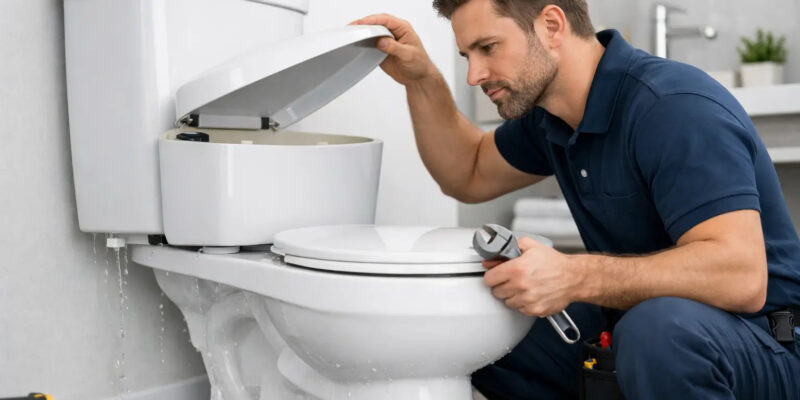
A toilet that refills at random, rocks at the base, or requires a second flush is more than an everyday annoyance. Timely toilet repair can prevent wasted water, damaged flooring, sewer backups, and an unexpected loss of a working bathroom. The right response depends on where the problem starts: inside the tank, at the fixture base, in the drain line, or farther into the plumbing system.
For homeowners, business owners, and property managers, the goal is not to replace parts at the first sign of trouble. It is to identify whether a simple adjustment is appropriate or whether the symptoms point to a repair that needs professional attention.
Common Toilet Repair Problems and What They Mean
Most toilet issues fall into a few familiar categories, but the same symptom can have different causes. A toilet that runs continuously, for example, may have a worn flapper, an improperly adjusted fill valve, a leaking flush valve seal, or water pressure affecting the tank’s operation. Replacing a part without confirming the cause can turn a small repair into a frustrating series of trips to the hardware store.
A Toilet That Keeps Running
A running toilet is often caused by water escaping from the tank into the bowl after the flush. The flapper may be warped, coated with mineral buildup, or held open by a chain that is too short. In other cases, the fill valve may not be shutting off at the proper water level.
A simple check is to remove the tank lid and watch what happens after the toilet finishes filling. If water continues to flow into the overflow tube, the fill valve or float adjustment deserves attention. If the tank appears full but periodically refills on its own, the flapper or flush valve seal is more likely the issue.
This may seem minor, but a toilet that runs all day can waste a substantial amount of water. In a commercial restroom or multi-unit property, several running fixtures can make a noticeable difference in water usage and operating costs.
Weak, Incomplete, or Double Flushes
When a toilet does not clear the bowl reliably, begin with the simple possibilities. A partially closed shutoff valve, low tank water level, or a disconnected flapper chain can limit flushing performance. Mineral deposits can also restrict rim holes beneath the bowl edge, especially where water quality causes scale buildup.
However, weak flushing can also indicate a developing blockage in the trap or drain. If plunging restores normal flushing only briefly, there may be an obstruction farther down the line. Repeated clogs in one bathroom, slow drainage in nearby fixtures, or gurgling from a tub or sink are not typical toilet problems. They can indicate a drainage or venting issue that should be evaluated before a backup occurs.
Water Around the Toilet Base
Water at the base of a toilet should never be ignored. Sometimes the source is simple condensation from a cold tank in a humid room, a loose supply connection, or water splashing from a bath or shower. Dry the area completely, then check again after several flushes to understand when the water appears.
If water emerges at the base after flushing, the wax ring or toilet seal may have failed. A loose toilet can contribute to this problem because movement breaks the seal between the fixture and the drain flange. This is not a repair to delay. Wastewater can reach the subfloor, damage finished flooring, create odors, and lead to more extensive restoration work.
A Toilet That Rocks or Feels Loose
A toilet should sit firmly on the floor without shifting. Rocking may result from uneven flooring, loose mounting bolts, damaged shims, or a compromised flange below the fixture. Tightening bolts alone is not always the answer. Over-tightening can crack a porcelain base, and securing a toilet that is sitting incorrectly can conceal a leaking seal.
A technician can determine whether the fixture needs to be reset, whether the flange requires repair, and whether the surrounding floor has been affected by moisture. This is particularly worthwhile in older homes and properties where prior repairs may not have addressed the underlying condition.
What You Can Safely Check Before Calling for Toilet Repair
A few basic checks can help narrow down the issue without taking apart the plumbing system. First, confirm that the shutoff valve behind the toilet is fully open and that the supply line is not dripping. Then lift the tank lid carefully and inspect the flapper, chain, water level, and fill valve for obvious misalignment or wear.
For a simple clog, use a flange plunger designed for toilets rather than a flat sink plunger. Use steady pressure and avoid forcing the handle aggressively, which can splash contaminated water or damage an already weak seal. If the water level rises close to the rim, stop flushing. Turn off the shutoff valve if necessary and allow the bowl to drain before taking the next step.
Do not rely on chemical drain cleaners for a toilet clog. These products can be ineffective against solid obstructions, can damage certain plumbing components, and create a handling hazard if a technician later needs to work on the fixture. A toilet auger can clear some local obstructions, but repeated use without finding the cause may only postpone a larger drain problem.
When a Plumbing Professional Is the Better Choice
Some toilet repairs are straightforward when the failure is limited to a readily accessible tank component. The situation changes when there is sewage, recurring clogging, a suspected leak below the floor, or a problem that affects more than one fixture.
Call for professional service when the toilet overflows repeatedly, water appears at the base after flushing, the fixture is cracked, or a plunger does not resolve a clog. The same applies if sinks, tubs, or floor drains are backing up or making gurgling sounds. Those signs can point to a branch drain or main sewer issue rather than a problem within the toilet itself.
For commercial facilities, prompt evaluation matters even more. An out-of-service restroom affects employees, customers, tenants, and daily operations. A repair should account for fixture condition, water efficiency, drain performance, accessibility requirements where applicable, and the reliability of the surrounding plumbing system.
Repair or Replace: Making a Practical Decision
Repair is usually the sensible choice when the porcelain fixture is sound and the problem involves a flapper, fill valve, supply connection, handle, seat, or mounting hardware. These components wear out over time and can often be replaced without changing the entire toilet.
Replacement may make more sense when the bowl or tank is cracked, the toilet has sustained repeated leak damage, replacement parts are difficult to source, or the fixture is chronically inefficient. An older toilet may use significantly more water per flush than a newer model, but efficiency alone does not require replacement. The condition of the fixture, the plumbing layout, and the property’s needs should guide the decision.
In homes with well water or water treatment equipment, mineral buildup can also factor into the conversation. Scale may shorten the service life of tank components and affect flushing performance. Addressing water-quality conditions alongside fixture repairs can help reduce repeat service issues.
Preventing Repeat Toilet Problems
Good toilet maintenance is mostly about paying attention early. Check periodically for a running tank, wipe up moisture around the base, and address a loose seat or rocking fixture before it becomes a larger problem. Avoid flushing wipes, paper towels, hygiene products, dental floss, or other materials labeled as disposable but not intended for toilet drainage.
Property managers and facility operators benefit from a regular plumbing maintenance approach, especially in buildings with multiple restrooms, older piping, high-traffic fixtures, or pump-supported wastewater systems. Small repairs are easier to schedule and budget for than emergency water damage or a restroom closure.
Hydrodynamics Inc. helps customers throughout Northeastern Pennsylvania assess toilet and plumbing problems in the context of the full system, from a leaking fixture to drainage, water-quality, and pump concerns. A toilet should work quietly and reliably. When it does not, acting before the next flush becomes a bigger problem protects the property and the people who depend on it.