
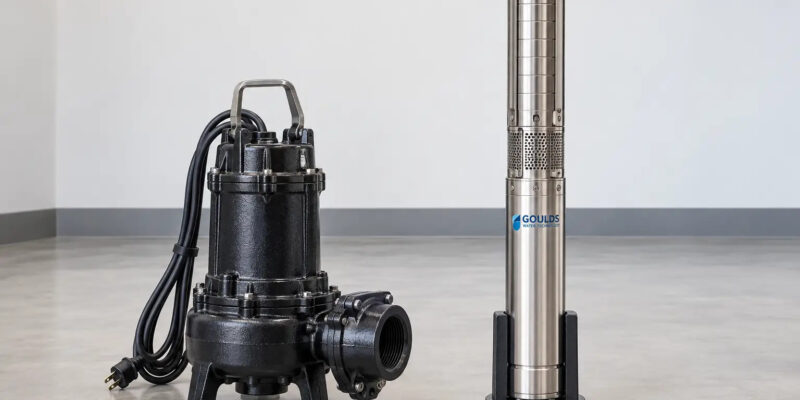
A pump rarely fails without giving some warning. Pressure that fluctuates, a breaker that trips, an alarm that will not clear, or a basin that drains more slowly than usual can all point to a problem that deserves prompt attention. These pump failure case studies show why the visible symptom is not always the root cause – and why a correct diagnosis matters as much as replacing a failed part.
For homeowners, a pump problem can mean no water, sewage backup risk, or damage to plumbing fixtures. For a commercial property or industrial facility, it can interrupt production, create sanitation concerns, or leave critical equipment without the water or circulation it needs. The common lesson is simple: treat a pump issue as a system issue, not just a motor issue.
Pump Failure Case Studies From Common Service Situations
The following scenarios reflect common pump failures seen in homes, businesses, and facilities across Northeastern Pennsylvania. Each system has different operating conditions, but the diagnostic approach remains the same: confirm the symptom, inspect the electrical and mechanical components, identify what caused the failure, and correct any condition that could damage the replacement.
Case Study 1: A Well Pump That Ran Constantly
A homeowner noticed that the well pump seemed to run whenever water was used. The house still had water, but pressure dropped noticeably during showers, and the electric bill had increased. Waiting for a complete loss of water would have been understandable, but it would also have allowed the pump to keep operating under stress.
The first assumption in situations like this is often that the submersible well pump is worn out. That may be true, especially with an older pump, but a pump that runs continuously can also be responding to a pressure-tank problem, a failed pressure switch, a plumbing leak, a clogged filter, or a loss of pressure on the well side of the system.
In this case, the pressure tank had lost its proper air charge and the switch was cycling too frequently. Short cycling forces the pump motor to start and stop far more often than it was designed to. Those frequent starts create heat and electrical stress, reducing motor life even if the pump itself is still capable of producing water.
The repair required more than a quick switch replacement. The tank, switch settings, electrical connections, and system pressure all needed to be evaluated together. Once the failed components were addressed and the system was adjusted properly, pressure stabilized and the pump stopped cycling excessively.
The lesson: a well pump that seems to be failing may be reacting to a pressure-control issue. Replacing the pump without correcting the cause can shorten the life of the new equipment.
Case Study 2: A Grinder Pump Alarm Caused by More Than a Clog
A grinder pump serves a demanding job. It collects wastewater and moves it to a sewer connection when gravity drainage is not possible. When its alarm sounds, the property owner may be tempted to reset it and hope the problem clears. That can be risky. If wastewater continues entering the basin while the pump cannot discharge it, the system can overflow.
At a residential property, a grinder pump alarm had been reset several times over a few days. The pump would run briefly, then shut down again. The basin contained material that should not have been flushed, which contributed to the immediate obstruction. But removing the obstruction alone did not explain why the pump repeatedly overheated.
Further inspection found a worn float switch and an aging check valve. The float was not consistently signaling the pump at the right level, while the check valve was allowing some discharge water to fall back into the basin after each cycle. The pump was handling more repeat work than necessary and operating under poor conditions.
The solution included clearing the obstruction, replacing the failed controls, and addressing the discharge issue. Just as important, the owner received practical guidance on what should never enter a grinder pump system. Wipes, feminine hygiene products, paper towels, grease, and other non-flushable materials can cause problems even when packaging suggests otherwise.
The lesson: a grinder pump alarm is not simply an inconvenience. It is an early warning that should be checked before the basin reaches capacity. A reset can restore operation temporarily, but it does not identify why the alarm occurred.
Case Study 3: A Commercial Circulation Pump With Intermittent Failure
A commercial building experienced uneven heating in several areas. Some zones warmed normally, while others remained cold despite a functioning boiler. The circulation pump was operating intermittently, leading staff to suspect an electrical failure or a failing motor.
Electrical testing was part of the diagnosis, but it did not tell the full story. The pump was receiving power. The larger issue was poor water quality in the closed-loop system, combined with debris accumulation near the pump and air trapped in portions of the piping. The pump was working harder to move water through a restricted system, and its performance dropped as operating conditions changed.
This type of failure illustrates a key trade-off in commercial mechanical service. Replacing the pump may restore circulation quickly, but it may not be the most durable solution if debris, air, incorrect flow settings, or system imbalance remain in place. In some cases, immediate replacement is necessary to restore heating or cooling. In others, cleaning, flushing, air elimination, and controls review can prevent the same failure from returning.
The corrective work focused on the pump and the loop it served. After the system was cleaned, air issues were addressed, and circulation was confirmed at the affected zones, the building returned to more consistent heating performance.
The lesson: circulation pumps depend on the health of the system around them. Water quality, air management, valve position, piping restrictions, and equipment controls all affect pump performance.
What These Pump Failures Have in Common
Although a well pump, grinder pump, and commercial circulation pump perform different jobs, their failures often follow similar patterns. Electrical issues, worn controls, blocked flow, improper cycling, and neglected maintenance can all turn a manageable repair into an urgent replacement.
Pump sizing also matters. An oversized pump may cycle too quickly or create unnecessary pressure stress. An undersized pump may run too long, overheat, or fail to keep up with demand. The right equipment depends on the property, water needs, piping arrangement, vertical lift, discharge conditions, and expected operating hours. There is no single pump choice that suits every home or facility.
Age matters, but it should not be the only factor in deciding whether to repair or replace. A newer pump with a failed switch or capacitor may be an excellent repair candidate. An older pump with motor damage, repeated service history, deteriorated piping, or insufficient capacity may justify replacement. A qualified technician should explain the condition of the existing equipment and the practical options before work begins.
Early Warning Signs Worth Acting On
Pump failures can develop gradually or happen without much notice. Property owners and facility teams should arrange service when they notice repeated breaker trips, unusual humming or grinding sounds, reduced water pressure, frequent pump cycling, an alarm condition, visible leaks, changing water quality, or water where it does not belong.
For facilities with critical equipment, preventive maintenance is usually less disruptive than emergency service. Routine inspection can identify worn seals, damaged controls, loose electrical connections, improper pressure settings, blocked strainers, and early corrosion before those issues cause an operational shutdown. The ideal maintenance schedule depends on the pump type, water conditions, workload, and consequences of downtime.
Hydrodynamics Inc. approaches pump service with the full mechanical system in view. Whether the concern involves a residential well pump, grinder pump, water-treatment equipment, or a commercial and industrial pump application, the goal is to restore dependable operation while addressing the condition that caused the problem.
When a pump begins to sound different, cycle more often, or struggle to keep up, acting early gives you more repair options. It also gives a technician time to diagnose the system carefully instead of making decisions under the pressure of a complete failure.