
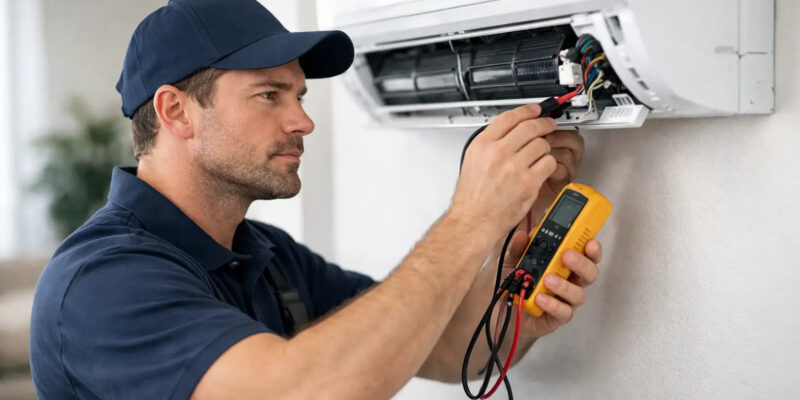
A ductless mini-split should be quiet enough that you barely notice it working. When an indoor head starts dripping onto a wall, blows lukewarm air on a hot afternoon, or makes a new rattling sound, the issue deserves attention. Timely mini split repair can often prevent a small drainage, electrical, or refrigerant problem from becoming a loss of heating or cooling when you need the system most.
Mini-splits are efficient because they move heat rather than create it through combustion or electric resistance alone. They also rely on several components working together: the indoor air handler, outdoor condenser, refrigerant lines, condensate drain, controls, and electrical connections. A problem at any point in that system can affect comfort, energy use, and equipment life.
When Mini Split Repair Is Needed
Some ductless issues are obvious. Others begin as a change in performance that is easy to dismiss until the system stops altogether. If the unit is not cooling or heating as it normally does, runs continuously, turns itself off, or displays an error code, schedule professional service rather than repeatedly resetting the equipment.
Water around or below the indoor unit is another common reason to call. In cooling mode, the indoor coil removes moisture from the air, and that water must leave through a properly pitched, clear condensate drain. A clogged drain line, failed condensate pump, damaged drain pan, or installation issue can cause water to back up into the air handler. Waiting can lead to stained finishes, damaged drywall, or microbial growth around the unit.
New sounds matter as well. A mild fan sound is normal, but buzzing, grinding, clicking that does not stop, or metal-on-metal vibration is not. The cause may be as simple as a loose panel or debris in the fan wheel. It may also involve a failing blower motor, outdoor fan motor, compressor component, or electrical connection. The only reliable way to tell is through an on-site inspection.
A few conditions call for faster action. Turn the system off and request service if you smell burning insulation, see smoke, find oil around refrigerant connections, notice a repeatedly tripped breaker, or hear loud electrical buzzing. Do not remove electrical covers or attempt to add refrigerant. Ductless systems operate with high voltage and sealed refrigerant circuits that require proper diagnostic equipment and qualified handling.
Common Problems Behind Ductless System Failures
A dirty air filter is one of the most preventable causes of poor mini-split performance. When airflow is restricted, the indoor coil cannot exchange heat efficiently. The system may run longer, deliver less comfort, and in some cases freeze at the coil. Homeowners can usually wash or replace filters according to the manufacturer’s instructions, but a heavily soiled coil needs more than a quick filter cleaning.
Coil contamination is especially common in homes with pets, cooking residue, smoking, candles, woodworking, or high dust levels. The indoor coil and blower wheel have narrow passages. As dirt builds up, airflow falls and the unit may begin to smell musty, drip, or struggle to maintain temperature. A professional cleaning addresses the components that are not easily accessible without disassembly.
Refrigerant issues require careful diagnosis. Low refrigerant is not a normal seasonal condition and is not something a system simply “uses up.” If charge is low, a leak may be present. Signs can include weak heating or cooling, frost on the refrigerant lines or coil, hissing, and longer run times. Adding refrigerant without finding the cause may provide temporary relief while allowing the underlying leak to continue.
Electrical and control faults can be less visible but equally disruptive. Mini-splits communicate between the indoor and outdoor units. A loose wire, damaged cable, failed sensor, control-board fault, or voltage problem can trigger error codes or intermittent operation. Because code meanings vary by manufacturer and model, the displayed code is a starting point for diagnosis, not a final answer.
Outdoor-unit concerns are also common in Northeastern Pennsylvania. Leaves, snow, ice, grass clippings, and drifting debris can restrict airflow through the outdoor coil. In heating mode, heat pumps periodically enter a defrost cycle. That process is normal, but persistent ice buildup, a unit buried in snow, or a system that never seems to recover from defrost is not. These conditions can point to airflow restrictions, drainage problems, sensor concerns, or a refrigerant-related issue.
What You Can Check Before Calling for Service
There are a few safe checks that can provide useful information and occasionally restore normal operation. Confirm that the thermostat or remote is set to the correct mode. A system set to fan-only or dry mode will not cool the same way it does in cooling mode. If your home has multiple indoor heads connected to one outdoor unit, remember that many multi-zone systems cannot heat one room while cooling another at the same time.
Check the filter and make sure the indoor unit’s intake and discharge areas are not blocked by furniture, curtains, or stored items. Outside, look for obvious debris around the condenser and clear away loose leaves or snow without bending coil fins or spraying water into electrical areas. You can also check whether a breaker has tripped once. If it trips again after resetting, leave it off and call for service.
Write down any error code, note which zones are affected, and pay attention to when the problem occurs. Does the unit fail only in heating mode? Does it leak only on humid days? Does the breaker trip when the outdoor unit starts? Those details help a technician narrow the diagnosis more efficiently.
Avoid using do-it-yourself sealants on refrigerant connections, pouring harsh chemicals into the condensate drain, or opening the outdoor unit. A mini-split may look compact, but its controls, refrigerant circuit, and drainage system require precise service. An incorrect repair can create a larger equipment problem or affect manufacturer warranty coverage.
What a Professional Mini Split Repair Visit Should Include
Effective repair starts with determining why the system is behaving differently, not simply replacing the most likely part. A technician should review the reported symptoms, inspect filters and airflow, examine the indoor and outdoor coils, check the condensate system, and evaluate electrical connections and operating controls.
Depending on the problem, diagnosis may include measuring supply-air temperatures, checking voltage and amp draw, verifying communication between components, testing sensors, inspecting fan operation, and evaluating refrigerant pressures and temperatures. If a leak is suspected, the technician should identify the source before discussing repair options and refrigerant correction.
The right repair depends on the equipment’s age, condition, and the failed component. Clearing a drain or replacing a sensor is generally a straightforward repair. A major compressor failure, significant refrigerant leak, or repeated control-board issue calls for a more detailed conversation about repair cost, remaining equipment life, and replacement options. The best choice is not always the least expensive immediate fix. For a newer system, a targeted repair may make clear sense. For an older unit with multiple concerns, replacement may offer better long-term reliability and efficiency.
For commercial properties and facilities, the impact extends beyond room temperature. A failed ductless unit can affect tenant comfort, server rooms, offices, equipment areas, specialty workspaces, and staff productivity. Property managers benefit from documenting model numbers, service history, error codes, and recurring performance concerns so repairs and maintenance decisions are based on a clear record.
Preventing Repeat Ductless Problems
Routine maintenance is the practical way to reduce unexpected failures. Filters should be checked regularly, with frequency based on household activity and the system’s operating hours. A lightly used bedroom unit may need less attention than a kitchen-area unit or a system running daily in a business.
Professional maintenance goes beyond filter care. It gives a technician the opportunity to clean coils and blower components as needed, confirm drainage, inspect line-set insulation, evaluate electrical parts, check outdoor airflow, and look for early signs of wear. Heat-pump mini-splits that provide both winter heat and summer cooling should be maintained with both seasons in mind.
Keep the outdoor unit accessible through the year. Do not stack materials against it, cover it tightly while operating, or allow roof runoff and snow accumulation to overwhelm the unit. If the equipment is in an area exposed to wind-driven snow, discuss practical protection and drainage options with a qualified contractor rather than restricting the airflow it needs.
Hydrodynamics Inc. provides ductless system service for homeowners, businesses, and facilities throughout the Hazleton area and Northeastern Pennsylvania. Whether the concern is a leaking indoor head, poor heat output, an error code, or a unit that has stopped operating, a prompt assessment can protect both comfort and the equipment that supports it.
If your mini-split has changed the way it sounds, drains, heats, or cools, treat that change as useful information. Addressing it before peak weather arrives gives you more repair options and a better chance of keeping the system dependable when the temperature outside is least forgiving.