
A heating system installation is not simply a matter of replacing one piece of equipment with another. In Northeastern Pennsylvania, the system has to handle long winter runs, changing outdoor temperatures, building heat loss, fuel availability, and the daily demands of the people or operations inside. The right installation starts with a clear assessment of the building, then matches equipment, distribution, controls, and safety requirements to the job.
For a homeowner, that may mean dependable room-to-room comfort and predictable operating costs. For a business, apartment property, or industrial facility, it may also mean protecting inventory, keeping tenants comfortable, avoiding downtime, and maintaining safe working conditions. The best result is a heating system that fits the building rather than forcing the building to work around the equipment.
Start With the Building, Not the Equipment
It is tempting to choose a new furnace, boiler, or heat pump based on the capacity of the unit being replaced. That approach can carry old problems into a new installation. An older system may have been oversized from the beginning, or the building may have changed through additions, insulation upgrades, window replacements, altered occupancy, or new process equipment.
A proper evaluation considers the building’s square footage, layout, insulation levels, air leakage, ceiling height, window exposure, and use. A warehouse with large overhead doors has a different heating profile than an office suite. A home with an unfinished basement and uneven second-floor temperatures needs a different approach than a compact ranch home. Heat-loss calculations provide a useful starting point because they estimate how much heat the building actually needs under local design conditions.
Oversizing is not harmless. Equipment that is too large can cycle on and off frequently, which may reduce efficiency, create temperature swings, increase wear, and leave less time for proper airflow or heat distribution. Equipment that is too small can run constantly during cold weather and still fail to maintain comfort. Correct sizing protects both performance and equipment life.
Choosing the Right Type of Heating System
The most suitable system depends on the building, the available energy source, the existing infrastructure, and the owner’s priorities. There is no single best option for every property.
Furnaces for Forced-Air Heating
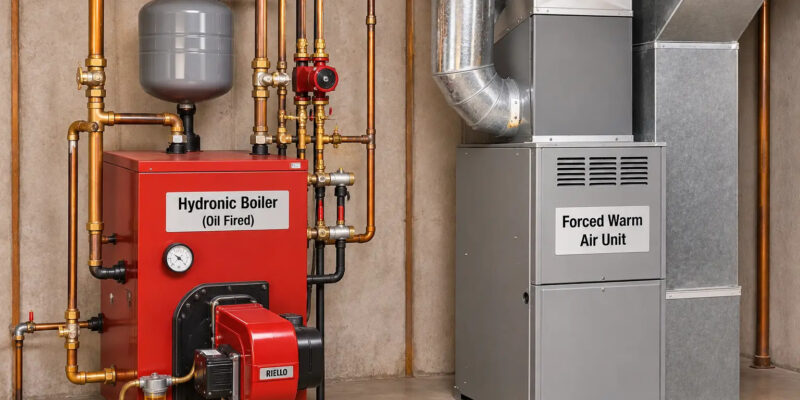
Gas, propane, and oil furnaces deliver heated air through ductwork. They are a practical choice when a building already has a sound duct system and needs central cooling as well. A new furnace installation should include an inspection of duct sizing, return-air capacity, filtration, venting, and blower performance. Installing a high-efficiency furnace on undersized or leaky ductwork can limit the benefit of the new equipment.
Fuel availability matters. Natural gas can be economical where service is available, while propane and oil remain common choices for many rural properties. Each fuel type has different storage, delivery, venting, and maintenance considerations.
Boilers and Hydronic Heating
Boilers heat water that circulates through radiators, baseboards, unit heaters, or radiant tubing. Many property owners value hydronic heat for its steady, even feel. Boilers can also serve domestic hot-water needs in certain configurations, though the system should be designed carefully to meet both heating and hot-water demand.
A boiler replacement is a good time to inspect circulator pumps, expansion tanks, air elimination devices, zone valves, piping condition, and controls. A new boiler cannot correct a poorly balanced hydronic system on its own. Zoning can be especially valuable in larger homes, multi-tenant buildings, and facilities with areas that operate on different schedules.
Heat Pumps and Ductless Systems
Modern heat pumps can provide efficient heating and cooling in one system. They are often a strong option for homes and businesses seeking to reduce reliance on fossil fuels, add air conditioning, or condition areas without existing ductwork. Ductless mini-splits are useful for additions, offices, finished basements, server rooms, workshops, and rooms that never seem to match the thermostat setting.
Cold-climate heat pumps can perform well in Pennsylvania, but the system still needs to be sized and selected for local winter conditions. Some installations use a dual-fuel approach, pairing a heat pump with a furnace or boiler that can support the load during more severe weather. The right choice depends on utility rates, fuel costs, comfort expectations, and the building’s heating load.
Commercial and Industrial Equipment
Commercial and industrial heating system installation may involve rooftop units, make-up air equipment, unit heaters, infrared systems, boilers, process heating, or specialized waste-oil heating equipment. These projects require attention to ventilation, combustion air, controls, roof or structural conditions, electrical capacity, equipment access, and the effect of heating equipment on the rest of the facility.
For operations with production schedules or sensitive materials, the installation plan is as important as the equipment selection. Work may need to be phased around occupied areas, deliveries, production lines, or seasonal demand. A contractor should understand how the heating system supports the entire operation, not just the mechanical room.
What a Complete Heating System Installation Includes
The visible equipment is only one part of the work. A dependable installation accounts for the parts that determine whether the system runs safely and efficiently after the crew leaves.
For combustion equipment, that includes properly sized venting, gas piping or oil connections, combustion air, condensate drainage where required, safety controls, and code-compliant clearances. For electric and heat-pump equipment, it includes correct electrical circuits, disconnects, refrigerant piping, condensate management, and control wiring. Any system may require duct modifications, piping updates, thermostats, zoning components, equipment pads, or vibration control.
Controls deserve special attention. A basic thermostat may be appropriate for a straightforward home system, while a commercial building may need programmable scheduling, multiple zones, remote monitoring, occupancy control, or integration with existing building systems. The goal is not to add complexity for its own sake. It is to give the owner useful control without making daily operation difficult.
Permits and inspections also matter. They help confirm that fuel connections, venting, electrical work, safety devices, and installation clearances meet applicable requirements. Skipping this step can create safety concerns, complicate insurance or property transactions, and make future service harder.
Plan for Replacement Before a Breakdown
Some failures cannot wait, especially when heat is lost during winter. Still, planning a replacement before the existing system fails gives property owners more options. There is time to evaluate fuel choices, compare efficiency levels, consider repairs to ducts or piping, and schedule the work with less disruption.
Warning signs often include frequent repairs, uneven temperatures, rising fuel use without a clear explanation, unusual noises, soot or odors, poor indoor air quality, water around a boiler, or equipment that is approaching the end of its expected service life. A system does not need to fail completely before it becomes costly to own.
For commercial and industrial properties, planning is even more valuable. Equipment lead times, crane access, rooftop placement, shutdown windows, and tenant coordination can all affect the project schedule. A replacement plan can prevent a manageable capital expense from becoming an emergency operational problem.
Maintenance Protects the Investment
Even a well-designed heating system needs routine attention. Filters, burners, heat exchangers, flame sensors, pumps, belts, motors, refrigerant components, condensate drains, and safety controls all need periodic inspection based on the equipment type. Maintenance also gives technicians an opportunity to identify developing issues before they interrupt heat or damage other components.
Homeowners should change or clean filters as recommended and keep outdoor heat-pump units clear of leaves, snow buildup, and obstructions. Facility managers benefit from a documented maintenance schedule that matches equipment age, run time, and criticality. High-use equipment or systems supporting essential operations may need more frequent service than a lightly used system.
Hydrodynamics Inc. approaches heating work with the understanding that equipment rarely operates alone. Heating, cooling, plumbing, water systems, pumps, ventilation, and refrigeration can affect one another, particularly in commercial and industrial settings. Working with a contractor that can evaluate those connections can simplify both installation decisions and ongoing service.
A heating upgrade should leave you with more than a new unit in place. It should give your home, building, or facility a system that is sized for the work, installed with care, and supported with a practical plan for the seasons ahead.