
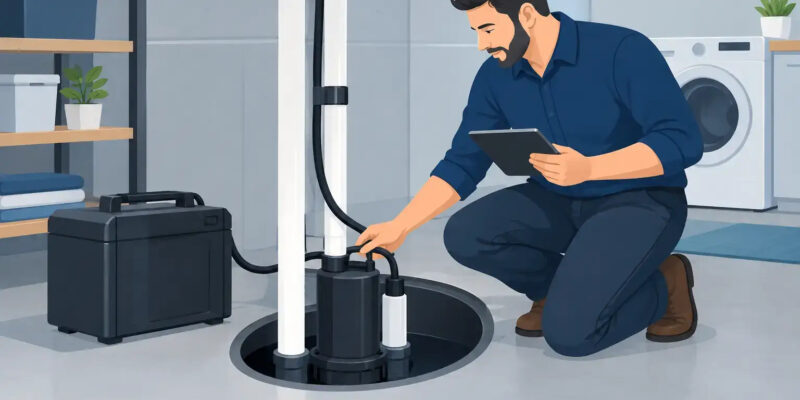
A sump pump often fails at the worst possible moment: during the same heavy storm that causes the pit to fill quickly. The best backup sump pump options are designed to keep water moving when the primary pump loses power, becomes overwhelmed, or develops a mechanical problem. For homeowners in Northeastern Pennsylvania, where hard rains, snowmelt, and aging drainage systems can all put pressure on a basement, a backup pump is practical protection for the home and everything stored below grade.
Choosing the right backup is not only about buying another pump. The backup needs enough capacity for the water entering your pit, a dependable power source, and an alarm that tells you when it has taken over. The right choice depends on your water supply, electrical setup, basement conditions, and how much risk you can afford to accept.
Best Backup Sump Pump Options at a Glance
For most homes, a battery-powered backup sump pump is the most flexible and common choice. It operates independently when utility power goes out and can also assist if the primary pump cannot keep up. A water-powered backup can be an excellent fit where municipal water is available and water pressure is reliable. A generator can protect the primary pump and other essential equipment during a longer outage, but it requires proper planning and safe operation.
Some properties benefit from using more than one layer of protection. A primary electric pump with a battery backup and a properly sized standby generator provides more coverage than relying on any single system. That may be warranted for a finished basement, a home with frequent water intrusion, or a building where water damage would interrupt operations.
Battery-Powered Backup Sump Pumps
A battery backup system includes a secondary pump, a battery, a charger, a controller, and usually an alarm. It is installed in the same sump basin as the primary pump or in a separate basin when site conditions call for it. When the power goes out or the water rises above the primary pump’s normal operating level, the backup pump turns on.
Battery backup pumps are often the best starting point because they do not depend on a municipal water connection. They are also useful when a primary pump’s float switch sticks, the motor fails, or incoming water exceeds the primary pump’s capacity. Many systems provide audible alarms and status indicators for high water, power loss, low battery, or pump activity.
The main trade-off is runtime. A battery is not an unlimited power source, and actual operating time depends on battery capacity, pump draw, vertical lift, discharge piping, and how frequently the pump cycles. During a brief outage with moderate inflow, a good battery system can provide meaningful protection. During a long outage and sustained heavy rain, the battery may be depleted before the storm passes.
A conventional automotive battery is not a suitable substitute for a purpose-built deep-cycle backup battery. Deep-cycle batteries are designed to discharge more steadily and recover through repeated charging cycles. The battery, charger, terminals, and alarm should be inspected regularly. A backup pump that has never been tested is not a backup plan.
When a battery backup is the right fit
A battery-powered unit is a strong option for homes with a private well, properties without municipal water service, and homeowners who want protection from both electrical outages and primary-pump failure. It is also a practical addition when an automatic standby generator is not part of the home’s electrical system.
Water-Powered Backup Sump Pumps
Water-powered backup pumps use the pressure from a municipal water line to create suction and move sump water out of the pit. They have no battery to charge and no motor that depends on household electricity. As long as the municipal water supply remains available with sufficient pressure, the unit can continue operating.
This makes water-powered systems attractive for long power outages. Unlike a battery backup, they do not have a fixed runtime determined by stored battery energy. They are mechanically simple and can offer dependable emergency pumping for homes connected to a public water system.
However, they are not right for every property. A water-powered backup cannot be used with a private well if the well pump loses power during an outage. It also consumes potable water while it operates, which can add substantially to water use during a major event. Local plumbing requirements, backflow protection, pipe sizing, water pressure, and the discharge arrangement all need to be evaluated before installation.
Performance is another consideration. Water-powered pumps may move less sump water than a properly sized electric backup pump, particularly where the pit fills rapidly. A professional should compare the pump’s expected capacity with the home’s actual water inflow rather than assuming that any backup system will be enough.
When water-powered backup makes sense
A water-powered pump can be a good choice for a home served by reliable municipal water, especially when outages may last longer than a battery can reasonably support. It is most effective when the property has moderate sump inflow and the available water pressure meets the system’s requirements.
Generator Backup for a Sump Pump
A generator does not replace a backup sump pump, but it can be a valuable part of a complete flood-prevention plan. A portable generator can power the existing primary sump pump during an outage, while an automatic standby generator can restore power to selected circuits without homeowner intervention.
For a portable generator, the biggest limitation is response time. Someone must be home, start the unit safely outdoors, connect it properly, and monitor fuel. It may be a reasonable solution for shorter events if the household has a safe transfer connection and knows how to operate the equipment. Running a portable generator in a garage, basement, or other enclosed area is unsafe because of carbon monoxide.
An automatic standby generator provides a higher level of protection. When utility power fails, it can start automatically and power essential circuits, including a sump pump, refrigerator, heating equipment, and selected lights. It requires professional electrical planning, routine maintenance, and an adequate fuel source, but it is especially useful for homes that experience repeated outages or cannot risk a flooded basement.
Even with generator power, a secondary battery backup pump still has value. It can begin pumping immediately during the transfer period before a generator starts, and it offers redundancy if the primary pump itself fails.
How to Choose the Right Backup Pump Capacity
The right backup pump is not necessarily the one with the highest advertised gallons-per-hour rating. Capacity ratings change with vertical lift, which is the distance the pump must raise water before it reaches the discharge line. A pump moving water only a few feet can deliver far more than the same pump lifting water 10 feet or more.
Start by evaluating the primary pump’s performance and the condition of the sump basin. If the pit is small, water may rise quickly and cause frequent cycling. If the discharge line is undersized, blocked, frozen, or lacks a reliable check valve, even a new backup pump may struggle. The discharge point should direct water far enough from the foundation that it does not flow back toward the basement.
For homes with a history of high water, installing a larger basin, improving exterior drainage, repairing downspout extensions, or addressing grading may matter as much as adding a backup pump. A sump pump is part of a drainage system, not a standalone cure for every water issue.
Features That Make a Backup System More Dependable
Look for a system with a clear high-water alarm, battery condition alerts, and a controller that indicates when the backup has operated. An alarm is essential because it gives you time to respond before water reaches the basement floor.
Dual-float or electronic switching can provide additional protection against a stuck primary float, though no switch design eliminates the need for inspection. A durable check valve prevents pumped water from draining back into the pit after each cycle. An accessible, covered sump basin helps keep debris out while allowing service technicians to inspect the equipment.
If your basement is finished or contains valuable equipment, consider a water alarm outside the pit as an added layer of warning. The goal is early notice, not discovering a problem after carpeting, appliances, or stored belongings have already been damaged.
Installation and Maintenance Matter as Much as the Pump
Backup sump pump systems need correct plumbing, electrical connections, discharge routing, and testing. An improperly installed pump can short-cycle, fail to discharge water, drain its battery prematurely, or interfere with the primary pump’s operation. Water-powered units also require proper plumbing safeguards to protect the potable water system.
Test the primary and backup pumps at least a few times each year by adding water to the pit and observing operation. Before spring thaw and before the heaviest rain season, check the discharge line, confirm the alarm works, and inspect the battery connections and charge status. If the pump runs often, annual professional maintenance is a sensible investment.
For property owners in the Hazleton area, Hydrodynamics Inc. can evaluate the full sump pump and drainage setup, not just replace a single component. That helps identify whether the issue is a worn pump, inadequate capacity, a failed switch, a drainage problem, or a backup system that no longer matches the property’s needs.
A backup sump pump is most valuable before the forecast turns severe. Choose a system that fits your water source and risk level, keep it maintained, and give it a real-world test while there is still time to correct a problem.