
A white crust on faucets, stiff laundry, and spotty glassware point to one kind of water problem. A failed bacteria test from a private well points to another. In a water softener versus UV treatment decision, the key question is not which system is better. It is what is actually in the water and what needs to be corrected.
For homes, businesses, and facilities in Northeastern Pennsylvania that rely on well water, more than one issue can be present at the same time. Hardness minerals, iron, sediment, and microorganisms each require a different response. Choosing equipment based on a symptom alone can leave the real concern unresolved.
Water Softener Versus UV Treatment: Different Jobs
A water softener is designed to address hardness. Hard water contains dissolved calcium and magnesium, which can form scale inside water heaters, pipes, fixtures, dishwashers, boilers, and other water-using equipment. Over time, scale can reduce efficiency, restrict flow, and increase maintenance needs.
Most conventional softeners use ion exchange. Water passes through resin media that captures hardness minerals and releases sodium or potassium ions in exchange. The system periodically regenerates with a salt or potassium chloride solution, flushing the collected minerals away as wastewater.
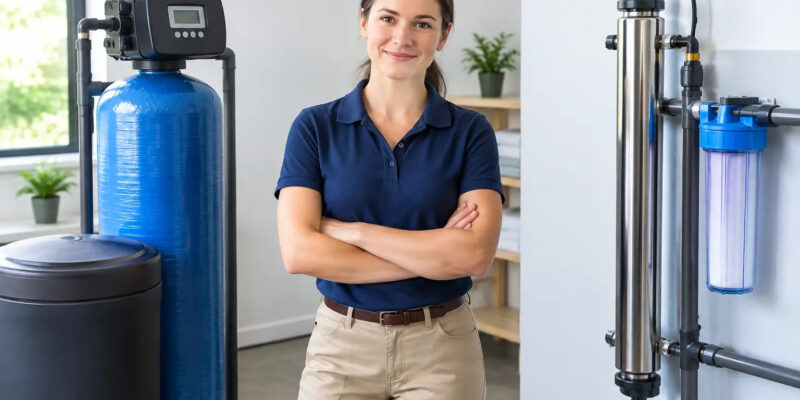
UV treatment has a completely different purpose. An ultraviolet system uses a UV lamp inside a treatment chamber to inactivate microorganisms as water flows past it. Properly sized and maintained UV equipment can be an effective final disinfection step for water that may contain bacteria, viruses, or other biological contaminants.
A UV system does not soften water. It will not remove calcium, magnesium, iron, manganese, sediment, salt, chemical contaminants, or unpleasant tastes and odors. Likewise, a softener does not disinfect water. It may improve water quality for plumbing and appliances, but it does not make bacteriologically unsafe water safe to drink.
When a Water Softener Is the Right Answer
Hardness is often noticeable long before it is measured. Soap may be difficult to rinse away, skin can feel dry after bathing, laundry may look dull, and shower doors can develop stubborn white deposits. In mechanical systems, the more serious concern is mineral buildup on heat-transfer surfaces. Even a thin layer of scale can make water-heating equipment work harder.
A water softener may be a practical fit when testing confirms elevated hardness and the main goals are protecting plumbing, improving cleaning results, and reducing scale on fixtures and equipment. This can matter in a residence with a tank-style water heater just as much as it can in a commercial building with water heaters, steam equipment, dishwashing equipment, or other water-dependent operations.
Softener selection should be based on actual hardness levels, water use, peak demand, plumbing layout, and the number of people or fixtures being served. An undersized unit may regenerate too frequently and struggle during high-demand periods. An oversized or poorly programmed system can waste salt and water.
There are trade-offs. Traditional softeners require ongoing salt management and a suitable drain connection for regeneration discharge. They also add a small amount of sodium to the treated water. For customers following a sodium-restricted diet, or for properties where discharge requirements are a concern, potassium chloride or an alternative treatment approach may deserve discussion. The right answer depends on the water test and the property, not just on the hardness number.
When UV Treatment Makes Sense
UV treatment is most often considered for private well water, especially after a positive total coliform or E. coli result, a flooding event, well repair, changes in taste or appearance, or concerns about surface water reaching the well. It can also be useful where a property wants continuous disinfection at the point where water enters the building.
Unlike chemical disinfection, UV treatment does not add chlorine or alter the taste of the water. It works at the moment water passes through the chamber. That makes it a strong option for many households, but it also means UV provides no residual protection farther down the plumbing system. If contamination occurs after the UV unit, such as in a storage tank or poorly maintained plumbing section, the UV chamber cannot correct it.
Water clarity is critical. Sediment, cloudiness, iron, manganese, and hardness scale can interfere with UV performance by blocking or scattering the light. For that reason, a UV system often needs pretreatment. A sediment filter may be enough in some cases. In others, iron removal, pH correction, or softening may be needed before the water reaches the UV chamber.
UV systems also need routine attention. Lamps lose output as they age, even if they still appear to be lit, and they typically require replacement on a regular schedule. The quartz sleeve surrounding the lamp must remain clean, and filters ahead of the unit need timely service. A UV unit is not a set-it-and-forget-it appliance. Maintenance is part of protecting the system's intended performance.
Can You Use a Softener and UV System Together?
Yes. In fact, combining treatment methods is often the appropriate solution for a private well with both hardness and biological concerns. The order of equipment matters because each component should protect the next one.
A typical arrangement may include sediment filtration first, followed by equipment for iron or manganese when needed, then a water softener for hardness control, and UV treatment near the end of the process. This arrangement helps deliver clearer water to the UV chamber and reduces the chance that scale will coat the quartz sleeve.
The exact sequence can vary. For example, water with substantial iron may need dedicated iron treatment before the softener. Water with low pH may need neutralization to protect pipes and improve the performance of other equipment. A laboratory water analysis and an on-site review of well, pump, plumbing, and flow conditions provide a better basis for system design than selecting components one at a time.
Start With Water Testing, Not Equipment
Water that looks clear can still contain bacteria or dissolved minerals. Water that stains fixtures orange may have iron, but it can also involve low pH, manganese, or bacteria associated with iron. A sulfur odor may come from the well, water heater, or plumbing conditions. Symptoms can point in a direction, but they do not replace testing.
For a homeowner, a basic test should address hardness, iron, manganese, pH, total dissolved solids, and bacteria when a private well is involved. Depending on the property and local conditions, additional testing for nitrate, arsenic, lead, or other contaminants may be appropriate. Commercial and industrial facilities may also need to consider process-water demands, code requirements, seasonal usage changes, and the cost of equipment downtime.
When reviewing results, separate aesthetic concerns from health-related concerns and from equipment-protection concerns. Cloudy water may require filtration. Scale may require softening. A bacteria concern may require disinfection and investigation of the well or source of intrusion. One piece of equipment rarely solves every category.
Questions That Help Determine the Right System
Before installing a softener, UV unit, or combined system, property owners should be able to answer a few practical questions:
- Is the water supplied by a private well, public water system, storage tank, or another source?
- Has a recent laboratory test identified hardness, bacteria, iron, sediment, or another issue?
- What are the building's peak flow demands, including bathrooms, kitchens, equipment, and process use?
- Is there adequate space, electrical service, drainage, and access for maintenance?
- Are there water-using appliances or mechanical systems already showing scale or corrosion?
These details affect equipment sizing and layout. A small UV unit that cannot keep up with peak flow, or a softener installed without considering drain capacity and regeneration settings, may create problems that a properly designed system would avoid.
Maintenance Protects the Investment
Both systems benefit from scheduled service. A softener needs salt checks, resin and control-valve inspection, and confirmation that regeneration is working as programmed. The brine tank should remain clean and free of salt bridging, where hardened salt prevents proper brine formation.
A UV system needs lamp replacement, sleeve inspection and cleaning, and filter changes according to water conditions and manufacturer requirements. After major plumbing work, flooding, a well repair, or a failed bacteria test, the water system may also need disinfection and follow-up testing. Equipment maintenance and source maintenance go together.
For properties with several mechanical needs, it can be especially helpful to evaluate water treatment alongside pumps, plumbing, water heaters, and related equipment. A treatment system should support the way the whole property operates, not become another disconnected piece of equipment to manage.
The most useful next step is simple: test the water, review the results in the context of your plumbing and water use, and build treatment around the problem that is actually present. That approach protects comfort, equipment, and confidence in the water coming from the tap.