
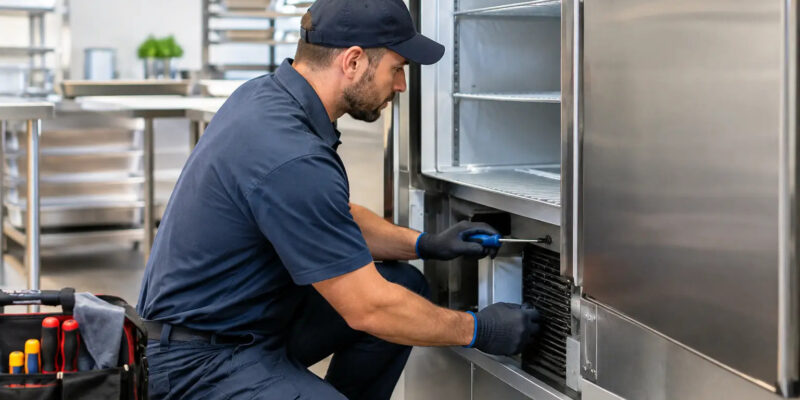
A walk-in cooler can appear to be running normally while product temperature is slowly climbing, ice is building on an evaporator coil, or a door gasket is leaking cold air around the clock. The best commercial refrigeration maintenance practices catch those smaller problems before they become spoiled inventory, a failed health inspection, an emergency service call, or a disruption to daily operations.
For restaurants, grocery operations, medical offices, warehouses, schools, and industrial facilities, refrigeration is not a background utility. It protects product, supports compliance, and helps keep the business moving. A practical maintenance plan combines routine staff checks with scheduled service from qualified refrigeration technicians.
Start With Daily Temperature and Condition Checks
Temperature is the most useful early-warning signal in a commercial refrigeration system. Staff should check and document temperatures at the beginning of the day and again during operating hours, especially for equipment that is opened frequently. A digital thermometer inside the cabinet or walk-in is useful, but it should be verified periodically against a reliable calibrated thermometer.
Target temperatures depend on the product and the equipment's design. Many refrigerated food products are held at 41 degrees Fahrenheit or below, while a typical walk-in cooler may operate closer to 35 to 38 degrees. Freezer setpoints can range from 0 degrees down to -10 degrees or lower depending on the product. Facility managers should always follow food-safety requirements, product specifications, and the equipment manufacturer's guidance rather than relying on a single universal number.
Temperature readings deserve context. A brief increase after a delivery or a busy lunch period may be expected if the system recovers promptly. A unit that runs constantly, recovers slowly, or shows a steady temperature trend upward needs attention before it reaches an unsafe range.
During these checks, staff should also look for obvious warning signs: unusual fan noise, puddles, frost on interior surfaces, damaged gaskets, hot air near the door opening, and alarms that have been silenced without resolving the cause. Recording these observations gives a service technician a more complete picture if a repair is needed.
Keep Airflow Clear Inside and Around Equipment
Commercial refrigeration depends on airflow. Inside a cooler or freezer, packed boxes, poorly placed product, and blocked evaporator covers can prevent cold air from circulating. The result is uneven temperatures, frozen product near discharge air, warmer product in other areas, and longer compressor run times.
Leave clearance around interior evaporator units and avoid stacking product directly against walls where return air may be drawn in. Use shelving that allows air to move around stored goods. Rotate inventory so older product is accessible without leaving doors open while staff search for items.
The same principle applies outside the equipment. Reach-in refrigerators, ice machines, condensing units, and remote refrigeration systems need adequate air around their condensers. Cardboard, cleaning supplies, stored materials, or landscaping debris can restrict airflow and force the system to work harder.
Outdoor condensing units in Northeastern Pennsylvania also face seasonal exposure to leaves, pollen, snow, ice, and windblown debris. Keep the surrounding area clear and make sure snow removal does not damage refrigerant lines, electrical components, or coil fins. Never pile snow against equipment intended to reject heat outdoors.
Clean Condenser Coils on a Scheduled Basis
A dirty condenser coil is one of the most common and preventable causes of refrigeration trouble. The condenser releases heat removed from the refrigerated space. When its coil is covered with dust, grease, lint, or outdoor debris, the system cannot reject heat efficiently. Head pressure rises, energy use increases, and compressor life can be shortened.
The needed cleaning frequency depends on the setting. A restaurant kitchen with grease-laden air may require more frequent attention than a lightly used office breakroom refrigerator. Equipment near flour, dust, loading docks, laundry areas, or outdoor vegetation can also soil quickly.
Maintenance staff can keep the surrounding area clean and report visible buildup. Coil cleaning itself should be done carefully with the proper method for the equipment. Bent fins, harsh cleaners, excessive water, and cleaning a live electrical component can create additional problems. A professional maintenance visit can include coil cleaning along with an inspection of fan motors, electrical connections, refrigerant performance, and overall operation.
Protect Door Seals, Closers, and Hinges
A refrigeration door that does not close fully can waste considerable energy and introduce humid air into the conditioned space. That moisture can create frost, ice, slippery floors, and excessive defrost demand. On a walk-in unit, a small gap in a gasket may eventually lead to larger operating issues.
Inspect gaskets for cracks, tears, hard spots, loose corners, and food debris. Clean them with an appropriate mild cleaner and dry them thoroughly. Check whether the door closes and latches without being pushed or lifted. If the door drags, springs open, or requires force to seal, the hinges, closer, sweep, latch, or frame may need adjustment.
Do not overlook strip curtains on walk-ins. They reduce warm-air infiltration during deliveries and frequent access, but torn or missing strips limit their benefit. In operations with heavy traffic, staff habits matter just as much as hardware. Doors should not be propped open for convenience unless there is a short, controlled loading process and the unit can recover properly afterward.
Manage Defrost and Drainage Problems Early
Frost does not automatically mean a refrigeration system is failing. Freezers naturally accumulate some frost in certain conditions, and many systems use automatic defrost cycles. Heavy ice buildup, however, can block evaporator airflow and leave the unit unable to maintain temperature.
Watch for ice on evaporator coils, fan guards, drain pans, ceilings, or floors. A blocked drain line can cause water to overflow and freeze. A defrost heater, control, termination device, or fan issue may also be involved. These problems are best addressed before staff begin chipping ice from coils or using unapproved heat sources, both of which can damage equipment and create safety risks.
Drain pans and drain lines should be inspected as part of routine service. In spaces exposed to freezing conditions, drain-line routing and heat-trace components may need additional attention. This is especially relevant in older facilities and loading areas where building temperature, humidity, and equipment placement can complicate drainage.
Schedule Professional Refrigeration Maintenance
The best commercial refrigeration maintenance practices separate simple operational checks from technical work that requires trained service personnel. A planned maintenance agreement gives technicians the opportunity to find wear before it becomes a shutdown.
During a comprehensive visit, a technician may inspect operating temperatures and pressures, check refrigerant charge and signs of leaks, examine electrical components and controls, verify defrost operation, inspect fan motors and blades, clean coils, test door performance, evaluate drain lines, and look for vibration or unusual compressor operation. The exact scope should reflect the type of equipment, its age, operating hours, product sensitivity, and the consequences of downtime.
For a lightly used self-contained unit, one or two planned inspections per year may be appropriate. High-demand kitchens, grocery refrigeration, process cooling, ice equipment, and facilities with critical inventory often benefit from more frequent service. There is a cost trade-off, but emergency repairs, lost product, overtime labor, and rushed equipment replacement generally cost more than catching a failing component during a planned visit.
Hydrodynamics Inc. helps commercial and industrial customers throughout Northeastern Pennsylvania maintain refrigeration and connected mechanical systems with practical service plans built around their equipment and operating needs.
Keep Clear Records and Plan for Replacement
A maintenance log turns isolated service calls into useful operating history. Record temperature trends, alarm events, coil cleanings, repairs, replaced parts, refrigerant-related work, and recurring symptoms. If one walk-in repeatedly needs attention during humid weather or after delivery days, the record can point to an airflow, door, capacity, or operating-practice issue rather than another temporary repair.
Replacement planning also belongs in maintenance. Older equipment may still be serviceable, but repeated compressor issues, escalating energy use, obsolete controls, frequent product-risk events, or unavailable parts can change the equation. A technician can help compare the remaining repair value against a replacement that improves reliability, capacity, and efficiency.
The goal is not to replace equipment prematurely. It is to make an informed decision before a failure forces one during the busiest day of the year.
A dependable refrigeration system is built on ordinary habits performed consistently: accurate temperature checks, clear airflow, clean heat-transfer surfaces, working doors, and timely professional service. When a unit starts showing a change in performance, treat it as useful information. Addressing it promptly protects the equipment, the inventory inside it, and the people who depend on both.