
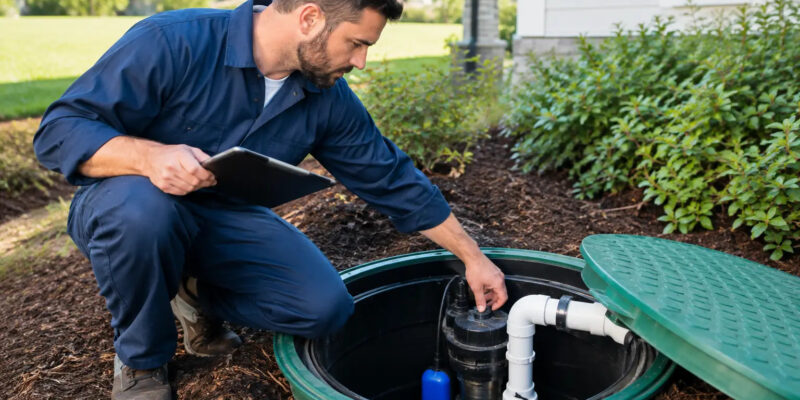
A grinder pump alarm during a busy morning or at the start of a workday deserves attention. This grinder pump troubleshooting guide helps property owners recognize common warning signs, take safe first steps, and know when a pump issue needs professional service before wastewater backs up into the building or reaches the yard.
A grinder pump is not the same as a typical sump pump. It collects wastewater from fixtures below the sewer line, grinds solids into a slurry, and pumps that waste through a small discharge line to a public sewer or septic connection. When it stops operating correctly, the tank can fill quickly depending on water use. Limiting water use early can prevent a manageable repair from becoming a cleanup problem.
Start Safely Before Troubleshooting a Grinder Pump
A grinder pump system combines electricity, wastewater, moving blades, and a sealed basin. Do not open the basin, remove the pump, reach into standing water, or work on wiring unless you are trained and equipped for that type of repair. Sewer gases and wastewater exposure create real health risks, while wet electrical equipment can be dangerous.
If the alarm is active, reduce or stop water use right away. Avoid flushing toilets, running laundry, taking showers, using dishwashers, and draining sinks until you know the pump is clearing the basin. For a commercial property, notify occupants or staff promptly and restrict use of restrooms or affected drains.
Then look for simple external clues. Is the alarm panel lit or sounding? Is there a power outage? Has a breaker tripped? Is water visibly backing up at a floor drain, toilet, or lower-level fixture? These observations help identify the urgency of the situation without exposing anyone to the pump basin.
What a Grinder Pump Alarm Usually Means
Most grinder pump alarms indicate a high water level in the basin. The alarm float rises when the normal pump cycle has not lowered the wastewater level as expected. That does not always mean the pump itself has failed. A high-water alarm can result from a loss of power, a tripped breaker, a blocked discharge line, a stuck float switch, or a mechanical pump problem.
A brief alarm after unusually heavy water use may clear if the pump starts and runs normally. Even then, it is worth paying attention to how long the alarm remains active. An alarm that continues after water use has stopped, returns frequently, or accompanies slow drains and sewage odors should be treated as a service concern.
If wastewater is backing up indoors, the basin may be near capacity or the discharge path may be blocked. Stop using water and arrange service as soon as possible. Do not assume the alarm will resolve on its own.
Check the Electrical Supply
Start at the electrical panel. A grinder pump may have a dedicated breaker, and some systems also have a disconnect switch near the control panel or basin. If the breaker has tripped once, reset it only once after reducing water use. If it trips again, leave it off and contact a qualified pump technician.
Repeated breaker trips can point to a short circuit, damaged cord, failing motor, moisture in electrical components, or a pump that is jammed and drawing excessive current. Continuing to reset the breaker can damage the system further and may create an electrical hazard.
During a regional power outage, the pump cannot move wastewater. Use water sparingly until power returns. Homes and facilities with frequent outages may benefit from discussing backup power options, but the right setup depends on the pump's electrical requirements, expected run time, and the rest of the building's critical loads.
Listen for What the Pump Is Doing
Sound can provide useful information from outside the basin. A normal grinder pump typically runs for a short period, clears the tank, and shuts off. A pump that hums but does not pump may have a jammed grinder, a seized motor, a failed start component, or another mechanical issue.
A pump that runs continuously may be fighting a blockage, dealing with a failed check valve, or responding to a float switch that has not returned to its normal position. It can also indicate a leak or inflow problem that keeps refilling the basin. Continuous operation raises the risk of motor damage, so it should not be ignored.
Silence when the alarm is active can suggest loss of power, a failed float switch, a control-panel issue, or a failed motor. The exact cause requires testing, but the symptom helps a service technician narrow the diagnosis efficiently.
Common Grinder Pump Problems and Their Likely Causes
The Pump Has Power but Will Not Run
If the breaker is on and the alarm remains active, the issue may be in the float switch, control panel, motor, or wiring. Float switches tell the pump when to start and stop. They can become tangled, coated with debris, damaged, or electrically faulty. Because access requires opening the basin, this is usually a professional repair.
On systems with a separate alarm and pump circuit, the alarm may still work even when the pump circuit has lost power. That is why checking both the panel indication and the dedicated breaker matters.
The Pump Runs but Wastewater Does Not Clear
A running pump with no reduction in basin level often points to a discharge problem. The discharge pipe may be blocked by unsuitable material, frozen in severe weather if it was improperly protected, damaged, or obstructed downstream. A failed check valve can allow wastewater to flow back toward the basin after each pump cycle, causing frequent starts and limited progress.
This problem is not always at the pump. The discharge line, valve assembly, and connection to the sewer or septic system all need to be considered. For that reason, replacing a pump without diagnosing the discharge path can leave the underlying issue unresolved.
Drains Are Slow but the Alarm Is Not On
Slow drains do not automatically mean a grinder pump failure. The blockage may be in an interior drain line, a building sewer, or a venting issue. However, if the slow drains affect fixtures connected to the grinder basin, inspect the alarm panel and listen for normal pump cycling.
A local plumbing obstruction and a pump-system failure can look similar at first. The difference matters because each requires a different repair approach. An experienced contractor can evaluate the plumbing and pump system together instead of treating them as unrelated problems.
The Alarm Goes Off Intermittently
An occasional alarm may reflect high demand, but repeated intermittent alarms should be investigated. A pump may be losing efficiency, a float may be activating inconsistently, or the discharge line may be partially restricted. In facilities with changing occupancy or heavy process-water use, the pump may also be undersized for actual demand.
Keep a simple record of when alarms occur, how long they last, and what water use was happening at the time. That information is especially useful for property managers and commercial maintenance teams trying to identify a recurring pattern.
What Not to Put Into a Grinder Pump System
Grinder pumps are designed for normal wastewater and toilet paper. “Flushable” wipes are a frequent cause of pump jams and line restrictions, even when packaging suggests otherwise. They do not break down like toilet paper and can collect around moving components or lodge in smaller discharge piping.
Keep the following out of toilets, drains, and the pump basin:
- Wipes, paper towels, facial tissues, and disposable cleaning cloths
- Feminine hygiene products, diapers, and dental floss
- Grease, cooking oil, cat litter, coffee grounds, and food scraps
- Paint, solvents, chemicals, medications, and construction debris
In commercial settings, staff education is a practical part of pump protection. Breakroom grease, cleaning products, and improper disposal habits can create service calls that routine maintenance alone cannot prevent.
When to Call for Grinder Pump Repair
Call for service promptly when the alarm will not silence after water use is reduced, the breaker trips again, the pump hums or runs continuously, or wastewater backs up into the building. Sewage odors around the basin, visible leakage, and recurring alarm events also justify a professional inspection.
For homes, this is often an urgent plumbing and pump-system issue. For restaurants, offices, rental properties, and industrial facilities, the impact can extend to sanitation, building access, employee safety, and operational downtime. Waiting for a complete failure rarely improves the repair outcome.
Hydrodynamics Inc. helps property owners throughout Northeastern Pennsylvania diagnose grinder pump, plumbing, electrical-control, and discharge-line concerns with the full system in view. That broader approach is useful when the symptom may involve more than one mechanical component.
Preventing the Next Grinder Pump Failure
Preventative maintenance is most valuable before an alarm becomes an emergency. A professional service visit can check pump operation, float performance, control-panel function, valve condition, basin condition, and signs of discharge-line restriction. The recommended frequency depends on household size, pump age, wastewater volume, and whether the system serves a business or multi-unit property.
Between visits, keep the alarm panel accessible, know which breaker serves the pump, and make sure everyone using the building understands what cannot go down the drain. If your pump is older, requires repeated repairs, or no longer matches the property's wastewater demand, replacement may be more economical than responding to one failure after another.
The best time to address a grinder pump concern is when the alarm is the only disruption. A timely inspection can protect the pump, the property, and the people who depend on the system every day.