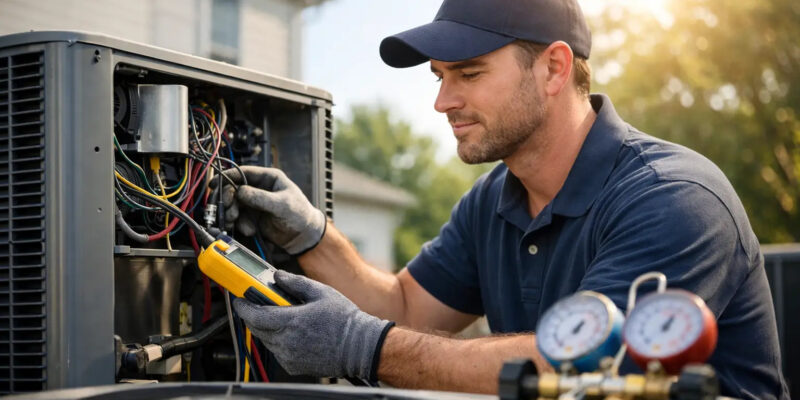
A/C Maintenance That Prevents Summer Breakdowns

The first hot, humid stretch of a Northeastern Pennsylvania summer is a poor time to learn that an air conditioner has been running with a clogged drain, weak capacitor, or restricted airflow. Regular a/c maintenance gives your system the attention it needs before high demand exposes a small issue as a no-cooling call. For homeowners, that means more dependable comfort. For businesses, property managers, and industrial facilities, it means fewer interruptions to occupants, equipment, and daily operations.

A cooling system does more than lower the temperature. It removes humidity, moves conditioned air through the building, and manages heat through electrical and refrigeration components that work hard during peak weather. Preventative service helps each of those functions work together as intended.

What Professional A/C Maintenance Should Address

A useful maintenance visit goes beyond changing a filter and confirming that cool air is coming from a supply register. A technician should inspect the condition, performance, and safety of the system, then identify concerns that could affect reliability, efficiency, or equipment life.

The indoor and outdoor equipment both require attention. On a central air conditioning system, this commonly includes checking thermostat operation, electrical connections, capacitors, contactors, blower components, refrigerant performance, condensate drainage, coils, filters, and overall airflow. Ductless mini-splits, heat pumps, rooftop units, and commercial cooling equipment need the same practical approach, although the components and access requirements vary by system.

Airflow Is a Major Part of Cooling Performance

Many comfort complaints begin with restricted airflow. A dirty air filter can make the blower work harder, reduce the amount of air reaching occupied spaces, and contribute to coil problems. A blocked return, damaged ductwork, dirty indoor coil, or failing blower component can produce similar symptoms.

An air conditioner may still run when airflow is limited, but it will not necessarily cool or dehumidify the space properly. Rooms may feel uneven, the system may run longer than usual, and utility costs can rise. In commercial spaces, poor airflow can also create comfort complaints across offices, retail areas, or tenant spaces even when the thermostat appears to be operating normally.

Condensate Drains Need More Attention Than They Get

Air conditioning creates condensation as warm indoor air passes over the cold evaporator coil. That moisture needs a clear path out of the system. Algae, dirt, and debris can restrict a condensate drain line or trap, causing water to back up near the indoor unit.

A drain issue can lead to water damage, unwanted shutdowns, and high indoor humidity. For systems installed in attics, mechanical rooms, ceilings, or areas above finished spaces, checking drainage before the cooling season is particularly worthwhile. A technician can inspect the drain assembly, clear restrictions when needed, and verify that the system is draining properly.

Electrical and Refrigeration Components Deserve Inspection

The outdoor condensing unit relies on electrical components to start and operate the compressor and fan. A weakening capacitor or worn contactor may not fail during a mild day, yet it can become the reason a system will not start during the first heat wave. Maintenance helps identify signs of wear before a component leaves a home or building without cooling.

Refrigerant performance should also be evaluated carefully. Refrigerant is not a routine item that should simply be topped off every year. A properly operating system is sealed. If refrigerant is low, the system may have a leak or another underlying concern that should be diagnosed and repaired. Adding refrigerant without addressing the cause can postpone the problem rather than solve it.

When to Schedule A/C Maintenance

For most homes, annual cooling maintenance is a sensible baseline. Spring is often the best time because it allows the system to be inspected before hot weather arrives and before service schedules become crowded with emergency calls. If your home uses a heat pump for both heating and cooling, service may be appropriate twice a year since the equipment operates through every season.

Commercial and industrial maintenance schedules depend on operating hours, equipment type, occupancy, and the consequences of downtime. A small office with one rooftop unit does not have the same needs as a facility with multiple rooftop systems, process cooling, refrigeration equipment, or areas that must maintain specific temperatures. High-use equipment may need seasonal inspections and additional checks throughout the year.

Property managers should also consider maintenance timing around tenant turnover, seasonal occupancy, and planned building work. Coordinating service before peak cooling demand can reduce disruption and allow time to plan repairs or replacements if an aging unit is nearing the end of its dependable service life.

Signs Your System Should Be Checked Sooner

Do not wait for a scheduled appointment if the system is giving clear warning signs. Cooling equipment often shows changes in performance before it fails completely. A prompt inspection may help avoid more extensive damage, especially if the compressor, blower motor, or electrical controls are under strain.

Call for service if you notice weak airflow, warm air from supply vents, short cycling, unusual buzzing or rattling, ice on refrigerant lines, water around the indoor unit, persistent humidity, or a sudden increase in cooling costs. A system that repeatedly trips a breaker should also be evaluated rather than reset and left to run.

Some issues are simple, such as a dirty filter or incorrectly programmed thermostat. Others require professional diagnosis. The practical value of service is determining which situation you have before operating the equipment causes further trouble.

A/C Maintenance for Homes, Businesses, and Facilities

The basic goals of maintenance are similar in every setting: reliable cooling, safe operation, controlled energy use, and longer equipment life. The details differ considerably.

Residential systems are often evaluated around comfort, humidity control, noise, and utility costs. Homeowners may need advice on filter changes, thermostat settings, ductless mini-split cleaning, or whether an older central air conditioner should be repaired or replaced. The right answer depends on the condition of the equipment, repair history, efficiency, and how well the system serves the home.

Commercial properties may require attention to rooftop units, multiple zones, tenant comfort, ventilation concerns, and access planning. A failure can affect employees, customers, inventory, or lease obligations. Maintenance records also help property owners make informed decisions about budget planning and equipment replacement.

Industrial facilities can have additional demands, including specialized heating and cooling equipment, refrigeration, production areas, and mechanical systems that must support consistent operations. In these environments, maintenance should be built around the actual equipment load and the operational cost of unexpected downtime, not a one-size-fits-all checklist.

What You Can Do Between Service Visits

Property owners and facility staff can support system performance without attempting repairs. Keep outdoor equipment clear of leaves, grass clippings, stored materials, and other obstructions that limit airflow. Replace or clean filters on the schedule recommended for the equipment and building conditions. A home with pets, construction dust, or frequent system use may need more frequent filter attention than a lightly occupied space.

Inside, keep supply and return vents open and unobstructed. Pay attention to new sounds, odors, moisture, or changes in how long the system runs. These details give a technician useful information and can make troubleshooting more efficient.

Avoid using a garden hose, chemical cleaner, or high-pressure spray on coils unless you understand the equipment and cleaning method. Coil fins bend easily, electrical components can be damaged, and improper cleaning can create a larger repair issue. Routine owner care is valuable, but it does not replace a full professional inspection.

Maintenance, Repair, or Replacement?

Maintenance helps prevent many avoidable failures, but it cannot make every older system new again. Equipment age, corrosion, repeated breakdowns, compressor condition, refrigerant type, and repair cost all matter when deciding whether to repair or replace a unit.

A newer system with a worn electrical component or drainage issue is often a straightforward repair. An older unit with recurring refrigerant leaks, major compressor trouble, or a history of expensive service calls may justify a replacement discussion. The goal should be a practical recommendation based on the system’s condition and your needs, not pressure to replace equipment that can still be repaired responsibly.

Hydrodynamics Inc. provides preventative maintenance and service for residential, commercial, and industrial cooling systems throughout Northeastern Pennsylvania, with support for central air conditioners, heat pumps, ductless systems, rooftop equipment, and related mechanical needs.

A well-timed service visit is one of the simplest ways to protect a system that works hardest when you need it most. Schedule a/c maintenance before summer demand builds, and address small changes in performance while there is still time to make a measured decision.


Water Conditioning for Better Well Water

A glass of water can look perfectly clear and still create problems throughout a home or facility. Orange staining on fixtures, scale inside a water heater, a sulfur smell at the tap, or recurring sediment in filters all point to a water-quality issue that deserves more than a guess. Water conditioning addresses the specific minerals, particles, odors, and contaminants affecting your supply, helping protect both the people using the water and the equipment that depends on it.

For properties across Northeastern Pennsylvania, the right approach often depends on whether water comes from a private well or a public system. A well may produce hard water, iron, manganese, sediment, sulfur, or bacteria concerns. Municipal water may be disinfected and safe to drink but still have hardness, chlorine taste, or mineral content that affects plumbing fixtures and appliances. The solution should fit the water, the building, and the way the property is used.

What Water Conditioning Actually Does

Water conditioning is a broad term for equipment and treatment methods that improve water quality or reduce the effects of undesirable water characteristics. It is not one single product. A properly designed system may include a sediment filter, a water softener, an iron-removal unit, carbon filtration, ultraviolet disinfection, or several components working together.

The goal is practical: cleaner-feeling water, fewer stains, better-performing fixtures, and less wear on mechanical equipment. For homeowners, that may mean soap rinses more easily and white laundry stays brighter. For a restaurant, apartment building, or industrial facility, it can mean less scale on water heaters, boilers, ice machines, process equipment, and plumbing components.

Not every concern requires the same level of treatment. Water that is hard but otherwise clean calls for a different system than water with elevated iron, bacterial risk, or heavy sediment. Installing equipment before identifying the actual issue can lead to disappointing results and unnecessary service costs.

Start With the Water Source and a Proper Test

A water test provides the starting point for any water-conditioning decision. Appearance and taste can offer clues, but they cannot confirm what is in the water or how much of it is present. Iron can turn water yellow, orange, or brown. Manganese may leave dark stains. Hydrogen sulfide can create a rotten-egg odor. Hardness often shows up as white scale, cloudy glassware, dry skin, and reduced soap performance.

A thorough evaluation can also identify pH, sediment, total dissolved solids, and other factors that affect treatment equipment selection. This matters because treatment components interact. For example, ultraviolet equipment works best when water is clear enough for UV light to reach microorganisms. If sediment or iron is present, prefiltration may be needed before the UV unit.

Private well owners should also recognize that water quality can change. Heavy rain, flooding, nearby construction, a damaged well cap, seasonal groundwater changes, or a shift in well performance can alter the supply. Testing is particularly worthwhile after a property has been vacant, after well or pump work, or when a new odor, taste, stain, or health concern appears.

Common Signs Your Property May Need Treatment

Hard water and iron issues often build gradually, so the warning signs can be easy to dismiss. Consider an evaluation if you notice persistent scale around faucets, shortened water-heater life, staining in toilets or sinks, reduced water flow from fixtures, unpleasant odor, cloudy water, or frequent sediment in aerators and appliance screens.

For commercial and industrial properties, the signs may appear as higher maintenance needs, inefficient water heating, damaged valves, inconsistent equipment performance, or scale buildup on equipment surfaces. These issues are not always caused by water quality, but untreated water should be part of the investigation.

Choosing the Right Water-Conditioning Equipment

The best water-conditioning system is based on the test results, water usage, flow rate, plumbing layout, and service needs of the property. A household with two occupants and a well has different demands than a busy commercial kitchen, multi-unit property, or manufacturing operation.

Water Softeners for Hard Water

A water softener is one of the most common water-conditioning solutions. It reduces hardness minerals, primarily calcium and magnesium, that create scale. Softened water can help extend the service life of water heaters, dishwashers, washing machines, tankless water heaters, faucets, and fixtures.

Most conventional softeners use ion exchange and require periodic salt replenishment. This is an effective and proven approach, but it does require regular attention. The unit must be sized correctly so it can handle expected water use without regenerating excessively or running out of capacity during high-demand periods.

Some properties need a softener alone. Others need iron treatment before or alongside softening. High iron levels can foul softener resin over time if the system is not designed for the actual water conditions.

Iron, Manganese, Sulfur, and Sediment Treatment

Iron and manganese can stain plumbing fixtures, laundry, and equipment. Sulfur odors can make otherwise clear water unpleasant to use. Sediment can clog filters, reduce flow, and interfere with valves, water heaters, and ultraviolet treatment.

Treatment may involve filtration media, oxidation, aeration, chemical-free systems, or specialty equipment selected for the concentration and type of contaminant. There is no universal answer. Clear-water iron behaves differently from iron that is already visible as particles, and sulfur treatment can depend on whether the odor comes from the well water, plumbing, or a water heater.

A well-planned system also considers maintenance access. Filters need replacement, treatment media has a service life, and control valves need inspection. Equipment that cannot be easily serviced is less likely to provide dependable long-term results.

Ultraviolet Water Treatment for Added Protection

Ultraviolet, or UV, water-treatment equipment uses UV light to deactivate microorganisms. It is often installed on private well systems when bacterial protection is a concern or when a treatment plan calls for an added disinfection barrier.

UV is not a filter and does not remove hardness, iron, sediment, or chemical contaminants. It also does not leave a residual disinfectant in the plumbing. That makes system design especially important. The water reaching the UV chamber must be adequately pretreated, and the lamp and sleeve must be maintained according to the equipment requirements.

For well owners, UV treatment can be a valuable part of a broader plan, especially after water testing and after any well or plumbing conditions that raise concerns about bacteria. It should not replace proper well construction, a secure well cap, sound plumbing practices, or appropriate testing.

Why Water Quality Affects More Than the Faucet

Water moves through much more than a kitchen sink. It feeds water heaters, boilers, ice makers, humidification equipment, dish machines, washing machines, mop sinks, break rooms, and process systems. When hardness or sediment is left untreated, the damage often develops where it cannot be seen.

Scale acts as insulation on heat-transfer surfaces. A water heater or boiler may need more energy to do the same work, while components experience higher operating stress. Sediment can settle in tanks, clog strainers, and reduce the performance of valves and fixtures. For businesses, these issues can become an uptime problem rather than a simple water-quality complaint.

There are trade-offs to consider. More treatment is not automatically better treatment. A system should address the documented problem without adding unnecessary complexity, water use, salt use, or maintenance demands. The right equipment is the equipment that performs reliably for the property and can be properly supported over time.

Plan for Service, Not Just Installation

Water-conditioning equipment is not a set-it-and-forget-it purchase. Salt levels, filters, UV lamps, treatment media, bypass valves, pressure settings, and system controls all need periodic attention. Preventative maintenance helps avoid the common situation where a system is still in place but no longer delivering the water quality it was installed to provide.

For homeowners, a service plan can keep routine tasks from being overlooked and help catch changes in water conditions before staining or equipment damage returns. For commercial and industrial facilities, maintenance scheduling can be coordinated with plumbing, heating, pump, and mechanical service needs to reduce unexpected disruptions.

Hydrodynamics Inc. helps property owners throughout Northeastern Pennsylvania evaluate water concerns and install, repair, and maintain treatment systems suited to the property. Whether the issue is hard water, iron staining, sediment, odor, or the need for ultraviolet treatment, the most dependable next step is to test the water and build the solution around what the results show.

Clean, usable water supports everyday comfort and protects the systems that keep a property running. When the water changes, or the signs of trouble begin to show, early evaluation is usually easier and less costly than waiting for plumbing fixtures, pumps, water heaters, or production equipment to feel the effects.

Plumbing Problems That Shouldn’t Wait for Repairs

A slow drain may seem like a minor inconvenience until it becomes a backup during a busy morning, a business day, or a production shift. Plumbing problems rarely improve when ignored. Water follows the path of least resistance, and a small leak, partial blockage, failing pump, or worn valve can become a larger repair when pressure, usage, or cold weather exposes the weakness.

For homeowners, business owners, property managers, and facility teams across Northeastern Pennsylvania, the goal is not simply to restore water service after a failure. It is to protect the building, maintain safe water flow and drainage, and avoid disruptions that cost more than a planned repair.

Plumbing Warning Signs That Need Attention

Some plumbing issues are obvious, such as water on the floor or a toilet that will not flush. Others develop quietly behind walls, below floors, or inside mechanical spaces. Knowing what to watch for can help property owners act before a small issue affects finishes, equipment, inventory, or daily operations.

A recurring drain clog is one of the clearest signs that the problem may be beyond a single fixture. Plunging a sink or toilet can be appropriate for a simple, isolated blockage. But if several drains are slow, a toilet bubbles when another fixture runs, or wastewater returns through a low drain, the issue may involve a branch line, main sewer line, venting problem, or grinder pump system. Repeated use of chemical drain cleaners can also damage certain piping and does little to address a physical obstruction farther down the line.

Unexpected changes in water pressure deserve attention as well. Low pressure at one faucet may point to a clogged aerator or localized fixture problem. Low pressure throughout the property can indicate a pressure tank concern, a well pump issue, a partially closed valve, treatment equipment restriction, or a supply-side problem. On well systems, pressure that cycles rapidly while water is running can be a sign that the pressure tank or pump controls need evaluation.

Water stains, peeling paint, musty odors, and warped flooring are often treated as cosmetic problems first. They can be evidence of a concealed plumbing leak. Even a slow leak can feed mold growth, damage framing, and raise water costs over time. In commercial buildings, hidden leaks may also affect tenant spaces, electrical components, stored materials, or finished areas that are costly to restore.

Changes in Water Quality Matter

Cloudy water, staining, unpleasant odor, or a metallic taste may be caused by mineral content, sediment, iron, sulfur, bacteria concerns, or aging plumbing components. The right response depends on the water source and the actual cause. A water softener, filtration system, ultraviolet treatment unit, or other water-conditioning equipment should be selected based on a practical assessment, not guesswork.

For homes with private wells, water quality and water delivery are closely connected. A treatment system can only perform as intended when the well pump, pressure tank, controls, and plumbing connections are operating properly. That is one reason an experienced mechanical contractor can be valuable when water issues overlap with pump or treatment equipment.

Why Small Leaks Create Large Costs

A dripping fixture is easy to notice. A leak under a vanity, behind a refrigerator line, at a water heater connection, or inside a wall is different. The damage may spread for weeks before it becomes visible. By that point, the repair can involve more than plumbing work. Drywall, flooring, cabinetry, insulation, and structural materials may all need attention.

Leaks also place strain on water systems. A well pump that runs more often than necessary can experience additional wear. A commercial property with a hidden toilet leak or failed flush valve can waste a significant amount of water over time. In facilities with several restrooms, break rooms, process areas, or tenant spaces, minor fixture problems multiply quickly.

Watch for a water bill that rises without a clear change in usage, the sound of water moving when fixtures are off, damp areas near piping, or a water meter that continues to register flow when the building is not using water. These signs do not identify the exact cause, but they justify a timely inspection.

Plumbing Maintenance Is Different for Every Property

There is no single maintenance schedule that fits a small home, an apartment building, a restaurant, a warehouse, and an industrial facility. The right approach depends on the age of the piping, water source, number of occupants, fixture use, drainage demands, and equipment installed at the property.

A homeowner may benefit from checking exposed supply lines, testing sump or grinder pump operation where applicable, watching for changes in water pressure, and having water-treatment equipment serviced on schedule. Seasonal planning is especially useful in Northeastern Pennsylvania, where unprotected pipes in crawl spaces, garages, exterior walls, and vacant areas can be vulnerable during cold weather.

Commercial and industrial properties need a broader view. Restroom fixtures, water heaters, backflow-related components, pumps, floor drains, specialized process connections, and water-treatment equipment can all affect operations. Preventative service allows facility teams to address worn components during planned work rather than after a restroom closure, water interruption, or equipment shutdown.

Do Not Treat Pumps as Separate From Plumbing

Pumps are often the overlooked part of a property’s water and drainage system. A well pump delivers water. A sump pump helps manage groundwater. A grinder pump moves wastewater where gravity drainage is not practical. When one fails, the plumbing fixtures connected to it may stop functioning as expected.

Warning signs vary by system. A well pump may cause pressure loss, cycling, or no water service. A sump pump may fail to run during heavy rain or may run continuously without lowering the water level. A grinder pump may trigger an alarm, produce unusual noise, or lead to slow drainage and backups. These are not problems to postpone, particularly where wastewater or flooding could affect occupied areas.

When Repair Makes Sense and When Replacement Is Better

A repair is often the right answer when a system has a clear, isolated issue and the remaining equipment is in good condition. Replacing a cartridge, valve, supply line, pump switch, or section of damaged pipe may restore dependable service without unnecessary expense.

Replacement becomes worth considering when repairs are frequent, equipment is nearing the end of its expected service life, corrosion is widespread, or the existing system no longer fits the building’s needs. For example, a property that has added bathrooms, tenants, equipment, or water demand may need changes to its pressure, pumping, or water-heating capacity. Similarly, older piping can create repeat leaks in different locations, making a targeted repair less economical over time.

The best recommendation should explain the trade-off clearly. A lower immediate repair cost may be sensible for a newer component. A planned replacement may offer better value when reliability, operating demands, and the cost of repeated service calls are considered together.

What a Professional Plumbing Evaluation Should Cover

Good plumbing service begins with identifying the actual source of the problem. Symptoms can be misleading. A slow drain does not always mean the clog is directly below that sink, and low water pressure does not always mean the fixture is at fault.

A thorough evaluation considers fixture performance, visible piping, valves, drainage behavior, water pressure, pumps, water heaters, and related equipment as needed. In a commercial or industrial setting, it should also account for occupancy patterns, process needs, downtime concerns, and access to mechanical areas. The goal is to provide a repair or replacement recommendation that works for the full system, not just the most visible symptom.

Hydrodynamics Inc. has served the region since 1994 with plumbing, pumps, water conditioning, HVAC, refrigeration, and mechanical services that often intersect in real buildings. That broader experience matters when a water concern involves more than a pipe or fixture.

If a plumbing issue is disrupting comfort, creating water damage, or raising concern about wastewater, pumping, or water quality, early service is usually the practical choice. Addressing the cause while the repair is manageable helps protect the property and keeps the people who depend on it moving forward.

HVAC Systems That Fit Your Building and Budget

A furnace that runs constantly, an air conditioner that cannot keep up on a humid afternoon, or uneven temperatures across a facility are not simply comfort problems. They are signs that an HVAC system may need attention. For homeowners, business owners, and facility managers in Northeastern Pennsylvania, the right response depends on the equipment, the building, the fuel source, and how the system is being used.

Heating and cooling equipment is a long-term investment, but it is also a working mechanical system. A sound decision considers more than the price of a new unit. It accounts for reliability during severe weather, operating costs, ventilation needs, repair history, and the service support available after installation.

What an HVAC System Is Responsible For

HVAC stands for heating, ventilation, and air conditioning. In practice, it covers the equipment and distribution systems that keep indoor spaces warm, cool, ventilated, and manageable throughout the year. That can include a furnace, boiler, heat pump, air conditioner, ductwork, thermostats, rooftop units, exhaust equipment, and air-handling components.

In a home, the goal is usually consistent comfort, reasonable energy use, and dependable operation. A commercial building may also need to account for occupancy changes, ventilation requirements, server rooms, refrigeration loads, operating hours, and tenant comfort. Industrial spaces can involve even more specialized needs, including process heating, make-up air, equipment protection, and systems that must support continuous operations.

That difference matters. A system that is appropriate for a modest home may not provide the control, capacity, or durability required in a warehouse, restaurant, office building, or production area. Equipment should be selected for the building it serves, not simply for what was installed before.

Choosing the Right HVAC Equipment

There is no single best heating and cooling system for every property. The practical choice depends on the building layout, available utilities, insulation levels, existing equipment, budget, and the owner’s priorities.

Furnaces and central air systems

Gas, propane, and oil furnaces remain a familiar option across the region. When paired with properly designed ductwork and a central air conditioner, they can provide reliable whole-building comfort. For a property with existing ducts in good condition, replacement can be straightforward compared with changing to an entirely different system type.

Fuel availability and cost should be part of the discussion. Natural gas may be practical in one location, while propane or oil may be more realistic in another. Older oil-fired equipment can sometimes be repaired and maintained effectively, but replacement may make sense if efficiency, repair frequency, or parts availability becomes a concern.

Heat pumps and geothermal systems

Modern heat pumps provide both heating and cooling, moving heat rather than generating it through combustion. They can be an efficient option for many homes and light commercial spaces, especially when paired with a backup heat source for the coldest weather. Performance has improved significantly, but system design still matters in Pennsylvania winters.

Geothermal systems use stable underground temperatures to heat and cool a building. They can offer strong long-term efficiency and quiet operation, though installation costs and site conditions must be evaluated carefully. A geothermal system is not automatically the right answer for every property, but it deserves consideration when a building owner is planning a major replacement or new construction project.

Ductless mini-splits and zoned comfort

Ductless mini-splits are useful where extending ductwork would be difficult or disruptive. They can serve additions, finished basements, workshops, older homes, individual offices, and rooms that are consistently too hot or too cold. Because they allow zone-by-zone temperature control, they can reduce the need to condition unused areas.

The trade-off is that indoor heads must be located thoughtfully, and a whole-building solution may require multiple zones. For some properties, a mini-split is the best supplement to an existing system rather than a full replacement.

Rooftop and specialized systems

Commercial properties commonly use packaged rooftop units because they combine heating and cooling components in one accessible location. They can be a practical fit for retail spaces, offices, and other buildings with flat or low-slope roofs. Proper maintenance is essential because weather exposure, belts, electrical components, drains, and filters all affect performance.

Facilities with specialized loads may require industrial heating, waste-oil heating, refrigeration support, or custom mechanical work. These systems need a contractor who understands how comfort equipment, ventilation, controls, and operational demands interact. Treating each piece of equipment as an isolated issue can leave the underlying problem unresolved.

Why Proper Sizing Matters More Than Bigger Equipment

An oversized system is not a safer choice. Equipment that is too large can start and stop frequently, wear components prematurely, and struggle to remove humidity during cooling season. An undersized system may run continuously and still fail to maintain the desired temperature when weather conditions are extreme.

Proper sizing starts with the building itself. Square footage matters, but so do ceiling height, window area, insulation, air leakage, occupancy, sun exposure, and internal heat from appliances or equipment. Duct condition also matters. A high-efficiency unit cannot deliver its expected performance through undersized, leaking, or poorly balanced ducts.

For commercial and industrial properties, a load calculation should also consider business operations. A building that is quiet most of the day has different needs than one with kitchen equipment, production machinery, frequent door openings, or changing occupancy. The right system is based on actual demand, not a guess based on the nameplate of the equipment being replaced.

Maintenance Protects Comfort and Equipment Life

Most HVAC failures do not happen without warning. Restricted airflow, dirty coils, worn motors, loose electrical connections, drainage issues, and neglected filters can turn a manageable service visit into an emergency repair. Preventative maintenance gives a technician the opportunity to identify those issues before a heat wave, cold snap, or busy operating period exposes them.

For homes, seasonal service before heating and cooling demand peaks is a sensible approach. The visit should include an inspection of key mechanical and safety components, along with filter and airflow checks. Homeowners can help between visits by using the right filter, replacing it on schedule, keeping outdoor units clear of debris, and reporting unusual noises or performance changes early.

Commercial and industrial maintenance often needs a more structured plan. Equipment may operate longer hours, serve more people, or support essential processes. Filters, belts, electrical connections, refrigerant operation, condensate drains, combustion components, controls, and rooftop-unit condition should be reviewed according to the system’s workload and environment.

Four signs deserve a service call rather than a wait-and-see approach:

  • Temperatures vary significantly from room to room or shift without a thermostat adjustment.
  • The system cycles often, runs continuously, or makes new banging, grinding, or squealing sounds.
  • Utility costs rise without a clear change in weather, occupancy, or operating hours.
  • Water appears around indoor equipment, airflow drops, or cooling and heating performance declines.

These symptoms do not always mean replacement is necessary. They do mean the system should be evaluated before a small problem becomes an interruption.

Repair or Replace? Make the Decision With the Full Picture

Repair is often the right choice when equipment is relatively young, the issue is isolated, and the system has been maintained. Replacing a failed capacitor, motor, ignition component, thermostat, or refrigerant-related part may restore dependable operation without requiring a major investment.

Replacement becomes more reasonable when repairs are frequent, critical components are failing, efficiency is poor, or parts are difficult to obtain. Age matters, but it is not the only factor. A well-maintained older system may continue serving a property effectively, while a newer unit with incorrect sizing or installation problems may require more serious attention.

For a facility operator, downtime may carry a larger cost than the repair invoice. Loss of heating can affect employees, customers, inventory, plumbing protection, and production schedules. A planned replacement can be easier to manage than a failure during peak demand. Reviewing equipment condition before the season begins gives owners more choices and avoids rushed decisions.

One Mechanical Partner Can Simplify Building Care

Heating and cooling rarely operate independently from the rest of a property’s mechanical systems. A drainage problem can affect air-conditioning equipment. A water-quality issue can shorten the life of plumbing components. A failed well pump, grinder pump, or water heater can create a disruption that reaches far beyond one fixture.

That is why many property owners prefer a contractor with broad mechanical capabilities. Hydrodynamics Inc. supports heating, cooling, plumbing, refrigeration, water treatment, and pump-system needs across Northeastern Pennsylvania, helping customers address connected system issues without coordinating multiple service providers.

The most useful next step is often simple: pay attention to how the building feels and how the equipment behaves. If comfort is uneven, costs are climbing, or a system is becoming less dependable, schedule an evaluation while there is still time to plan the right repair, maintenance visit, or replacement.