
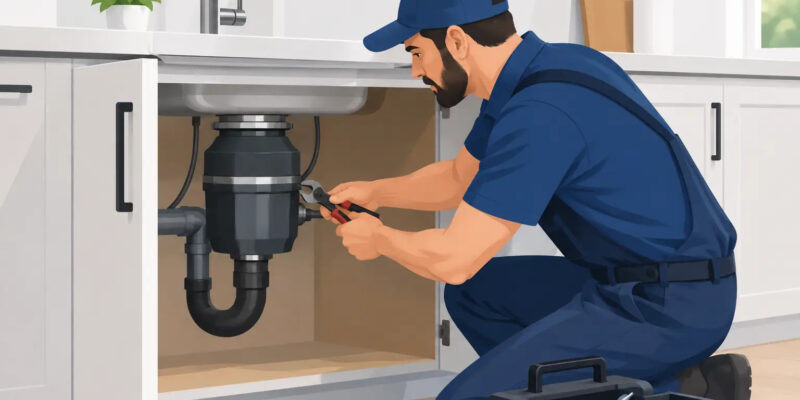
A garbage disposal that hums without grinding, leaks beneath the sink, or stops mid-cleanup can turn a convenient kitchen fixture into a plumbing concern. Prompt garbage disposal repair matters because a failing unit can contribute to sink backups, cabinet damage, unpleasant odors, and strain on the drain line serving the kitchen.
For homeowners, the first question is usually whether the disposal needs a simple reset or a professional repair. The answer depends on the symptom, the age of the unit, and whether the issue is limited to the appliance or has reached the sink drain, dishwasher connection, or electrical supply.
Start Garbage Disposal Repair With Safe Checks
A disposal is not a blender, and it should never be treated like one. Before inspecting anything, turn the disposal switch off. If the unit has stopped completely, unplug it under the sink when possible. If it is hardwired, switch off the circuit breaker that serves the disposal before any hands-on work.
Never reach into the disposal chamber with your hand, even when the power is off. Use a flashlight to look for visible objects, then use tongs or pliers to remove items such as utensils, bottle caps, small bones, or pieces of glass. This protects both the person doing the inspection and the grinding components inside the unit.
If the disposal is silent when switched on, first check whether the outlet has power and whether the circuit breaker or GFCI receptacle has tripped. Many kitchens have a reset button on a nearby GFCI outlet, which may control the disposal even if that outlet is not directly beneath the sink. A tripped breaker that immediately trips again is not a reset-and-forget issue. It can indicate a motor fault, wiring problem, or water-related electrical concern that needs professional attention.
Use the Reset Button Correctly
Most disposals have a small reset button on the bottom of the unit. If the motor overheats due to a jam or prolonged use, this overload protector may trip. Allow the disposal to cool for several minutes, press the reset button firmly, restore power, and test it with cold water running.
If the reset button will not stay engaged or the disposal shuts down again shortly after restarting, the unit may still be jammed or the motor may be failing. Repeatedly resetting an overloaded disposal can worsen the problem rather than solve it.
Free a Jam Without Damaging the Unit
A disposal that makes a low humming sound but does not grind is commonly jammed. Turn off power first. Many models can be manually turned from below using the manufacturer-provided hex wrench in the socket at the base of the disposal. Move the wrench back and forth until the grinding plate turns freely, then remove the object causing the obstruction with tongs.
Some older models have a manual turning feature that is accessed differently. If the disposal does not have a clear turning socket, do not force improvised tools into the unit. Excess force can damage internal components, crack the housing, or create a safety risk. Once the obstruction is removed, restore power, run cold water, and test the disposal briefly.
Common Problems That Call for Garbage Disposal Repair
Not every disposal failure means replacement is necessary. A relatively new, otherwise sound unit may only need a cleared obstruction, repaired electrical connection, tightened mounting assembly, or drain adjustment. However, certain symptoms point to a repair call before a small kitchen issue becomes a larger plumbing problem.
A Disposal That Drains Slowly
If the disposal runs but water lingers in the sink, the problem may be food buildup in the disposal outlet, the P-trap, or the kitchen branch drain. It can also be a partial blockage farther down the line. Running the disposal longer will not clear a clogged drain and may overheat the motor.
Avoid chemical drain cleaners in a disposal whenever possible. These products can sit in the unit or trap, create a hazard during later service, and may not address the actual blockage. A plumbing professional can determine whether the restriction is inside the disposal, immediately downstream, or farther along the drain piping.
Leaks Under the Kitchen Sink
Water beneath a disposal should be addressed promptly, particularly in cabinets with particleboard bases or nearby electrical connections. The location of the leak helps identify the cause. A leak at the top may involve the sink flange, plumber’s putty, mounting ring, or sink opening. Water at the side connection may come from the dishwasher discharge hose. A leak at the drain outlet can point to a loose fitting, worn gasket, or misaligned drain pipe.
Water dripping from the bottom of the disposal housing is more serious. It often indicates an internal seal failure. While an external fitting can frequently be repaired, a leaking internal seal commonly means the disposal has reached the end of its service life and replacement is the practical choice.
Loud Grinding, Rattling, or Metal-on-Metal Noise
A brief rattle may be caused by a foreign object. Continued harsh noise after the chamber has been cleared can mean damaged grinding parts, a loose internal component, or worn bearings. The trade-off is straightforward: a minor obstruction may justify service, but major internal wear on an older unit often makes replacement more cost-effective than rebuilding the appliance.
Odors That Return After Cleaning
Disposal odors usually come from food residue caught around the splash guard, grinding chamber, or drain. Cleaning the removable splash guard, flushing the unit with cold water, and grinding a small amount of ice can help dislodge residue. Citrus peels can leave a fresh scent, but they do not resolve a drain blockage or a failing disposal.
If odors return quickly, especially along with slow drainage or gurgling, the issue may be buildup in the drain system rather than the disposal itself. That distinction matters because treating the disposal alone will not correct a restriction farther down the pipe.
Know When Replacement Makes More Sense
A quality garbage disposal can provide many years of service, but frequent jams, recurring leaks, weak grinding performance, and repeated resets are signs to evaluate replacement. Age matters, but condition matters more. A newer unit damaged by a utensil may be repairable, while an older unit with motor trouble and an internal leak is rarely a good candidate for continued investment.
Replacement also provides an opportunity to select a unit appropriate for the household or facility. A light-use kitchen may not need the same motor capacity or sound insulation as a busy family kitchen, breakroom, rental property, or food-service area. The disposal must also work with the existing sink, drain configuration, dishwasher connection, electrical setup, and local plumbing requirements.
For commercial properties, the decision deserves additional care. A disposal that serves a staff kitchen, restaurant prep area, or other high-use setting may be part of a larger drainage and maintenance concern. Food waste practices, grease management, drain capacity, and downtime all affect whether repair, replacement, or a different waste-handling approach is appropriate.
Prevent Problems Before the Next Sink Backup
A disposal is designed to process small amounts of soft food waste with plenty of cold running water. Cold water helps keep fats more solid as they move through the disposal and drain. Hot water may feel like it should clean the line, but it can allow grease to soften and travel until it cools and collects farther along the piping.
Keep fibrous foods, grease, coffee grounds, large bones, pasta, rice, eggshells, and nonfood items out of the disposal. Fibrous materials can wrap around internal components. Grease and grounds can settle in the trap and drain. Pasta and rice expand with water and can contribute to clogs, especially when a drain already has buildup.
Run water before turning on the disposal, add food gradually, and continue running cold water for several seconds after grinding stops. This helps move small particles through the trap instead of allowing them to settle directly below the sink. Regularly cleaning the splash guard and checking for slow drainage can also catch developing problems early.
When a disposal problem involves electrical power, recurring clogs, leaking connections, or a worn-out motor, professional service protects more than the appliance. It protects the sink cabinet, drain system, and the daily function of the kitchen. Hydrodynamics Inc. can assess the disposal in the context of the surrounding plumbing and provide a repair or replacement recommendation built for dependable use.