
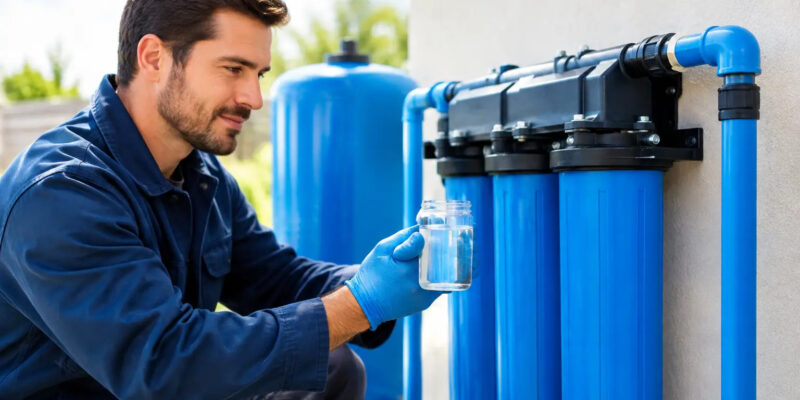
A clear-looking glass of water can still carry microorganisms that should not be there. For homes served by private wells and facilities with their own water sources, water disinfection is the treatment step that addresses bacteria, viruses, and other microbiological concerns that a softener, filter, or pump repair alone will not solve.
The right approach starts with testing, not assumptions. A water test identifies whether contamination is present and reveals the water conditions that can affect treatment performance. From there, property owners can choose a disinfection method that fits the source, the plumbing system, the water chemistry, and the level of ongoing protection needed.
When Water Disinfection Is Needed
Private wells are not regulated and routinely monitored in the same way as public water supplies. That does not mean well water is automatically unsafe, but it does mean the owner is responsible for testing and maintenance. Bacteria can enter a well after flooding, a damaged well cap, a plumbing repair, a pump replacement, or changes to the surrounding property.
Testing is also wise when water has an unusual odor, discoloration, a sudden change in taste, or when household members experience recurring gastrointestinal illness. Those symptoms do not prove that the water is the cause, but they warrant a closer look.
For commercial and industrial properties, the concern can extend beyond a single drinking-water faucet. Buildings may have storage tanks, long plumbing runs, low-use areas, equipment connections, ice machines, employee break rooms, or seasonal occupancy patterns. Stagnant water and poorly maintained components can create conditions that deserve professional evaluation.
Routine testing is especially valuable for properties in Northeastern Pennsylvania that depend on wells. A test after a major storm, flood event, or work on the well system can catch a problem before it becomes a larger disruption.
What Water Disinfection Actually Does
Disinfection controls microorganisms. It is not a catch-all treatment for every water-quality issue.
A properly selected disinfection system may address coliform bacteria, E. coli, and other microbial risks, depending on the treatment method and the source-water conditions. It does not remove hardness minerals, sediment, iron, manganese, dissolved chemicals, or fuel-related contaminants. In some cases, those issues must be addressed first so the disinfection equipment can do its job effectively.
For example, hard water can coat internal components, while iron, manganese, cloudiness, and sediment can interfere with ultraviolet light. A property with several water problems may need a coordinated treatment train: sediment filtration first, then iron or hardness treatment where needed, followed by disinfection. This is why a water analysis and an on-site review matter more than choosing equipment based on a single symptom.
UV Disinfection: Continuous Protection Without Chemicals
Ultraviolet, or UV, disinfection uses a specialized lamp to expose water to germicidal light as it passes through a treatment chamber. The light damages the ability of microorganisms to reproduce. UV is a practical option for many well-water applications because it provides continuous treatment at the point where water enters the building and does not add chlorine taste or odor.
UV has clear operating requirements. The water must be sufficiently clear for the light to reach microorganisms, which often means installing filtration ahead of the UV unit. The equipment must also be sized for the building’s peak flow demand. A unit selected only for average water use may not provide the intended treatment during periods of heavy demand.
Maintenance is straightforward but necessary. Lamps require scheduled replacement even when they still appear to be glowing, because their germicidal output declines over time. The quartz sleeve surrounding the lamp also needs cleaning or replacement if mineral buildup blocks the light. Power interruptions, alarms, flow rates, and prefilter changes should all be part of the maintenance plan.
UV does not leave a disinfecting residual in the plumbing. That is often an advantage for taste and daily use, but it means the rest of the system must be maintained properly. If bacteria are already established in the well or plumbing, the source may need to be disinfected before a UV system is installed.
Chlorination: Useful for Well and System Cleanup
Chlorination introduces chlorine at a controlled level to disinfect water. A one-time process commonly called shock chlorination can be used after a positive bacteria test, well work, or contamination event to disinfect the well and associated plumbing. It can be effective, but it is not a permanent answer if the source of contamination remains.
A cracked well casing, missing cap, poor surface drainage, unprotected wiring entry, or nearby source of contamination can allow bacteria to return. Repeated shock chlorination without correcting the underlying issue can create a cycle of temporary results and recurring test failures.
Continuous chlorination may be appropriate for some high-demand or challenging water systems. It provides a disinfecting residual and can work well when designed and monitored correctly. However, it requires chemical storage, feed equipment, contact time, regular testing, and often additional treatment to manage chlorine taste, odor, or byproducts. It is a more involved solution than UV, but it can be the better fit when conditions call for residual protection.
Start With Testing, Then Treat the Cause
A bacteria result is a decision point, not just a pass-or-fail report. The response depends on what was found, the type of water source, recent events at the property, and whether the result is isolated or recurring.
A qualified water-treatment professional will look beyond the test result. They may inspect the well cap and casing, review drainage around the well, check the pressure tank and plumbing connections, confirm that the treatment equipment is correctly located, and assess whether sediment or mineral levels are limiting performance. For a commercial building, the review may also include water demand, pipe layout, storage, and areas where water sits unused.
The goal is to avoid treating a symptom while leaving the cause untouched. If a well cap is loose or surface water is pooling near the casing, that repair belongs in the solution. If cloudy water is reducing UV effectiveness, filtration must be addressed. If an aging pump system is disturbing sediment or failing to maintain dependable pressure, the water system needs attention as a whole.
Choosing Between UV and Chlorine Treatment
There is no universal winner between UV and chlorination. UV is often a strong choice for homeowners who want continuous microbiological treatment without adding chemicals, provided the water is properly pretreated and the unit is maintained. It is also appealing for buildings where taste and odor matter and the water supply is stable.
Chlorination is often better suited to well and plumbing disinfection after contamination, or to systems that need a residual disinfectant throughout the distribution piping. It may also be part of a larger treatment strategy for difficult source water. The trade-off is more active management, including chemical handling and ongoing monitoring.
In some cases, both methods have a role. A system may be shock chlorinated to disinfect the well and plumbing, then protected with properly installed UV treatment for daily use. The sequence and equipment selection should be based on current testing, not on a one-size-fits-all package.
Maintenance Protects the Investment
Water-treatment equipment is most dependable when it is treated like any other essential mechanical system. Filters need replacement, UV lamps need annual service, sleeves need inspection, and water quality should be retested on a schedule that matches the property and its history. Commercial and industrial facilities may need a more formal maintenance plan because downtime, employee safety, and process reliability are all on the line.
Hydrodynamics Inc. helps homeowners and property managers evaluate well-water concerns, install UV water-treatment equipment, and keep related plumbing and pump systems working together. A coordinated approach is especially useful when poor water quality, pressure problems, filtration needs, and aging mechanical equipment overlap.
If a water test raises questions, act before the next plumbing repair, storm, or busy season puts more demand on the system. A clear diagnosis and a maintainable treatment plan can provide far more confidence than relying on water that only looks clean.