
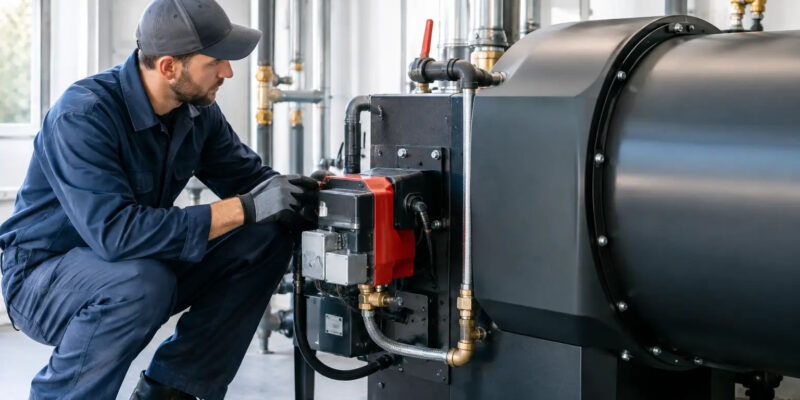
A busy service bay, fleet garage, or industrial shop can generate used oil year-round while still facing high heating costs every Pennsylvania winter. Waste oil heaters address both realities by using properly managed eligible used oil as a fuel source for space heat. For the right facility, they can reduce disposal volume, offset purchased heating fuel, and provide dependable warmth where large overhead doors, concrete floors, and frequent air exchanges make heating a constant operating expense.
That does not make a waste-oil system a fit for every building. These heaters require appropriate fuel handling, dedicated space, proper installation, and ongoing maintenance. The strongest results come from looking at the heater as part of a complete mechanical system rather than as a stand-alone piece of equipment.
Where Waste Oil Heaters Make Sense
Waste oil heating is most practical for businesses that consistently produce qualifying used oil and have a building with a meaningful heating load. Automotive repair shops, truck and equipment fleets, agricultural operations, municipal garages, maintenance departments, and certain manufacturing facilities are common examples.
The value depends on volume and consistency. A small shop that generates limited used oil may not have enough available fuel to support its heating needs throughout the season. A larger facility with several service bays and a steady flow of oil changes may have a more reliable supply. Before choosing equipment, it is worth tracking how much used oil the operation collects over a typical year, how it is stored, and how much heat the building requires during the coldest part of the season.
A waste oil heater is also better suited to a work area than to every occupied space. Shops and garages often benefit from unit heaters that deliver warm air directly where people work. Office areas, customer waiting rooms, and tightly controlled spaces may be better served by separate HVAC equipment designed for those comfort and ventilation needs.
Start With the Building, Not the Fuel Supply
A common mistake is sizing a heater around the amount of oil available rather than the building’s heat loss. Fuel supply matters, but it should not determine whether the unit is too small to keep up or oversized for normal operation.
A proper evaluation considers square footage, ceiling height, insulation levels, wall and roof construction, window and door area, and how often overhead doors open. A repair garage with 16-foot ceilings and multiple bay doors can lose heat much faster than an insulated warehouse of the same floor area. Local winter design temperatures also matter in Hazleton and across Northeastern Pennsylvania, where prolonged cold weather can expose shortcomings in an undersized system.
Air distribution deserves equal attention. A heater may have adequate capacity on paper but still leave employees cold if warm air never reaches workstations. Placement, discharge direction, mounting height, fan performance, and obstructions such as lifts, racking, or partitions all affect comfort. In larger or irregularly shaped buildings, multiple units or a carefully planned ducted approach may be more effective than one large heater at a single end of the shop.
Think About Backup Heat
Even a well-maintained waste-oil system can need service, and used-oil supply may vary. Facilities that cannot tolerate downtime should plan for backup heat or retain an existing heating source where practical. The right approach depends on the building’s use, the consequences of a cold-weather shutdown, and whether the system supports occupied areas, inventory, equipment, or freeze protection.
Fuel Quality Is an Operating Issue
Waste oil heaters are designed to burn approved used oils, but not everything called “waste oil” belongs in the tank. The acceptable fuel types and blending limits are determined by the heater manufacturer and applicable regulations. Used crankcase oil, hydraulic oil, transmission fluid, and certain other petroleum-based fluids may be acceptable when handled correctly. Solvents, gasoline, antifreeze, brake cleaner, chlorinated materials, and other contaminants do not belong in the fuel supply.
Contaminated fuel creates safety, emissions, and maintenance concerns. It can also damage pumps, nozzles, and combustion components. Clear shop procedures are essential: label collection containers, train employees on what can and cannot be added, and keep the fuel-storage area controlled. If outside sources contribute used oil, the facility needs even stronger acceptance practices because the contents may be unknown.
Water is another frequent source of trouble. Water can enter storage tanks through condensation, poor container handling, or contaminated incoming oil. It can interrupt combustion, accelerate component wear, and create unstable burner operation. Properly designed tanks, filtration, water separation where needed, and regular inspection help protect the system.
Installation Is More Than Hanging a Unit Heater
Waste oil equipment needs a professional installation that addresses combustion air, venting, fuel storage, electrical service, clearances, controls, and local code requirements. The heater, tank, supply lines, filters, and safety devices must work together. A unit can appear to run properly at startup yet become unreliable if its fuel-delivery system is poorly designed or its venting is incorrect.
The burner and flue system must be matched to the equipment specifications. Improper vent sizing, unsupported piping, inadequate termination location, or neglected draft requirements can lead to poor combustion and nuisance shutdowns. Installation also needs to account for building layout and service access. Filters, pumps, cleanout areas, and controls should be reachable without making routine maintenance difficult or unsafe.
Permitting and compliance should be addressed before installation, not after equipment arrives. Requirements can vary by municipality, building type, fuel storage arrangement, and intended use. A qualified mechanical contractor can coordinate system design around the facility, the selected heater, and the applicable requirements instead of forcing a one-size-fits-all layout.
Maintenance Determines Whether the Savings Last
Waste oil burners work in a demanding environment. Their fuel is less uniform than new heating oil, which makes regular inspection and cleaning especially important. Preventive maintenance is not optional if a facility expects reliable heat through the season.
At a minimum, service should address filters, strainers, burner components, nozzle condition, ignition parts, air settings, combustion chamber condition, fan operation, safety controls, and venting. The fuel tank and lines should be checked for sludge, water, leaks, and restrictions. A technician may also verify combustion performance and adjust the system according to manufacturer specifications.
The service interval depends on fuel quality, operating hours, equipment design, and the working environment. A shop with consistently clean fuel and moderate runtime may need less frequent attention than a high-hour fleet facility collecting oil from several sources. Waiting for smoke, odor, hard starts, or shutdowns is not a maintenance plan. Those symptoms usually mean the system has already lost efficiency or is approaching a failure.
Watch for Changes in Operation
Facility staff can help catch problems early by paying attention to changes in sound, startup behavior, heat output, or fuel consumption. Repeated lockouts, uneven flame behavior, visible smoke, new odors, or oil around fittings deserve prompt attention. Keeping a simple service record also makes it easier to spot recurring issues and plan maintenance before peak heating season.
Compare the Full Cost, Not Just the Heater Price
The financial case for waste oil heating is tied to more than the initial equipment cost. Potential benefits include reduced spending on conventional heating fuel and lower dependence on off-site used-oil disposal. But the complete calculation should also include tank and piping installation, electrical work, venting, maintenance, filters, compliance needs, and the labor required to manage the oil supply.
For some facilities, the biggest advantage is control. Used oil is already generated on site, so converting an eligible waste stream into useful heat can make operating costs more predictable. For others, the required maintenance and fuel-handling responsibility outweigh the benefit. The answer depends on the facility’s oil volume, heat demand, operating schedule, and ability to maintain disciplined fuel practices.
Hydrodynamics Inc. helps commercial and industrial customers evaluate specialized heating systems in the context of the entire building. That includes considering equipment placement, existing heat sources, ventilation, controls, and the service support needed after installation.
A well-planned waste-oil heating system should make the shop more comfortable without adding uncertainty to the workday. When equipment is correctly sized, fuel is managed carefully, and maintenance is scheduled before winter, the heater can become a practical part of a facility’s long-term operating plan.