
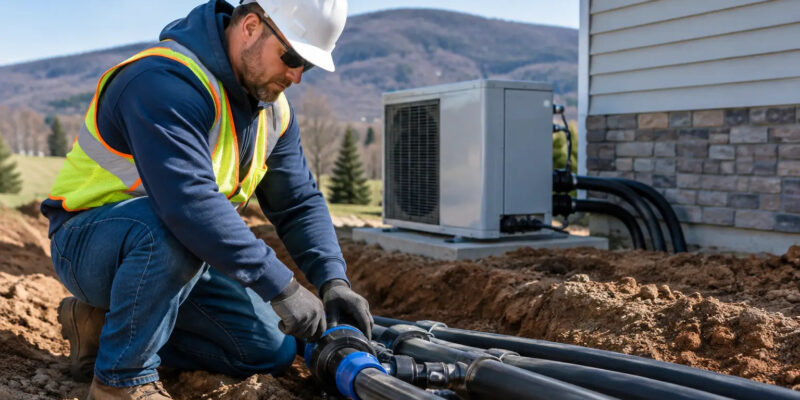
A geothermal system is not a standard heating-and-cooling replacement. It is a property-level mechanical project that depends on the ground beneath your building, the way the building uses energy, and the quality of the installation. For homeowners and facility managers comparing geothermal installers Hazleton Pennsylvania, the right question is not simply which unit to buy. It is whether the contractor can properly assess the site, design the loop field, integrate the indoor equipment, and support the system for years after startup.
Geothermal heat pumps can provide dependable heating, cooling, and, in many applications, domestic hot-water support. They do so by moving heat between a building and the relatively stable temperature below the earth’s surface. That principle is straightforward. Designing a system that performs well through a Northeastern Pennsylvania winter takes careful planning.
What a Geothermal Installation Actually Includes
A geothermal heat pump uses an underground loop system containing a water-based solution. In heating season, it draws heat from the ground and transfers it indoors. In cooling season, it moves heat from the building back into the ground. The indoor heat pump distributes conditioned air through ductwork or, in some designs, connects with hydronic equipment.
The equipment inside the building is only one part of the job. A complete installation may involve loop drilling or trenching, underground piping, headers, circulation pumps, electrical work, ductwork changes, controls, condensate management, and integration with existing heating or water-heating equipment. If any one of those pieces is undersized, poorly coordinated, or difficult to service, the owner may not receive the comfort or operating results expected from geothermal.
This is why a geothermal estimate should be based on more than the square footage of a home or building. Two properties with the same footprint can have very different heating loads because of insulation levels, window performance, occupancy, ceiling height, ventilation needs, process loads, and the condition of the existing distribution system.
Site Conditions Shape the Right System
Before recommending equipment, experienced geothermal installers in Hazleton, Pennsylvania should evaluate the site. Available land, access for drilling or excavation equipment, rock conditions, groundwater considerations, utility locations, and the location of wells or septic systems can all affect the loop design and project cost.
Horizontal loops are installed in trenches and can be a practical choice where a property has sufficient open land and favorable excavation conditions. Vertical loops use drilled boreholes and require less surface area, making them useful for tighter sites or locations where trenching would be disruptive. Some projects may use pond loops or other specialized configurations when site conditions support them.
No loop type is automatically best. A large rural lot does not always mean horizontal trenching is the lowest-cost or strongest long-term option, particularly if access, rock, landscaping, or soil conditions complicate excavation. Likewise, a vertical system can be an excellent fit for a constrained commercial site, but drilling logistics must be planned around building access and underground infrastructure.
A thorough evaluation also protects other essential systems. Properties throughout the region may rely on private wells, water treatment equipment, septic systems, sump systems, or pumps. Those components need to be identified before work begins so the geothermal installation is coordinated with the full mechanical and water-service needs of the property.
Load Calculations Matter More Than Equipment Size
Oversizing is a common concern with any HVAC installation. A larger heat pump is not automatically a safer choice. It can lead to shorter run cycles, reduced dehumidification in cooling season, unnecessary equipment cost, and operating issues that are difficult to diagnose later.
Proper system sizing starts with a building load calculation. For a residence, that means looking at the envelope of the home, including insulation, windows, air leakage, orientation, and room-by-room comfort needs. For a commercial or industrial facility, the analysis may also need to account for occupancy patterns, ventilation requirements, refrigeration, process equipment, loading doors, rooftop equipment, and changing operating schedules.
The underground loop must also be sized for the heating and cooling loads it will carry. The loop field is not an accessory. It is the heat source and heat sink for the system. A well-designed loop helps preserve stable performance through the seasons and supports the service life of the heat pump.
Existing Ductwork and Backup Heat Need a Clear Plan
Many geothermal projects are replacements for oil, propane, gas, or older heat-pump systems. The existing ductwork may be usable, but it should be inspected rather than assumed adequate. Leaky ducts, poor return-air paths, restrictive filters, or improperly sized supply runs can limit comfort no matter how efficient the new heat pump is.
Some homes and buildings benefit from retaining a backup or supplemental heat source. That decision depends on the system design, local utility costs, the building’s load, and the owner’s priorities. In other cases, a properly designed geothermal heat pump can carry the expected load without relying heavily on supplemental heat.
The discussion should be specific. Ask how the system will perform during the coldest weather, what equipment will provide supplemental heat if needed, and how the controls will decide when to use it. A clear answer is more valuable than a broad promise about efficiency.
Questions to Ask Geothermal Installers in Hazleton, Pennsylvania
A geothermal proposal deserves more review than a standard equipment swap. Property owners should expect the contractor to explain the design in plain language and identify the work included in the price.
Ask how the heating and cooling loads will be calculated, what loop configuration is recommended, and why it fits the property. Confirm who will handle drilling or excavation coordination, permits where required, electrical requirements, piping connections, ductwork modifications, and restoration of affected areas.
It is also reasonable to ask how the system will be commissioned after installation. Startup should include verification of flow, refrigerant operation, temperature performance, controls, condensate drainage, and airflow. The contractor should explain routine maintenance requirements, filter changes, recommended service intervals, and whom to contact if the system needs attention.
For commercial and industrial properties, the conversation should go further. Decision-makers should understand how installation work will affect operations, whether work can be phased, what downtime is expected, and how the geothermal equipment will coordinate with ventilation, refrigeration, rooftop units, boilers, pumps, or other critical systems.
Operating Cost Is Only One Part of the Decision
Geothermal systems are often chosen for their potential energy savings and long equipment life. Those benefits can be meaningful, especially for properties with high heating demand or owners planning to remain in a building for many years. However, the upfront investment is typically higher than a conventional HVAC replacement because of drilling, trenching, loop piping, and site work.
The value calculation depends on the property. Fuel costs, electricity rates, available incentives, financing, building efficiency, and expected ownership period all matter. Incentive programs and tax rules can change, so owners should confirm current eligibility before making a final financial decision.
A geothermal system also does not eliminate the need for maintenance. Indoor air filters still need attention, condensate drains need to remain clear, electrical and control components should be inspected, and circulation equipment needs periodic professional service. Preventative maintenance helps identify small issues before they affect comfort, energy use, or business operations.
Choose a Contractor Prepared to Support the Whole System
Geothermal performance is tied to more than the heat pump itself. It depends on the loop field, air distribution or hydronic delivery, electrical controls, water management, and the condition of related mechanical equipment. That is especially relevant when an older building has several systems working together.
Hydrodynamics Inc. brings geothermal work into a broader mechanical-service approach that includes HVAC, plumbing, pumps, water conditioning, and ongoing maintenance. For property owners, that means the contractor evaluating a geothermal project can also recognize related concerns with ductwork, drainage, well-pump equipment, water quality, or existing heating equipment instead of treating each issue as unrelated.
The best next step is a site-specific conversation before selecting equipment or comparing proposals only by price. A careful evaluation can show whether geothermal is the right fit for your property and, if it is, what it will take to build a system that provides dependable comfort through every season.