
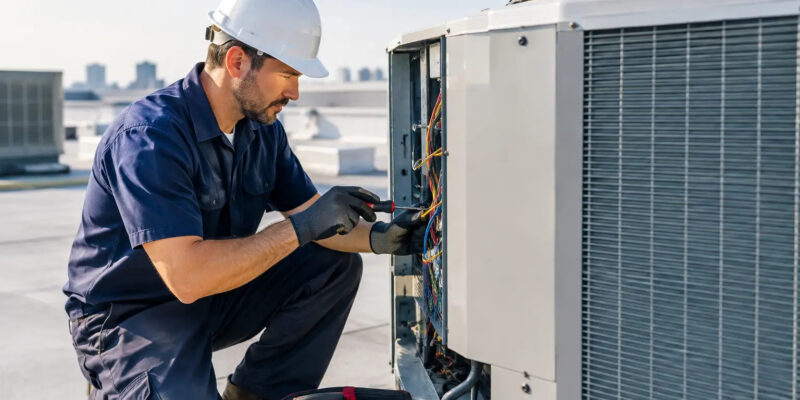
A rooftop unit can appear to be working normally right up until a hot office, a cold sales floor, or a production interruption proves otherwise. Learning how to maintain rooftop HVAC equipment gives property owners and facility managers a practical way to protect comfort, control operating costs, and avoid emergency repairs when the weather is least forgiving.
Rooftop HVAC units are exposed to conditions that indoor equipment never sees: wind-driven rain, snow, ice, leaves, pollen, direct sun, and temperature swings. In Northeastern Pennsylvania, winter freeze-thaw cycles and heavy seasonal debris can add another layer of stress. A maintenance plan should account for both the equipment inside the cabinet and the environment around it.
Start With Safe, Regular Rooftop Inspections
A visual check can catch problems early, but rooftop access is not a casual task. Falls, electrical components, moving parts, and damaged roof surfaces are real hazards. Building staff should only access the roof when they have safe access, appropriate training, and site procedures in place. Never remove electrical panels or reach into a running unit.
From a safe position, look for obvious changes around the equipment. Check whether the unit cabinet is secure, panels are in place, and any visible duct connections appear intact. Notice standing water, loose debris, bent coil fins, damaged insulation, unusual noise, or signs of oil or water around the unit.
Pay close attention after severe weather. A windstorm can deposit branches and trash against the condenser coil. Snow buildup can block outdoor air paths. Ice near a drain outlet may point to a drainage issue that needs attention before it creates leaks or freezes components.
Keep Airflow Clear and Filters on Schedule
Restricted airflow is one of the most common causes of rooftop unit trouble. When filters load up with dust, the blower works harder, heating and cooling capacity drops, and internal components can run at temperatures they were not designed to handle. The result may be uneven temperatures, higher utility bills, frozen evaporator coils, or premature blower and compressor wear.
Filter replacement intervals depend on the building, occupancy, and air quality. An office with typical occupancy may follow a different schedule than a restaurant, warehouse, manufacturing facility, or retail location near a busy road. Rather than replacing filters only when someone notices a comfort complaint, establish an inspection schedule and adjust it based on what the filters actually look like.
The outdoor coil also needs room to breathe. Remove leaves, paper, grass clippings, and other loose material from around the unit. Keep stored materials, pallets, and roof debris away from the cabinet and air intake areas. Do not use a pressure washer on coils, as high pressure can flatten delicate fins and reduce airflow further.
Maintain Drainage Before Water Finds Another Path
During cooling season, a rooftop unit removes moisture from indoor air. That condensate must flow through the drain pan and drain line without obstruction. If the line plugs, water can overflow into the unit, leak onto the roof, damage insulation, or find its way into the building.
A qualified technician should inspect and clear the condensate system during scheduled cooling maintenance. This includes checking the drain pan for corrosion, confirming the trap is properly configured where required, and making sure the drain outlet is open. A recurring drain issue may not be just a clogged line. It can also indicate poor unit leveling, improper piping, microbial buildup, or an airflow problem causing the coil to freeze and thaw excessively.
Roof drains matter, too. They are not part of the HVAC unit, but clogged roof drains can leave water around curbs and penetrations. Keeping the roof area clear helps protect both the equipment and the building envelope.
Schedule Seasonal Professional Service
The best time to service rooftop equipment is before it is carrying the full load of summer cooling or winter heating. For many commercial buildings, that means a cooling inspection in spring and a heating inspection in fall. Facilities with high occupancy, refrigeration needs, critical operations, or year-round cooling may need more frequent visits.
During a professional maintenance visit, a technician can perform work that should not be left to untrained personnel. The scope varies by unit type and condition, but it commonly includes:
- Checking electrical connections, contactors, capacitors, motors, and control components
- Measuring operating pressures, temperatures, amperage, and refrigerant performance
- Cleaning coils with appropriate methods and straightening fins when needed
- Inspecting belts, bearings, blower assemblies, economizers, dampers, and outside-air controls
- Testing heating operation, safety controls, ignition components, heat exchangers, and combustion performance where applicable
This testing matters because rooftop units often lose efficiency gradually. A failing capacitor, worn belt, loose electrical connection, or drifting economizer damper may not stop the system immediately. It can still raise energy use and place added strain on more expensive components.
Do Not Overlook the Economizer and Controls
Many rooftop units use an economizer to bring in outdoor air for ventilation and, under the right conditions, provide free cooling. When it works correctly, an economizer can support indoor air quality and reduce mechanical cooling demand. When it sticks open, sticks closed, or loses calibration, it can create comfort complaints that are easy to misdiagnose.
A stuck-open damper can bring in too much cold air during winter or humid air during summer. A stuck-closed damper can reduce ventilation and leave occupants complaining that the space feels stale. Sensors, actuators, linkages, and control settings all deserve attention during maintenance.
Controls should also be reviewed when building hours or space use changes. A rooftop unit serving a former office area may be operating on the wrong schedule after the space becomes a training room, retail floor, or warehouse. Correct scheduling prevents equipment from running unnecessarily while ensuring the building is comfortable when people arrive.
Watch for Signs That Service Cannot Wait
Preventive maintenance reduces surprises, but it does not eliminate every repair. Call for service promptly if the unit short-cycles, trips breakers, makes grinding or banging sounds, produces burning odors, leaks water into the building, or cannot maintain set temperature. Rising energy use without a clear reason is another signal worth investigating.
For gas-fired rooftop equipment, treat combustion-related concerns seriously. Repeated ignition failures, unusual burner operation, soot, exhaust odors, or a carbon monoxide alarm require immediate professional attention. Do not keep resetting the unit in hopes that the problem will clear itself.
It also helps to record recurring issues. Note the date, weather conditions, affected area, thermostat setting, and what employees or tenants observed. Those details help a technician identify intermittent faults faster than a report that simply says the unit is not working.
Plan for Repairs and Replacement With the Whole Building in Mind
Maintenance decisions are not always simple. An older rooftop unit may be repairable, but repeated compressor, heat exchanger, or refrigerant-circuit problems can make replacement the more responsible long-term choice. The right answer depends on repair history, efficiency, parts availability, building use, remaining equipment life, and budget.
Replacement should not be treated as a one-for-one equipment swap without evaluating the system. Proper sizing, curb condition, ductwork, electrical capacity, ventilation needs, controls, and roof access all affect performance. A larger unit is not automatically better. Oversizing can lead to short cycling, poor humidity control, and unnecessary cost.
For properties with several mechanical needs, it is useful to work with a contractor that can see the connections between HVAC operation, plumbing drainage, refrigeration loads, controls, and facility uptime. Hydrodynamics Inc. provides maintenance and repair support for rooftop heating and cooling systems as part of a broader mechanical service approach.
A rooftop unit is easy to ignore because it is out of sight. Put it on a documented maintenance schedule, respond to small changes early, and give qualified technicians the information and access they need to keep the system dependable when your building needs it most.