
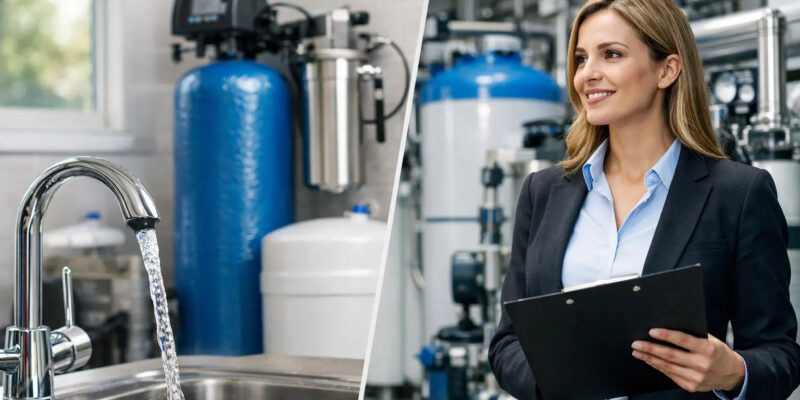
A white scale ring around the faucet, orange staining in a toilet bowl, a sulfur smell at the tap, or a sudden change in well-water taste can turn a simple glass of water into a property concern. Effective water treatment is not about adding equipment first. It starts by identifying what is in the water, how the property uses it, and which solution will protect people, plumbing, and equipment without creating unnecessary maintenance.
For homeowners, a water-quality issue may show up as dry skin, cloudy ice cubes, or appliances that wear out too soon. For a business or industrial facility, the consequences can be broader: scale in water heaters, inconsistent process water, corroded piping, downtime, and avoidable service costs. The right system is a practical investment in the systems that depend on water every day.
Start Water Treatment With a Water Test
Water can look clear and still contain minerals, metals, bacteria, or other contaminants that affect its safety, taste, odor, and performance. Municipal water and private well water also present different concerns. A public supply is treated before it reaches the building, but it may still contain disinfectant residuals, hardness minerals, or sediment picked up through plumbing. A private well is the owner’s responsibility from the source to the faucet.
A professional water test provides the information needed to make a sound recommendation. Depending on the property and its symptoms, testing may evaluate hardness, pH, iron, manganese, sulfur, bacteria, total dissolved solids, and other factors. If water quality has changed after flooding, plumbing work, a new well pump, or a shift in seasonal conditions, testing is especially worthwhile.
A test also prevents a common mistake: treating the symptom but missing the cause. A carbon filter may improve an odor, for example, but it will not correct hard water. A softener can reduce hardness, but it is not designed to disinfect water. Equipment should be selected for the actual condition, not simply because a neighbor has a similar-looking system.
Common Problems and the Equipment That Addresses Them
Water treatment equipment works best when each component has a defined job. Some properties need one solution. Others need a staged system that handles sediment first, then hardness, iron, odor, or disinfection.
Hard Water and Mineral Scale
Hard water contains elevated calcium and magnesium. It is common in many areas and is usually identified by white or chalky buildup on fixtures, glassware, shower doors, and heating elements. Soap may not lather well, laundry can feel stiff, and water-using equipment may lose efficiency as scale accumulates.
A water softener exchanges hardness minerals for sodium or potassium ions. Properly sized softeners can reduce scale throughout the home or building, helping protect water heaters, dishwashers, ice machines, boilers, and plumbing fixtures. Sizing matters. A system that is too small may regenerate too often and fail to keep up with demand, while an oversized system can add unnecessary cost.
For commercial properties, water use patterns are just as important as the hardness reading. A restaurant, multi-unit building, or facility with process equipment may require higher flow capacity, different control settings, or a dedicated treatment approach for sensitive equipment.
Iron, Manganese, and Staining
Orange, brown, or black stains often point to iron or manganese. These minerals can discolor fixtures and laundry, leave deposits in toilet tanks, and clog filters, valves, and small plumbing passages over time. In some cases, iron bacteria can create a slimy buildup and unpleasant odor.
Treatment may involve oxidation, specialized media filtration, or a softening system, depending on the type and concentration of the minerals. This is one area where guessing can lead to disappointing results. Dissolved iron, particulate iron, and bacterial iron do not all respond to the same equipment, so accurate testing and appropriate installation are essential.
Sediment, Taste, and Odor
Sediment can come from a well source, aging pipes, disturbed supply lines, or seasonal changes in groundwater. It may make water appear cloudy and can shorten the life of faucets, valves, water heaters, and appliances. Sediment filtration is often the first stage of a treatment system because it protects the equipment that follows.
Taste and odor concerns have several possible causes. Chlorine taste in public water, earthy odors, sulfur odors, and organic compounds require different approaches. Activated carbon filtration is often useful for improving chlorine taste and certain odors. Sulfur odor may require aeration, oxidation, or specialized filtration instead. The best choice depends on the source of the odor and the chemistry of the water.
Bacteria and Private Well Water
Private wells should be monitored because water conditions can change. Heavy rain, nearby construction, a damaged well cap, flooding, or changes in groundwater can introduce contamination risks. If bacteria is present, the well and plumbing may need disinfection, and ongoing treatment may be appropriate based on the source and test results.
Ultraviolet, or UV, water-treatment equipment disinfects water by exposing it to UV light as it passes through the chamber. It can be an effective final barrier against microorganisms when the system is properly designed and maintained. However, UV equipment does not remove sediment, hardness, iron, or chemical contaminants. Clear water is necessary for the UV light to work effectively, which is why prefiltration is often part of the installation.
Why Installation Details Matter
A treatment system is more than a tank or filter connected to a pipe. It must be installed where it can be serviced, protected from freezing, supplied with proper drainage when required, and matched to the building’s flow rate and pressure. On well systems, the pump, pressure tank, and plumbing condition can affect how treatment equipment performs.
For facilities, installation planning should account for peak demand, bypass needs, floor drains, equipment access, and operational continuity. A system that produces excellent water but restricts flow during the busiest part of the day is not a successful solution. The same principle applies at home: a family with multiple bathrooms, laundry use, and high-demand fixtures needs equipment that can keep pace.
At Hydrodynamics Inc., water-conditioning work can also be evaluated alongside well pumps, plumbing, water heaters, and related mechanical systems. That broader view helps identify problems that may otherwise be blamed on the water alone, such as low pressure from a failing pump, restricted plumbing, or a water heater already affected by years of mineral scale.
Maintenance Keeps Water Quality Consistent
Like any mechanical system, water-treatment equipment needs attention after installation. Filters eventually load with sediment. Softener salt must be maintained, and the brine tank should be checked for salt bridging or buildup. UV lamps lose output over time, even if the light still appears to be on, and sleeves may need cleaning or replacement.
The maintenance schedule depends on the water source, equipment type, water use, and test results. A house on a private well may need more frequent observation after severe weather or changes in water appearance. A commercial kitchen or facility with water-dependent equipment may need planned service intervals to avoid costly interruptions.
Watch for signs that service is due: staining returns, water pressure drops, odors reappear, the softener uses salt abnormally, or an alarm appears on UV equipment. These issues do not always mean the equipment has failed. Often, a filter change, adjustment, cleaning, or updated test can restore proper performance.
Choosing a Solution for the Long Term
The lowest initial equipment price is not always the lowest cost over time. Media replacement, salt use, filter changes, water waste during regeneration, energy use, and service access all deserve consideration. A well-designed system balances treatment performance with the maintenance a homeowner, manager, or maintenance team can realistically support.
It also helps to plan for the entire water system. Treating hardness can extend the life of a water heater. Removing sediment can protect valves and fixtures. Improving well-water quality can make a property more comfortable and reduce wear on pumps and plumbing. For commercial and industrial properties, the right approach can support equipment reliability and more predictable operating costs.
If your water leaves stains, smells unusual, affects equipment, or simply has not been tested recently, begin with facts rather than assumptions. A clear test result and a properly matched treatment plan can turn an ongoing nuisance into a dependable part of your property’s mechanical system.