
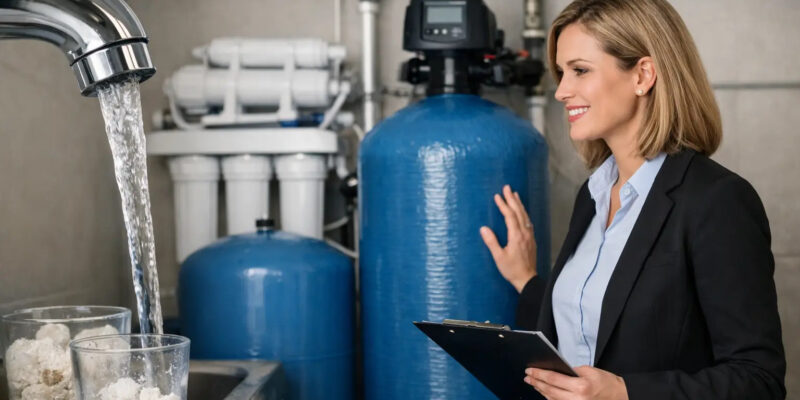
White scale around a faucet, cloudy spots on clean glasses, stiff laundry, and a water heater that seems to work harder than it should can all point to mineral-heavy water. Hard water filtration is a common search term, but the right solution is not always a filter alone. For many homes and facilities, controlling hardness requires water softening, while filtration addresses separate concerns such as sediment, iron, odor, or other water-quality issues.
That distinction matters. Installing the wrong equipment can leave the original problem in place, add unnecessary maintenance, or create unrealistic expectations about what a system can do. A practical water-treatment plan starts with the water source, a proper test, and a clear understanding of how the property uses water.
What Makes Water Hard?
Hard water contains dissolved minerals, primarily calcium and magnesium. These minerals occur naturally as groundwater moves through rock and soil. They are especially common in well water, though municipal water can also have measurable hardness.
Hardness is not usually a health concern by itself. In fact, calcium and magnesium are naturally occurring minerals. The problem is their effect on plumbing fixtures, water-using equipment, and everyday cleaning. As hard water is heated or evaporates, minerals can form scale deposits. That buildup can collect on shower doors and faucets, but it can also develop inside water heaters, boilers, dishwashers, ice machines, humidifiers, and piping.
For a homeowner, the issue may first appear as soap that will not lather well or fixtures that need frequent cleaning. For a commercial property or industrial facility, scale can affect equipment efficiency, maintenance schedules, and uptime. The larger the water demand and the more heat involved, the more costly untreated hardness can become.
Hard Water Filtration vs. Water Softening
A standard sediment filter is useful for catching particles such as sand, silt, rust, and debris. It protects fixtures and equipment from physical material in the water, especially where a private well produces sediment. However, dissolved calcium and magnesium are too small to be removed by an ordinary cartridge filter.
A conventional ion-exchange water softener is designed specifically to reduce hardness. It uses resin media to exchange hardness minerals for sodium or potassium ions. The system periodically regenerates with salt or potassium chloride, flushing the collected minerals away through a properly installed drain connection.
This does not mean filtration has no role in a hard-water solution. Many properties need both. A sediment prefilter can protect the softener from debris. If iron, manganese, sulfur odor, acidity, bacteria, or other conditions are present, additional treatment may be needed before or after the softener. Ultraviolet treatment, for example, is used for disinfection concerns but does not soften water or remove minerals.
The most reliable approach is to match each piece of equipment to a verified condition. Calling every water-treatment device a filter can make the selection process confusing. A system should be built around what is actually in the water and what the building needs protected.
Signs Your Property May Need Treatment
Scale is the clearest sign, but it is not the only one. Repeated repairs to water-using appliances, reduced hot-water performance, and frequent mineral residue on fixtures deserve attention. In homes with well water, staining and odor may indicate conditions beyond hardness.
Watch for a combination of these concerns:
- White or chalky buildup on faucets, showerheads, dishes, and coffee makers
- Dry-feeling skin, dull hair, stiff laundry, or soap residue in tubs and showers
- Lower efficiency or shorter service life from water heaters and other heated equipment
- Orange, brown, black, or blue-green staining that may point to iron, manganese, or plumbing-related issues
- Grit in faucet aerators, low fixture flow, or sediment collecting in toilet tanks
One symptom does not identify the problem by itself. For example, low water pressure may result from sediment, a plumbing restriction, a failing well pump component, or scale buildup. Orange staining may be caused by iron rather than hardness. Proper testing keeps a treatment recommendation from becoming guesswork.
Start With a Water Test and Site Review
Water treatment should be based on test results, not only the appearance or taste of the water. A useful evaluation may check hardness, iron, manganese, pH, total dissolved solids, sulfur-related concerns, and bacterial conditions when appropriate. Private well owners should test routinely and after flooding, major plumbing work, a change in taste or odor, or any concern about water quality.
The water source is only part of the picture. Equipment selection also depends on household size or building occupancy, peak water demand, plumbing layout, available drain access, electrical access, and the equipment that needs protection. A softener that is too small may regenerate too often and fail to keep up during high-demand periods. An oversized system can increase upfront cost without providing a meaningful benefit.
Commercial and industrial settings require an even broader review. Restaurants, lodging properties, laundries, medical facilities, manufacturing operations, and multi-unit buildings may have specialized equipment and significant hot-water loads. Their treatment systems should account for daily demand, flow rate, service access, regeneration timing, and the consequences of scale on operations.
Choosing the Right Hard Water Filtration Setup
There is no single best hard water filtration setup for every property. A home on municipal water with moderate hardness may need a properly sized softener and a simple drinking-water option at the kitchen sink. A rural home on well water may require sediment filtration, iron treatment, softening, and ultraviolet disinfection based on water testing.
For properties with a known hardness issue but otherwise clean water, a whole-house softener is often the direct solution. It treats water before it reaches fixtures, appliances, and water-heating equipment. Point-of-use filters can improve drinking water at one location, but they do not protect the rest of the plumbing system from scale.
Salt-free conditioners are another option that some owners consider. These systems may alter how minerals behave and can help reduce scale adhesion under certain conditions, but they do not remove hardness minerals in the same way as an ion-exchange softener. They may be appropriate where adding sodium or using a drain line is not practical, but they should not be presented as identical to a water softener.
Reverse osmosis systems are also frequently misunderstood. They can reduce many dissolved substances at a drinking-water tap, depending on the system design, but they are typically not a whole-building answer for scale control. They work best as part of a broader plan when improved drinking water is the goal.
Installation Details That Affect Performance
Good equipment can still underperform when it is installed without attention to the building. Treatment systems need proper bypass valves, accessible shutoffs, drainage, and enough space for salt loading and service. Where freezing temperatures are possible, equipment should be located in a protected area. Water pressure, pipe size, and flow demands must also be considered so treatment does not create a noticeable restriction during showers, laundry, or business operations.
For well systems, the relationship between the pressure tank, pump controls, sediment conditions, and treatment equipment should be reviewed together. A water-quality problem can overlap with a pump or plumbing issue. Working with a contractor that understands both water conditioning and mechanical systems helps avoid treating one component while overlooking another.
Hydrodynamics Inc. has served Northeastern Pennsylvania properties since 1994 with water-conditioning, plumbing, pump, and mechanical services. That broader experience is useful when a treatment decision affects water heaters, boilers, well equipment, fixtures, or facility operations.
Maintenance Keeps Treatment Working
Water treatment is not a set-it-and-forget-it purchase. Softener salt must be maintained, resin and control settings should be checked, filters need replacement, and ultraviolet systems require scheduled lamp service. The exact schedule depends on water quality, system type, and water use.
A sudden return of spotting, staining, odor, or poor soap performance may mean the system needs attention. It can also signal a change in source-water conditions. Addressing those signs early is generally easier than waiting for scale to damage equipment or for a filter to become heavily restricted.
The right treatment system should make water use easier without creating unnecessary complexity. Begin with a test, consider the entire plumbing and equipment picture, and choose serviceable equipment sized for the way your property actually operates.