
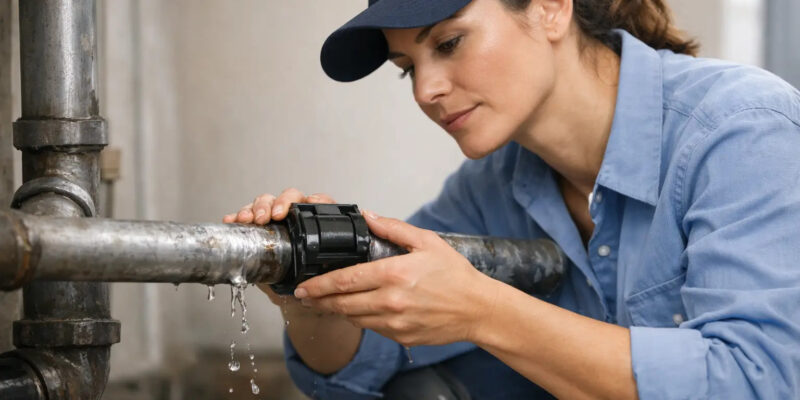
A pipe leak rarely announces itself with a dramatic burst. More often, it starts as a damp cabinet floor, a stain spreading across a ceiling tile, a drop in water pressure, or a water bill that no longer makes sense. Timely pipe repair protects more than the plumbing line itself. It helps protect finished spaces, equipment, inventory, indoor air quality, and the normal operation of a home or facility.
For property owners in Northeastern Pennsylvania, the right response depends on where the pipe is located, what material it is made from, what it carries, and why it failed. A small accessible drain leak may need a straightforward repair. A hidden water line leak, frozen pipe, failed underground line, or recurring industrial piping issue calls for a more complete diagnosis before anyone decides on a repair method.
What a Pipe Problem Can Tell You
Pipes do not fail for only one reason. Age is a factor, especially in older buildings with galvanized steel, cast iron, or deteriorating copper piping. But pressure changes, freezing temperatures, shifting foundations, corrosive water conditions, poor previous repairs, vibration, and clogged drains can all contribute to a failure.
A visible drip is clear evidence that something needs attention, but the less obvious signs matter just as much. Water discoloration, a musty smell near a wall, bubbling paint, slow drains in more than one fixture, or the sound of water moving when no fixture is running can point to a plumbing concern. In commercial and industrial settings, watch for unexplained moisture around mechanical equipment, reduced process water performance, repeated drain backups, or piping that needs frequent patching.
Ignoring these signs can turn a contained repair into a larger restoration project. Water can travel along framing, insulation, floors, and ceilings before it becomes visible. By the time a stain appears, the source may be several feet away.
Pipe Repair Starts With Finding the Actual Cause
An effective repair is not simply covering the spot where water appeared. The first task is determining the source and the condition of the surrounding pipe. This is especially important when leaks are concealed behind walls, below slabs, above ceilings, or underground.
For a supply line, a technician may check water pressure, fittings, valves, and nearby sections of pipe for corrosion or stress. Drain and sewer concerns require a different approach. A recurring backup may be caused by a blockage, a damaged pipe, a failing connection, root intrusion, or an improperly sloped line. Replacing a short section without addressing the underlying issue may provide only temporary relief.
The same principle applies to well pumps, grinder pumps, water-treatment equipment, and mechanical systems that depend on connected piping. A loss of water pressure may involve a supply pipe, but it could also relate to a pump, pressure tank, switch, valve, or treatment component. Looking at the complete system prevents unnecessary repairs and helps restore dependable performance.
Common Pipe Repair Options
The best repair method depends on the pipe material, accessibility, intended use, and remaining service life. A sound pipe with one failed fitting may only need the damaged fitting or a short section replaced. A pipe with widespread corrosion, repeated pinhole leaks, or brittle material may be a better candidate for partial or full repiping.
Repairing Water Supply Lines
Water supply lines are under pressure, so even a small defect can release a significant amount of water over time. Copper, PEX, CPVC, and galvanized piping each require appropriate repair materials and connections. A proper repair restores a secure, code-conscious connection and verifies that the line holds pressure without leaking.
Temporary clamps, tape, and sealants can sometimes reduce water loss long enough to manage an immediate situation, but they are not a dependable long-term answer for a compromised pressurized line. If a pipe has split from freezing, for example, it should be repaired after the water is shut off and the area is safely thawed. Applying heat improperly can create additional damage or safety hazards.
Repairing Drain, Waste, and Vent Pipes
Drain piping works by gravity, which means alignment, slope, and connection integrity matter. A drain leak under a sink may be limited to a worn washer or loose connection. A leak from cast iron piping or a damaged sewer line can be more involved, particularly when corrosion has weakened a larger section of pipe.
Drain issues should also be separated from simple fixture clogs. Chemical drain cleaners may damage certain piping materials and rarely solve recurring line problems. When backups return, the cause needs to be identified rather than repeatedly treated at the fixture.
Addressing Frozen and Burst Pipes
Winter conditions can create some of the most urgent plumbing calls in this region. Pipes located in exterior walls, crawl spaces, garages, unheated basements, and areas with poor insulation are particularly vulnerable. A frozen pipe may show reduced flow or no flow at all. If it has already ruptured, water may not appear until the ice thaws.
Shut off the water supply if a burst is suspected, then contact a qualified plumbing professional. After the damaged section is repaired, the next step is preventing a repeat failure. That may include insulation, air-sealing, heat tracing where appropriate, correcting a cold-air path, or relocating vulnerable piping during a larger renovation.
When Repair Is Better Than Replacement
Repair is often the sensible choice when the failure is isolated, the pipe material is in good condition, and the affected section is accessible. It can restore service quickly while controlling cost and disruption.
Replacement becomes more practical when repairs are becoming routine. Multiple leaks in a short period, visible corrosion, chronic low pressure from aging lines, recurring drain failures, or pipes that are difficult to access may justify a broader solution. For a business or industrial facility, the calculation also includes downtime. A planned replacement during a scheduled maintenance window can be far less disruptive than an emergency failure during operations.
There is no universal threshold. A newer system with a damaged fitting may need only a focused repair, while an older property with original galvanized piping may benefit from a phased replacement plan. A clear assessment should explain both options, the expected service life of the repair, and the likely consequences of waiting.
Protecting Your Property While Help Is On the Way
If water is actively leaking, turn off the nearest fixture valve if the leak is isolated to a sink, toilet, appliance, or similar connection. If the source is unknown or a pipe has burst, shut off the building’s main water supply. Move valuables away from the affected area and, if it is safe to do so, collect standing water to limit damage.
Do not open walls, cut piping, or remove electrical equipment near water unless you can do so safely. Water near outlets, panels, appliances, or mechanical equipment may require additional precautions. In a commercial building, notify the appropriate facilities contact so affected areas can be isolated and occupants protected.
It also helps to document when the issue started, where water was first seen, and whether water pressure or drainage changed beforehand. Those details can help a technician narrow the diagnosis.
Preventative Maintenance Reduces Emergency Pipe Repairs
The most cost-effective pipe repair is often the one avoided through early attention. Periodic plumbing inspections can identify deteriorating fittings, hidden moisture, corroded valves, weak drain connections, and vulnerable pipes before they fail. Properties with wells, pumps, water softeners, or ultraviolet treatment systems should include their associated piping and connections in regular service planning.
For commercial and industrial facilities, preventative maintenance should account for piping connected to heating, cooling, refrigeration, process equipment, pumps, and specialized systems. A leak may not only waste water. It can affect production, damage equipment, create slip hazards, or interrupt climate control in occupied spaces.
Hydrodynamics Inc. helps homeowners, businesses, and facilities evaluate plumbing concerns in the context of the complete mechanical system. That broader approach is useful when a pipe issue overlaps with water quality equipment, pumps, HVAC components, or ongoing maintenance needs.
A small leak deserves prompt attention, even when it seems manageable. Addressing it while the repair is contained gives you more options, less disruption, and a better chance of keeping your property operating the way it should.