
The first hot, humid stretch of a Northeastern Pennsylvania summer is a poor time to learn that an air conditioner has been running with a clogged drain, weak capacitor, or restricted airflow. Regular a/c maintenance gives your system the attention it needs before high demand exposes a small issue as a no-cooling call. For homeowners, that means more dependable comfort. For businesses, property managers, and industrial facilities, it means fewer interruptions to occupants, equipment, and daily operations.
A cooling system does more than lower the temperature. It removes humidity, moves conditioned air through the building, and manages heat through electrical and refrigeration components that work hard during peak weather. Preventative service helps each of those functions work together as intended.
What Professional A/C Maintenance Should Address
A useful maintenance visit goes beyond changing a filter and confirming that cool air is coming from a supply register. A technician should inspect the condition, performance, and safety of the system, then identify concerns that could affect reliability, efficiency, or equipment life.
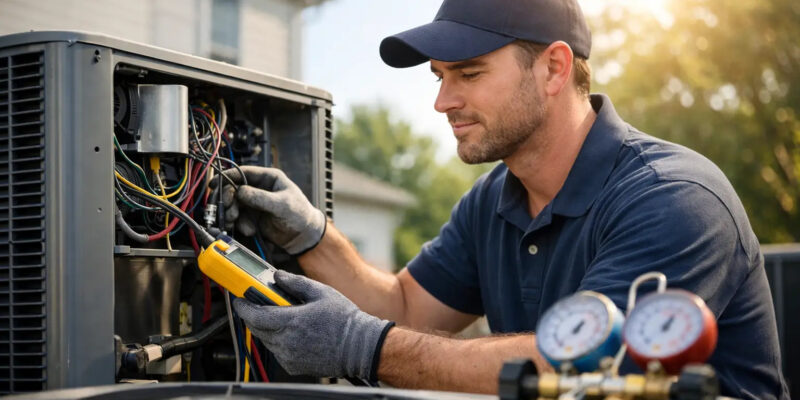
The indoor and outdoor equipment both require attention. On a central air conditioning system, this commonly includes checking thermostat operation, electrical connections, capacitors, contactors, blower components, refrigerant performance, condensate drainage, coils, filters, and overall airflow. Ductless mini-splits, heat pumps, rooftop units, and commercial cooling equipment need the same practical approach, although the components and access requirements vary by system.
Airflow Is a Major Part of Cooling Performance
Many comfort complaints begin with restricted airflow. A dirty air filter can make the blower work harder, reduce the amount of air reaching occupied spaces, and contribute to coil problems. A blocked return, damaged ductwork, dirty indoor coil, or failing blower component can produce similar symptoms.
An air conditioner may still run when airflow is limited, but it will not necessarily cool or dehumidify the space properly. Rooms may feel uneven, the system may run longer than usual, and utility costs can rise. In commercial spaces, poor airflow can also create comfort complaints across offices, retail areas, or tenant spaces even when the thermostat appears to be operating normally.
Condensate Drains Need More Attention Than They Get
Air conditioning creates condensation as warm indoor air passes over the cold evaporator coil. That moisture needs a clear path out of the system. Algae, dirt, and debris can restrict a condensate drain line or trap, causing water to back up near the indoor unit.
A drain issue can lead to water damage, unwanted shutdowns, and high indoor humidity. For systems installed in attics, mechanical rooms, ceilings, or areas above finished spaces, checking drainage before the cooling season is particularly worthwhile. A technician can inspect the drain assembly, clear restrictions when needed, and verify that the system is draining properly.
Electrical and Refrigeration Components Deserve Inspection
The outdoor condensing unit relies on electrical components to start and operate the compressor and fan. A weakening capacitor or worn contactor may not fail during a mild day, yet it can become the reason a system will not start during the first heat wave. Maintenance helps identify signs of wear before a component leaves a home or building without cooling.
Refrigerant performance should also be evaluated carefully. Refrigerant is not a routine item that should simply be topped off every year. A properly operating system is sealed. If refrigerant is low, the system may have a leak or another underlying concern that should be diagnosed and repaired. Adding refrigerant without addressing the cause can postpone the problem rather than solve it.
When to Schedule A/C Maintenance
For most homes, annual cooling maintenance is a sensible baseline. Spring is often the best time because it allows the system to be inspected before hot weather arrives and before service schedules become crowded with emergency calls. If your home uses a heat pump for both heating and cooling, service may be appropriate twice a year since the equipment operates through every season.
Commercial and industrial maintenance schedules depend on operating hours, equipment type, occupancy, and the consequences of downtime. A small office with one rooftop unit does not have the same needs as a facility with multiple rooftop systems, process cooling, refrigeration equipment, or areas that must maintain specific temperatures. High-use equipment may need seasonal inspections and additional checks throughout the year.
Property managers should also consider maintenance timing around tenant turnover, seasonal occupancy, and planned building work. Coordinating service before peak cooling demand can reduce disruption and allow time to plan repairs or replacements if an aging unit is nearing the end of its dependable service life.
Signs Your System Should Be Checked Sooner
Do not wait for a scheduled appointment if the system is giving clear warning signs. Cooling equipment often shows changes in performance before it fails completely. A prompt inspection may help avoid more extensive damage, especially if the compressor, blower motor, or electrical controls are under strain.
Call for service if you notice weak airflow, warm air from supply vents, short cycling, unusual buzzing or rattling, ice on refrigerant lines, water around the indoor unit, persistent humidity, or a sudden increase in cooling costs. A system that repeatedly trips a breaker should also be evaluated rather than reset and left to run.
Some issues are simple, such as a dirty filter or incorrectly programmed thermostat. Others require professional diagnosis. The practical value of service is determining which situation you have before operating the equipment causes further trouble.
A/C Maintenance for Homes, Businesses, and Facilities
The basic goals of maintenance are similar in every setting: reliable cooling, safe operation, controlled energy use, and longer equipment life. The details differ considerably.
Residential systems are often evaluated around comfort, humidity control, noise, and utility costs. Homeowners may need advice on filter changes, thermostat settings, ductless mini-split cleaning, or whether an older central air conditioner should be repaired or replaced. The right answer depends on the condition of the equipment, repair history, efficiency, and how well the system serves the home.
Commercial properties may require attention to rooftop units, multiple zones, tenant comfort, ventilation concerns, and access planning. A failure can affect employees, customers, inventory, or lease obligations. Maintenance records also help property owners make informed decisions about budget planning and equipment replacement.
Industrial facilities can have additional demands, including specialized heating and cooling equipment, refrigeration, production areas, and mechanical systems that must support consistent operations. In these environments, maintenance should be built around the actual equipment load and the operational cost of unexpected downtime, not a one-size-fits-all checklist.
What You Can Do Between Service Visits
Property owners and facility staff can support system performance without attempting repairs. Keep outdoor equipment clear of leaves, grass clippings, stored materials, and other obstructions that limit airflow. Replace or clean filters on the schedule recommended for the equipment and building conditions. A home with pets, construction dust, or frequent system use may need more frequent filter attention than a lightly occupied space.
Inside, keep supply and return vents open and unobstructed. Pay attention to new sounds, odors, moisture, or changes in how long the system runs. These details give a technician useful information and can make troubleshooting more efficient.
Avoid using a garden hose, chemical cleaner, or high-pressure spray on coils unless you understand the equipment and cleaning method. Coil fins bend easily, electrical components can be damaged, and improper cleaning can create a larger repair issue. Routine owner care is valuable, but it does not replace a full professional inspection.
Maintenance, Repair, or Replacement?
Maintenance helps prevent many avoidable failures, but it cannot make every older system new again. Equipment age, corrosion, repeated breakdowns, compressor condition, refrigerant type, and repair cost all matter when deciding whether to repair or replace a unit.
A newer system with a worn electrical component or drainage issue is often a straightforward repair. An older unit with recurring refrigerant leaks, major compressor trouble, or a history of expensive service calls may justify a replacement discussion. The goal should be a practical recommendation based on the system’s condition and your needs, not pressure to replace equipment that can still be repaired responsibly.
Hydrodynamics Inc. provides preventative maintenance and service for residential, commercial, and industrial cooling systems throughout Northeastern Pennsylvania, with support for central air conditioners, heat pumps, ductless systems, rooftop equipment, and related mechanical needs.
A well-timed service visit is one of the simplest ways to protect a system that works hardest when you need it most. Schedule a/c maintenance before summer demand builds, and address small changes in performance while there is still time to make a measured decision.