
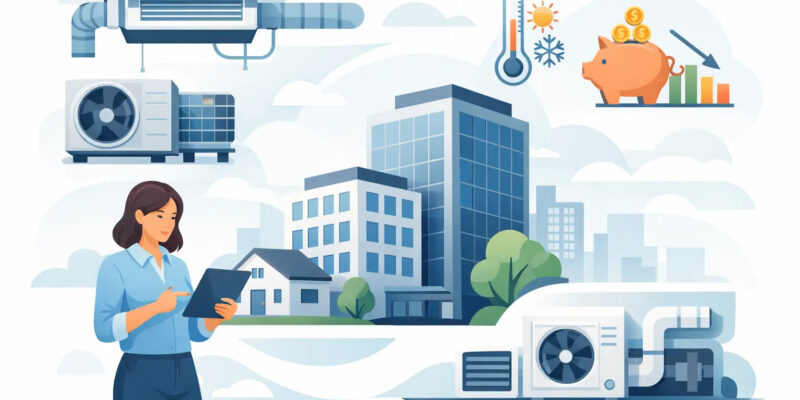
A furnace that runs constantly, an air conditioner that cannot keep up on a humid afternoon, or uneven temperatures across a facility are not simply comfort problems. They are signs that an HVAC system may need attention. For homeowners, business owners, and facility managers in Northeastern Pennsylvania, the right response depends on the equipment, the building, the fuel source, and how the system is being used.
Heating and cooling equipment is a long-term investment, but it is also a working mechanical system. A sound decision considers more than the price of a new unit. It accounts for reliability during severe weather, operating costs, ventilation needs, repair history, and the service support available after installation.
What an HVAC System Is Responsible For
HVAC stands for heating, ventilation, and air conditioning. In practice, it covers the equipment and distribution systems that keep indoor spaces warm, cool, ventilated, and manageable throughout the year. That can include a furnace, boiler, heat pump, air conditioner, ductwork, thermostats, rooftop units, exhaust equipment, and air-handling components.
In a home, the goal is usually consistent comfort, reasonable energy use, and dependable operation. A commercial building may also need to account for occupancy changes, ventilation requirements, server rooms, refrigeration loads, operating hours, and tenant comfort. Industrial spaces can involve even more specialized needs, including process heating, make-up air, equipment protection, and systems that must support continuous operations.
That difference matters. A system that is appropriate for a modest home may not provide the control, capacity, or durability required in a warehouse, restaurant, office building, or production area. Equipment should be selected for the building it serves, not simply for what was installed before.
Choosing the Right HVAC Equipment
There is no single best heating and cooling system for every property. The practical choice depends on the building layout, available utilities, insulation levels, existing equipment, budget, and the owner’s priorities.
Furnaces and central air systems
Gas, propane, and oil furnaces remain a familiar option across the region. When paired with properly designed ductwork and a central air conditioner, they can provide reliable whole-building comfort. For a property with existing ducts in good condition, replacement can be straightforward compared with changing to an entirely different system type.
Fuel availability and cost should be part of the discussion. Natural gas may be practical in one location, while propane or oil may be more realistic in another. Older oil-fired equipment can sometimes be repaired and maintained effectively, but replacement may make sense if efficiency, repair frequency, or parts availability becomes a concern.
Heat pumps and geothermal systems
Modern heat pumps provide both heating and cooling, moving heat rather than generating it through combustion. They can be an efficient option for many homes and light commercial spaces, especially when paired with a backup heat source for the coldest weather. Performance has improved significantly, but system design still matters in Pennsylvania winters.
Geothermal systems use stable underground temperatures to heat and cool a building. They can offer strong long-term efficiency and quiet operation, though installation costs and site conditions must be evaluated carefully. A geothermal system is not automatically the right answer for every property, but it deserves consideration when a building owner is planning a major replacement or new construction project.
Ductless mini-splits and zoned comfort
Ductless mini-splits are useful where extending ductwork would be difficult or disruptive. They can serve additions, finished basements, workshops, older homes, individual offices, and rooms that are consistently too hot or too cold. Because they allow zone-by-zone temperature control, they can reduce the need to condition unused areas.
The trade-off is that indoor heads must be located thoughtfully, and a whole-building solution may require multiple zones. For some properties, a mini-split is the best supplement to an existing system rather than a full replacement.
Rooftop and specialized systems
Commercial properties commonly use packaged rooftop units because they combine heating and cooling components in one accessible location. They can be a practical fit for retail spaces, offices, and other buildings with flat or low-slope roofs. Proper maintenance is essential because weather exposure, belts, electrical components, drains, and filters all affect performance.
Facilities with specialized loads may require industrial heating, waste-oil heating, refrigeration support, or custom mechanical work. These systems need a contractor who understands how comfort equipment, ventilation, controls, and operational demands interact. Treating each piece of equipment as an isolated issue can leave the underlying problem unresolved.
Why Proper Sizing Matters More Than Bigger Equipment
An oversized system is not a safer choice. Equipment that is too large can start and stop frequently, wear components prematurely, and struggle to remove humidity during cooling season. An undersized system may run continuously and still fail to maintain the desired temperature when weather conditions are extreme.
Proper sizing starts with the building itself. Square footage matters, but so do ceiling height, window area, insulation, air leakage, occupancy, sun exposure, and internal heat from appliances or equipment. Duct condition also matters. A high-efficiency unit cannot deliver its expected performance through undersized, leaking, or poorly balanced ducts.
For commercial and industrial properties, a load calculation should also consider business operations. A building that is quiet most of the day has different needs than one with kitchen equipment, production machinery, frequent door openings, or changing occupancy. The right system is based on actual demand, not a guess based on the nameplate of the equipment being replaced.
Maintenance Protects Comfort and Equipment Life
Most HVAC failures do not happen without warning. Restricted airflow, dirty coils, worn motors, loose electrical connections, drainage issues, and neglected filters can turn a manageable service visit into an emergency repair. Preventative maintenance gives a technician the opportunity to identify those issues before a heat wave, cold snap, or busy operating period exposes them.
For homes, seasonal service before heating and cooling demand peaks is a sensible approach. The visit should include an inspection of key mechanical and safety components, along with filter and airflow checks. Homeowners can help between visits by using the right filter, replacing it on schedule, keeping outdoor units clear of debris, and reporting unusual noises or performance changes early.
Commercial and industrial maintenance often needs a more structured plan. Equipment may operate longer hours, serve more people, or support essential processes. Filters, belts, electrical connections, refrigerant operation, condensate drains, combustion components, controls, and rooftop-unit condition should be reviewed according to the system’s workload and environment.
Four signs deserve a service call rather than a wait-and-see approach:
- Temperatures vary significantly from room to room or shift without a thermostat adjustment.
- The system cycles often, runs continuously, or makes new banging, grinding, or squealing sounds.
- Utility costs rise without a clear change in weather, occupancy, or operating hours.
- Water appears around indoor equipment, airflow drops, or cooling and heating performance declines.
These symptoms do not always mean replacement is necessary. They do mean the system should be evaluated before a small problem becomes an interruption.
Repair or Replace? Make the Decision With the Full Picture
Repair is often the right choice when equipment is relatively young, the issue is isolated, and the system has been maintained. Replacing a failed capacitor, motor, ignition component, thermostat, or refrigerant-related part may restore dependable operation without requiring a major investment.
Replacement becomes more reasonable when repairs are frequent, critical components are failing, efficiency is poor, or parts are difficult to obtain. Age matters, but it is not the only factor. A well-maintained older system may continue serving a property effectively, while a newer unit with incorrect sizing or installation problems may require more serious attention.
For a facility operator, downtime may carry a larger cost than the repair invoice. Loss of heating can affect employees, customers, inventory, plumbing protection, and production schedules. A planned replacement can be easier to manage than a failure during peak demand. Reviewing equipment condition before the season begins gives owners more choices and avoids rushed decisions.
One Mechanical Partner Can Simplify Building Care
Heating and cooling rarely operate independently from the rest of a property’s mechanical systems. A drainage problem can affect air-conditioning equipment. A water-quality issue can shorten the life of plumbing components. A failed well pump, grinder pump, or water heater can create a disruption that reaches far beyond one fixture.
That is why many property owners prefer a contractor with broad mechanical capabilities. Hydrodynamics Inc. supports heating, cooling, plumbing, refrigeration, water treatment, and pump-system needs across Northeastern Pennsylvania, helping customers address connected system issues without coordinating multiple service providers.
The most useful next step is often simple: pay attention to how the building feels and how the equipment behaves. If comfort is uneven, costs are climbing, or a system is becoming less dependable, schedule an evaluation while there is still time to plan the right repair, maintenance visit, or replacement.