
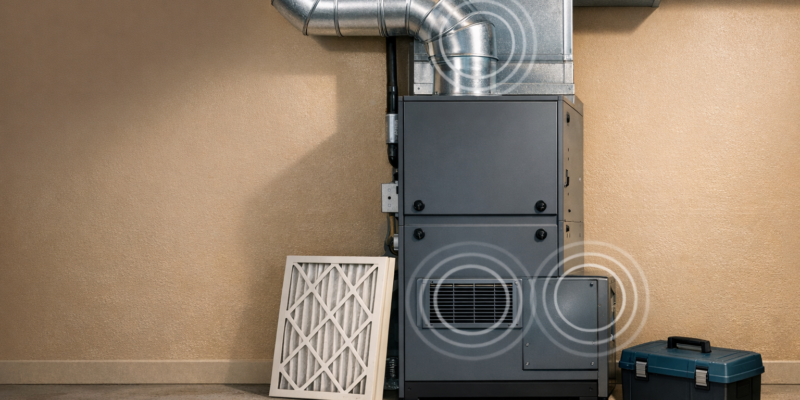
HVAC Noise: Common Causes and Fixes
Your HVAC system should run quietly. Strange noises often signal issues that need attention to avoid expensive repairs or replacements. Here’s a quick breakdown of common HVAC noises, their causes, and what to do:
- Rattling: Loose screws or panels. Tighten them, but if it persists, call a professional.
- Banging: Loose or damaged components like the compressor or blower motor. Needs expert help.
- Buzzing: Electrical issues such as loose wiring or failing capacitors. Shut down and contact a technician if there’s a burning smell.
- Squealing/Grinding: Worn belts or bearing failures. Turn off the system and seek professional service.
- Popping: Ducts expanding/contracting due to temperature changes. Insulate ducts or check airflow.
- Gurgling/Bubbling: Clogged condensate lines or refrigerant issues. May require professional maintenance.
Addressing these noises early can save you from costly repairs. Simple DIY steps like tightening panels or replacing air filters can help, but some issues demand professional diagnostics. If repairs exceed $5,000 (based on system age × repair cost), replacing the unit might be smarter. Regular maintenance is key to keeping your HVAC system quiet, efficient, and safe.
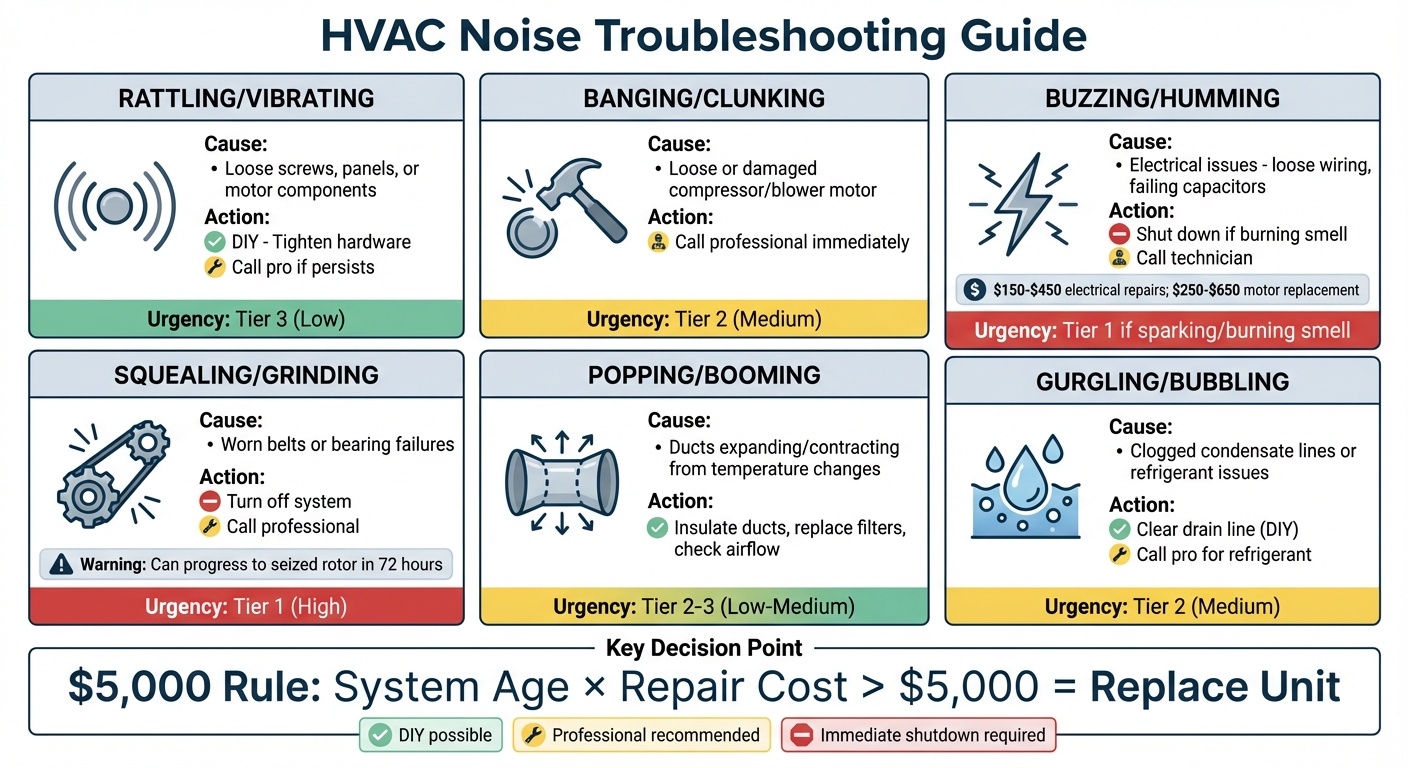
Common HVAC Noises: Causes and Solutions Guide
Common Cause for Noisy HVAC | Ask This Old House

sbb-itb-99db659
Common HVAC Noises and Their Causes
Your HVAC system has a way of communicating through the sounds it makes. While some noises are harmless, others can signal problems that may require immediate attention. Identifying the type of noise can help you determine whether it’s a simple fix or time to call in a professional.
Rattling or Vibrating Noises
Rattling sounds usually point to loose hardware, like screws, panels, or motor components. Start by checking your outdoor condenser and indoor air handler for any loose screws or panels, and tighten them if necessary. If the rattling continues, it could mean internal issues with the blower motor or compressor, which would need professional attention. As Michael Starratt from United HVAC Motors explains, “A properly functioning HVAC system should run quietly, providing heating and cooling without disruption”. Addressing these issues early can save you from costly repairs, as remanufactured blower motors can cost between $329.99 and $699.99. If the noise becomes more forceful and turns into banging, it may indicate more serious problems.
Banging or Clunking Sounds
Banging noises often suggest loose components, but the added intensity could mean internal damage. Tighten any accessible screws or panels, but if the banging persists or seems to come from deeper within the unit, you might be dealing with a failing compressor or damaged blower motor parts. Pay special attention during startup or shutdown – if the compressor struggles to start and you hear clanking, the capacitor might need to be replaced.
Buzzing or Humming Noises
A steady, low hum is normal during operation, but a sudden or loud buzzing often signals electrical problems. This could include loose wiring, faulty contactors, broken relays, or failing capacitors that can’t deliver the necessary charge to start the unit. Buzzing may also point to a failing motor or transformer. While you can check for loose panels or refrigerant lines vibrating against the housing, leave any electrical diagnostics to the experts. Electrical repairs typically range from $150 to $450, while motor replacements can cost between $250 and $650.
Important note: If buzzing is accompanied by a burning smell, shut down your system immediately, as this could indicate a potential electrical fire hazard.
Squealing or Grinding Noises
Squealing and grinding noises suggest mechanical stress. Squealing often comes from worn or loose belts losing tension. In newer systems, it might also indicate bearing issues in the motor. Grinding sounds, on the other hand, are more severe and usually mean metal-on-metal contact caused by failed bearings or an unbalanced blower wheel. For example, a 1/3 HP blower motor with bearing failure can progress from minor squeals to a completely seized rotor in as little as 72 hours. If you hear grinding, shut off your system immediately and call for professional service to avoid extensive damage and higher repair costs.
Less Common HVAC Noises and How to Fix Them
Sometimes, your HVAC system might produce unusual sounds that go beyond the typical hum or rattle. These less frequent noises can be warning signs of inefficiencies or potential issues that need attention before they turn into costly repairs.
Popping or Booming Sounds
If you hear popping or booming noises, your ductwork might be expanding and contracting due to sudden temperature changes. Jason Peavey, Co-founder of PV Heating, Cooling & Plumbing, explains:
As soon as the hot air from the furnace hits the cold ducts, the metal starts to expand quickly. When this happens, an air duct popping noise may result from the rapid expansion of the cold metal.
High static pressure can make this problem worse. Rene Langer, Senior Comfort Specialist at PICKHVAC, points out:
The number one cause of noisy ducts is static pressure that is too high.
This issue is particularly common with rectangular ducts or those made from thinner metal. To address it, you can:
- Insulate the ducts to reduce noise and temperature fluctuations.
- Replace or clean dirty air filters to improve airflow.
- Tighten any loose screws or panels in the ductwork.
- Install spring-loaded backdraft dampers (typically $20–$30) to minimize clanging sounds.
If these fixes don’t solve the problem, your ductwork might be undersized for your system. In that case, a professional evaluation, including a Manual J load calculation, can help identify the best solution.
Gurgling or Bubbling Noises
Gurgling or bubbling sounds often point to water or air blockages. A common culprit is a clogged condensate drain line, which prevents proper drainage. You can often fix this by inspecting the drain line and flushing it out or using a wet/dry vacuum to clear minor clogs.
If the noise comes from the refrigerant lines, it might indicate trapped air in the system. This requires professional attention, as a trained technician will need to bleed the air from the lines or check refrigerant levels. These tasks involve specialized tools and certifications, so it’s not something you should attempt on your own.
To prevent these problems, schedule regular professional maintenance – ideally in the fall for furnaces and in the spring for air conditioners. This proactive approach can help catch minor issues before they turn into major headaches.
When to Contact Hydrodynamics for Professional Help

Some HVAC noises go beyond routine maintenance and signal the need for immediate professional intervention. Sounds like metallic grinding, banging accompanied by combustion odors, or electrical buzzing with visible sparks are red flags that require you to shut down the system immediately.
When these situations arise, professional diagnostics are essential. Hydrodynamics follows a detailed process to identify the source of unusual noises. Their technicians examine critical components like the blower motor, compressor, and fan blades for wear and tear. They also use tools such as multimeters to test electrical parts like capacitors and analyze pressure imbalances caused by refrigerant leaks or airflow blockages . Noises are further classified based on their origin – whether it’s a rotating imbalance, mechanical looseness, aerodynamic turbulence, or refrigerant flow issues.
Refrigerant-related problems, in particular, must be handled by professionals certified under EPA Section 608 . Persistent screeching or squealing often points to motor or bearing failures, which are not DIY-friendly fixes .
Hydrodynamics organizes repairs into three urgency levels. Tier 1 issues, such as severe grinding or sparking, demand an immediate shutdown to prevent serious damage. Tier 2 problems, like belt squealing or duct resonance, should be addressed within 30 days to avoid further deterioration. Tier 3 concerns, such as minor rattling from registers, can typically wait until your next routine maintenance visit. Understanding these tiers helps you prioritize repairs and decide whether a professional service call is necessary after performing basic safety checks.
Before reaching out to a technician, take a moment to check your air filter and tighten any loose access panels. These simple actions can often eliminate whistling or rattling noises . However, if the issue persists, it’s time to weigh the cost of repairs against replacement. Use the $5,000 rule: multiply the unit’s age by the estimated repair cost. If the result exceeds $5,000, replacing the system is usually the smarter choice. For reference, installing a new HVAC system in a 1,500-square-foot home typically costs between $5,000 and $12,000, depending on efficiency levels and ductwork requirements.
Conclusion: Maintaining a Quieter HVAC System
A noisy HVAC system often points to mechanical wear or potential breakdowns. For example, a squealing bearing can go from bad to worse in as little as 72 hours if left unchecked.
To minimize noise issues, make sure to replace air filters every 1–3 months, keep at least 80% of your vents open, and inspect for loose panels or screws regularly.
Hydrodynamics follows ASHRAE 180 standards, conducting routine vibration checks and setting acoustic baselines to catch problems early. However, if noise persists despite basic fixes, it’s often a sign of a more serious issue that needs immediate attention.
Certain sounds – like metallic grinding, liquid slugging, or rattling paired with combustion odors – can signal serious hazards. These situations call for shutting the system down and bringing in a professional for diagnostics. Hydrodynamics addresses urgent problems promptly while keeping an eye on smaller concerns during scheduled maintenance.
A quieter HVAC system doesn’t just enhance comfort – it also boosts efficiency and helps protect your investment over the long term.
FAQs
Which HVAC noises mean I should shut the system off right away?
If your HVAC system starts making loud screeching, banging, rattling, or high-pitched whistling noises, you should turn it off immediately. These sounds can signal problems such as a failing compressor, loose parts, or airflow blockages. Ignoring these noises could lead to more damage or even safety hazards. To avoid further complications, shut the system down and call a professional technician to inspect and fix the issue.
How can I tell if a noise is coming from the ducts or the unit itself?
To figure out where that HVAC noise is coming from, take a moment to listen closely while the system is running.
- Duct noises – like rattling or banging – are often caused by loose duct sections, vent dampers, or shifts in air pressure.
- Unit noises – such as humming or buzzing – usually point to problems with parts like the blower motor, fan, or compressor.
Focus on whether the sound is coming from the ductwork or the main unit to narrow down the issue.
When does it make more sense to replace my HVAC instead of repairing it?
If your HVAC system is over 12–15 years old and repairs are costing you $1,300 or more, it’s often smarter to go for a replacement. Another handy guideline? Multiply the repair cost by the system’s age. If that number is more than $5,000, replacing the system is likely the more budget-friendly option in the long run.